How to Prepare Rooms After Flooding Safely
Water can turn a familiar room into a safety concern in minutes. Whether a pipe burst under a sink, an appliance overflowed, or stormwater entered the property, knowing how to prepare rooms after flooding protects people, limits property damage, and gives restoration professionals the best chance of saving affected materials.
For Palm Beach County homes, condos, and commercial properties, speed matters. South Florida’s heat and humidity can accelerate mold growth, while moisture trapped beneath flooring, behind walls, and inside cabinetry can continue causing damage long after visible water is gone. The goal is not simply to make the room look dry. It is to make it safe, document the loss, remove moisture correctly, and prevent a small flood from becoming a larger restoration project.
Start With Safety Before You Enter
Do not walk into standing water until you know the area is safe. Water and electricity are a dangerous combination, especially around outlets, extension cords, appliances, and electrical panels. If water may have reached electrical equipment, shut off power to the affected area only if you can do so without stepping into water. Otherwise, wait for a qualified professional.
Also consider the source of the water. A clean-water supply line leak is handled very differently from water that came from a toilet backup, sewer line, storm surge, or outdoor flooding. Contaminated water can carry bacteria, chemicals, and other harmful materials. Keep children, pets, residents, and employees away from the room until it has been evaluated and cleaned.
Wear waterproof boots, gloves, and eye protection if you must enter a lightly affected room. Avoid using a household vacuum to remove water, and do not use fans near standing water or wet electrical equipment. If the ceiling is sagging, walls are bowed, or the floor feels unstable, leave the area. Those are signs that water may have compromised building materials.
Document the Damage Before Cleanup
Once the area is safe, take clear photos and videos before moving furniture or removing materials. Capture the water line on walls, affected flooring, damaged belongings, and the suspected source of the flood. For condo owners, tenants, HOA boards, and commercial property managers, this record can be especially helpful when communicating with insurance carriers, building management, or maintenance teams.
Make brief notes while details are fresh. Record when the flooding was discovered, when the water source was stopped, which rooms were affected, and whether water moved into closets, hallways, or neighboring units. Water often travels farther than expected, particularly under baseboards, through shared walls, and beneath hard-surface flooring.
Do not throw away damaged items until your insurance provider has advised you to do so, unless the materials present an immediate health hazard. If disposal is necessary, photograph the item first and keep a simple inventory.
Stop the Source and Protect Unaffected Areas
If the flood came from plumbing, shut off the local supply valve or the property’s main water supply. With an appliance leak, turn off the appliance and disconnect it only when it is safe. If rainwater is entering through a roof, window, door, or exterior opening, use temporary containment only if conditions allow. Do not attempt roof repairs during active severe weather.
Next, keep water from spreading. Move dry furniture, electronics, paper files, and rugs out of the affected area when it is safe to do so. Place furniture on blocks or foil-covered supports if it cannot be moved, but avoid dragging heavy pieces across wet flooring. That can scratch surfaces, spread contamination, and force water deeper into carpet or seams.
Close interior doors to unaffected rooms if water is still moving across the floor. In a multifamily building, notify management quickly. Water from one unit can affect ceilings, walls, electrical systems, and finishes in the units below.
How to Prepare Rooms After Flooding for Drying
Preparing a room for professional drying is different from trying to dry it with open windows and a few fans. The visible surface may feel dry while water remains inside padding, subflooring, drywall, insulation, cabinetry, and wall cavities.
Begin by removing wet contents that can be safely moved. Wet towels, clothing, cardboard boxes, area rugs, and fabric items can hold a surprising amount of moisture. Separate salvageable belongings from items that may be contaminated or beyond recovery. Avoid piling wet materials together, since that creates the warm, damp conditions mold needs.
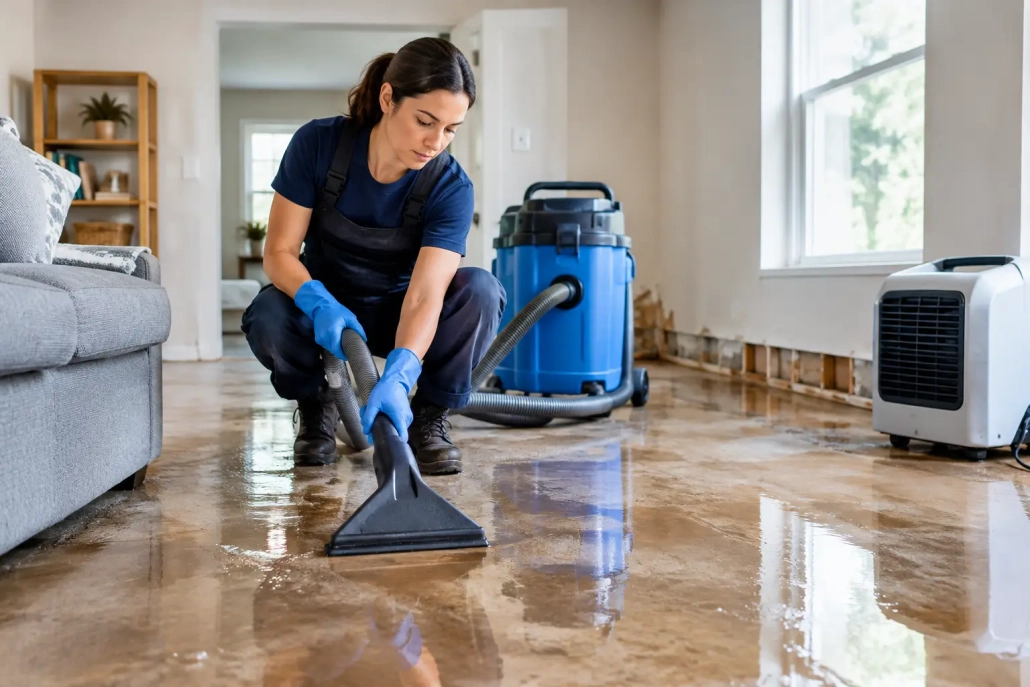
If the water was clean and the area is safe, blot small wet spots with clean towels. For larger losses, extraction equipment is usually needed. Professional water extraction removes far more moisture than towels, mops, or consumer wet vacuums, particularly from carpet backing and padding.
Open cabinet doors, closet doors, and interior doors so trapped air can circulate. Remove toe kicks or baseboards only when directed by a restoration professional, as improper removal can create additional repair work. In some cases, professionals may use specialized drying systems to dry materials in place. In others, wet drywall, insulation, carpet padding, or laminate flooring may need removal because moisture has traveled too deeply.
Do Not Assume Every Floor Can Be Saved
Each flooring material responds differently to water. Tile may look unaffected, but water can move through grout lines and collect beneath the installation. Hardwood can cup, buckle, or separate when moisture changes its shape. Laminate and engineered wood may swell at seams and edges, often making replacement the practical option. Carpet may be salvageable after a clean-water incident if extraction and drying begin quickly, but it is rarely a candidate for saving after sewage or heavily contaminated water.
Concrete floors also need moisture testing. They can hold moisture long after surface water has been removed, which can affect adhesives, coatings, and future floor installations. The right decision depends on the water category, the amount of time materials remained wet, and verified moisture readings – not appearance alone.
Control Humidity Without Creating New Problems
South Florida humidity works against do-it-yourself drying. Opening windows may feel helpful, but it can bring more humid outdoor air into an already wet room. During humid or rainy conditions, professional-grade dehumidification and controlled air movement are generally more effective than relying on outdoor ventilation.
A restoration team uses moisture meters, thermal imaging, air movers, and dehumidifiers to locate and remove hidden moisture. This process helps protect wall assemblies, flooring, and contents while providing a clearer picture of what can be restored. Proper monitoring matters because drying too slowly can encourage microbial growth, while drying certain materials too aggressively can cause cracking, warping, or finish damage.
If you use portable fans while waiting for help, direct them toward wet surfaces only after electrical safety has been confirmed. Never run fans on contaminated water. Keep indoor temperatures moderate, and avoid cranking the air conditioning down to an extreme setting. Cooling alone does not remove enough moisture from building materials.
Watch for Mold and Contamination Signs
Mold can begin growing within 24 to 48 hours when moisture remains in porous materials. A musty smell, discoloration, peeling paint, swollen baseboards, or new staining around walls and ceilings all deserve attention. Do not paint over stains or spray fragrance to mask odors. Those steps hide the warning signs without solving the moisture problem.
Contaminated water requires a more cautious response. Porous items exposed to sewage, floodwater, or water from a toilet backup may need disposal. Drywall, insulation, carpet padding, upholstered items, and paper products can be difficult to fully sanitize after contamination. A qualified restoration assessment can identify which materials can be cleaned and which need removal for health and safety.
Know When to Call a Restoration Professional
A minor, clean-water spill caught immediately may be manageable with quick extraction and thorough drying. Flooding that reaches multiple rooms, runs under flooring, affects walls or cabinets, involves contaminated water, or follows a storm needs professional attention. The same is true when the source cannot be identified, the property has a mold odor, or occupants have respiratory sensitivities.
For property managers and HOA boards, a fast response also limits disruption for residents and protects common areas. Clear communication, documented moisture readings, and a defined drying plan make it easier to coordinate repairs and avoid repeat issues.
The Cleaners Drones provides water damage restoration support for properties throughout Palm Beach County, with the practical equipment and detailed approach needed to address wet interiors before damage spreads. The sooner drying begins, the more options you typically have for preserving finishes, furnishings, and the comfort of the people who use the space.
After the immediate emergency is under control, keep the room accessible, avoid replacing flooring or closing walls too soon, and rely on verified moisture readings before repairs begin. A room is ready to rebuild when it is truly dry – not merely when the floor no longer looks wet.


Leave a Reply
Want to join the discussion?Feel free to contribute!