Emergency Water Extraction Service Steps
A burst supply line behind a vanity can release far more water than most homeowners expect. By the time water reaches a hallway, baseboards, cabinets, and flooring may already be absorbing moisture. An emergency water extraction service is designed for this moment: remove standing water quickly, identify where it traveled, and begin drying before a small leak becomes a major restoration project.
For Palm Beach County homes, condos, and commercial properties, fast action matters especially because humidity slows natural drying. Opening windows or aiming a household fan at wet flooring may feel helpful, but it rarely addresses the moisture trapped beneath surfaces or inside walls. The goal is not simply to make the floor look dry. It is to return affected materials to an appropriate moisture level safely and thoroughly.
Start With Safety and Stop the Water Source
If water is actively flowing, shut off the nearest fixture valve or the property’s main water supply if it is safe to do so. A leaking refrigerator line, toilet supply line, washing machine hose, or water heater can keep adding damage by the minute. For a roof or window leak during heavy rain, move valuables away from the area and contain water only if doing so does not create a slip or electrical hazard.
Do not walk through standing water near outlets, cords, appliances, or an electrical panel. Turn off power to the affected area only when it is safe and you know which breaker controls it. If water has reached electrical equipment, call a qualified electrician as needed before anyone begins work.
The type of water also changes the response. Clean water from a broken supply line is different from water involving a toilet overflow, sewage backup, or exterior floodwater. Contaminated water requires protective procedures and careful removal of affected materials. Do not try to shop-vac sewage or floodwater without the right equipment and training.
What an Emergency Water Extraction Service Does
Water damage restoration has a sequence. Skipping steps can leave moisture behind, creating odors, warping, staining, and conditions that may support mold growth. A professional response begins with an assessment of the source, the category of water, and the rooms or building components affected.
Extraction Comes Before Drying
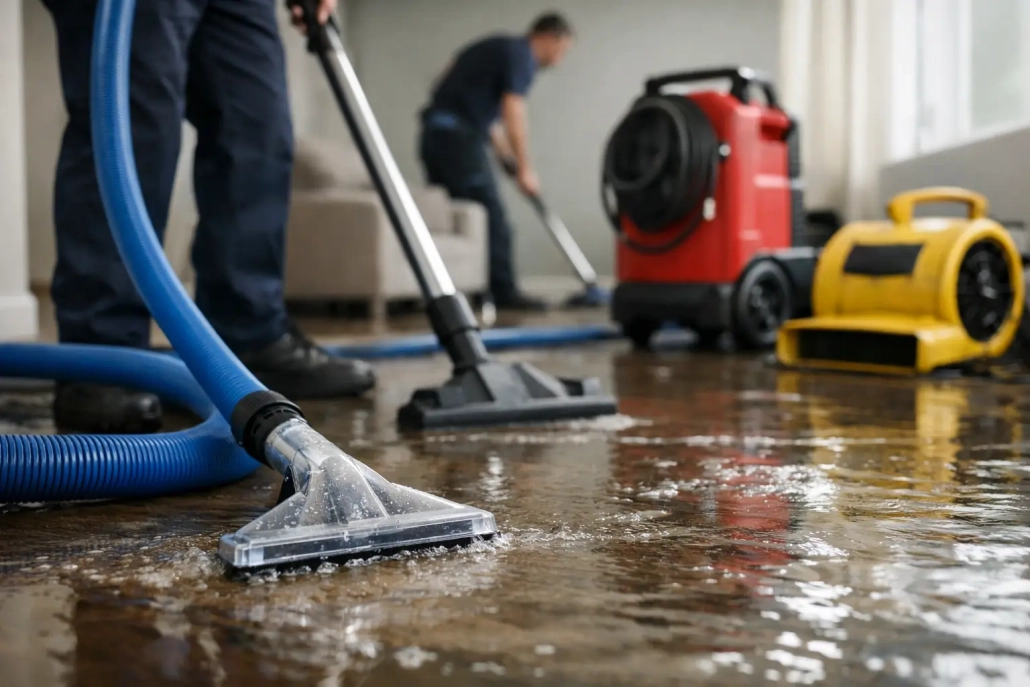
The first priority is removing standing water. Professional extraction equipment can pull water from carpet, padding, hard surfaces, and other accessible areas much more effectively than towels or a small wet vacuum. The faster water is removed, the less time it has to soak through flooring, under baseboards, and into lower wall sections.
Carpet can sometimes be saved after a clean-water event, depending on how long it was wet, the amount of water involved, and the condition of the padding and subfloor. In other cases, saturated padding must be removed because it holds moisture and can prevent the structure below from drying properly. A reliable technician should explain the recommendation rather than treating every water loss the same way.
Moisture Detection Finds What You Cannot See
Standing water is only part of the problem. Water follows gravity, slips beneath flooring, wicks into drywall, and travels through shared walls in condominiums and multi-unit buildings. Moisture meters and thermal imaging help identify affected areas without unnecessary demolition.
This step matters in South Florida condos, where water can move between units and impact neighboring ceilings, wall cavities, and common areas. Property managers and HOA boards need a clear picture of the extent of damage quickly so they can coordinate access, notify residents, and protect the building.
Controlled Drying Protects Materials
After extraction, technicians place commercial air movers and dehumidifiers to remove remaining moisture from materials and the air. Equipment placement is based on the affected materials and the size of the loss, not just the room’s square footage. Wood flooring, engineered flooring, drywall, cabinets, carpet, and concrete each respond differently to moisture.
Daily or scheduled monitoring is part of a proper drying plan. Technicians check moisture readings, adjust equipment, and document progress until the area reaches drying goals. Removing equipment too early can leave hidden moisture behind. Running it longer than necessary can add inconvenience and energy use, so measurement is what keeps the process focused.
The First Hours Make a Difference
Water damage does not always look dramatic at first. A small amount of water under vinyl plank flooring or inside a cabinet toe-kick can create problems days later. Prompt extraction reduces the chance that materials will swell, separate, or require replacement.
Move lightweight furniture, rugs, electronics, paper items, and fabric belongings away from the affected area if it is safe. Place foil or protective blocks under furniture legs that cannot be moved, and avoid placing wet items on dry carpet or upholstered furniture. Take photos of visible damage for your records before major cleanup begins.
Avoid these common mistakes:
- Do not use a household vacuum to remove water.
- Do not lift wall-to-wall carpet if you are unsure how to handle it or if contamination is possible.
- Do not assume a dry surface means the subfloor or wall is dry.
- Do not run ceiling fans or HVAC systems if contaminated water may have affected the area.
- Do not delay because the leak appears minor or has stopped.
For commercial spaces, quick containment also helps preserve operations. A water event in an office, retail space, fitness center, or lobby may require isolating a small area, protecting equipment, and creating a drying plan around tenants, customers, and staff. The right approach balances speed with a clean, organized work area.
When Water Damage Requires More Than Extraction
Extraction is the urgent first service, but it is not always the final one. Materials may need cleaning, sanitizing, repair, or replacement based on the water source and the time they remained wet. Drywall that has absorbed contaminated water, for example, may need to be removed. Cabinet components, baseboards, insulation, and flooring can require separate decisions after moisture readings and condition checks.
Mold is another reason not to treat water damage as a cosmetic issue. Mold can begin to grow when moisture remains in building materials, though the risk and required response depend on conditions at the property. Fast extraction and verified drying are practical prevention steps. If visible growth is present or moisture has persisted, the scope of work may need to expand beyond standard water removal.
Insurance is also a case-by-case matter. Coverage often depends on the cause of loss, policy language, maintenance history, and whether the water came from inside or outside the property. Keep photos, invoices, and communication records. A professional restoration team can provide documentation of observed damage, extraction work, equipment placement, and drying progress, but your insurer makes the coverage decision.
Water Extraction for Condos and South Florida Properties
In a condo or high-rise, a leak in one unit can become a building-wide coordination issue. Water may travel downward into ceilings, along plumbing penetrations, or across shared structural areas. Residents should notify building management promptly, while managers should document the event, coordinate unit access, and confirm whether adjacent spaces need moisture inspection.
For single-family homes, common causes include failed appliance hoses, air conditioner condensate line issues, plumbing leaks, roof intrusion, and water heater failures. South Florida’s intense rain events add another variable. Exterior water intrusion may need a different plan than a clean indoor plumbing leak, particularly when stormwater or floodwater is involved.
The Cleaners Drones approaches water damage with the same focus that guides every property service: clear communication, careful work, and visible progress. The immediate objective is to protect the property, limit disruption, and give the owner or manager a straightforward understanding of what happens next.
Call Before the Damage Spreads
If water is standing, spreading, or has reached flooring, walls, cabinets, or neighboring units, treat it as a time-sensitive property issue. Shut off the source when safe, protect people and valuables, and arrange professional assessment and extraction as soon as possible.
A fast, measured response can be the difference between drying a contained area and replacing materials that had a chance to stay wet. When the water is under control, the next best step is simple: make sure the moisture you cannot see is being checked just as carefully as the water you can.


Leave a Reply
Want to join the discussion?Feel free to contribute!