Drone Window Washing for South Florida Buildings
A streaked upper floor can make an otherwise well-managed property look neglected from the street. For Palm Beach County condos, commercial buildings, and multi-story homes, the challenge is rarely recognizing dirty glass. It is finding a practical way to clean it without closing off access areas, scheduling lifts, or putting crews in difficult positions. Drone window washing gives property owners and managers another option for reaching exterior glass safely and efficiently.
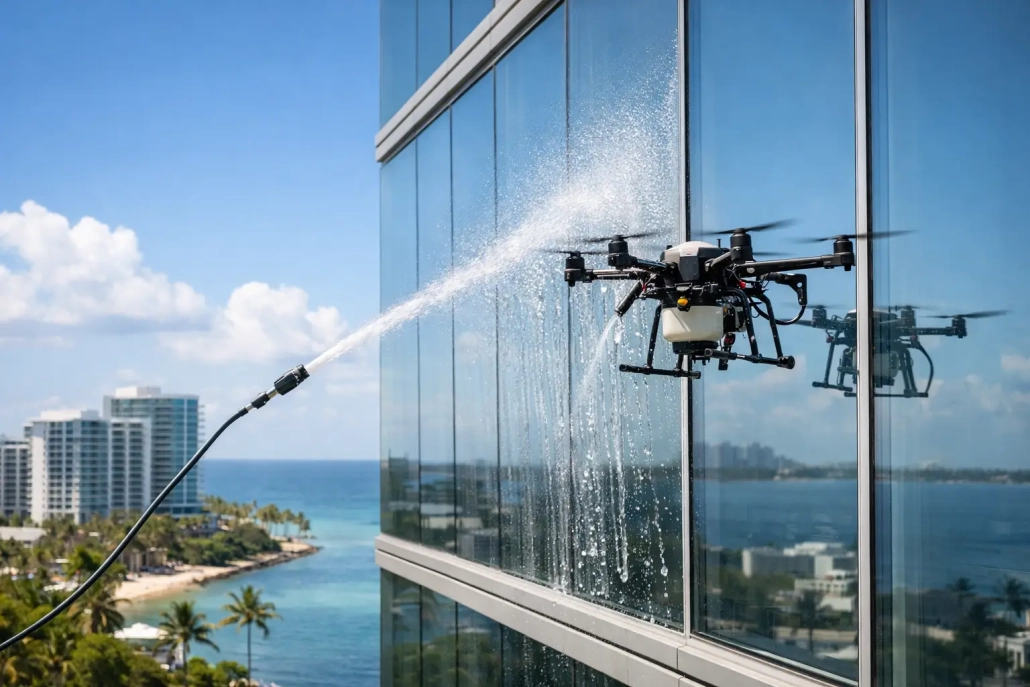
Unlike a small consumer drone with a camera, professional exterior-cleaning drones are purpose-built working systems. They deliver controlled, low-pressure cleaning solutions and water to elevated surfaces while an experienced operator manages the flight path from the ground. The goal is straightforward: remove airborne salt, dust, mildew, pollen, and surface grime that dulls windows, frames, and nearby exterior finishes.
Why exterior glass gets dirty so quickly in South Florida
South Florida buildings deal with a combination of conditions that ordinary maintenance schedules do not always account for. Humidity encourages organic growth around frames and ledges. Afternoon storms leave mineral residue. Coastal properties may collect salt spray, while traffic corridors add fine dust and exhaust film.
Glass can still look cloudy even after rain because rain does not rinse contaminants evenly or remove the film that has already bonded to the surface. Window frames, seals, and trim can also hold dirt that draws attention away from otherwise clean glass. Regular exterior cleaning protects the polished, cared-for appearance residents, guests, and tenants expect.
For a property manager, that appearance affects more than curb appeal. Clean windows improve daylight, make common areas feel better maintained, and support the overall presentation of the building during tours, inspections, and resident visits. For homeowners, it is often about finally being able to enjoy the view without stains and buildup at hard-to-reach elevations.
How drone window washing works
The right approach begins with an assessment of the building, the glass condition, surrounding access, and weather. Not every window needs the same treatment, and no responsible contractor should use the same pressure or cleaning chemistry on every exterior surface.
A professional crew establishes a safe ground area, identifies obstacles such as balconies, trees, power lines, and pedestrian paths, then plans the cleaning sequence. The drone is operated close enough to apply a controlled low-pressure rinse and cleaning solution where needed. The system can reach upper-story windows and exterior surfaces without relying on scaffolding or a boom lift in many situations.
For routine buildup, low-pressure cleaning can remove the dirt, organic residue, and environmental film that make exterior glass look dull. The process is especially useful for broad areas of upper-level glass, window surrounds, façades, and difficult-to-access exterior details.
Results depend on the condition of the glass. Fresh surface grime responds differently than etched hard-water deposits, oxidized frames, damaged seals, or construction residue. A qualified cleaning company should explain what cleaning can improve and what may require specialty restoration or a different method.
It is not a one-size-fits-all replacement for hand detailing
Drone cleaning is a powerful access solution, but it is not a shortcut for every job. Some windows may need hand-detailing for interior glass, stubborn spots, deep track cleaning, or precision work around delicate architectural features. Ground-floor glass and easily accessible areas may be more efficiently cleaned using traditional methods.
That is not a drawback. It is how good property maintenance works. The best plan may combine drone-based exterior cleaning for upper elevations with conventional cleaning for entrances, storefronts, interior-facing glass, and areas requiring close manual attention. The result is a more complete service without paying for lifts or scaffolding where they are not necessary.
What property decision-makers gain
Traditional high-access window cleaning often brings a long list of operational concerns: lift positioning, parking restrictions, blocked drive lanes, noise, lengthy setup, and work zones that affect residents or customers. Drone window washing can reduce many of those burdens.
The biggest benefit is safer access. Cleaning from the ground reduces the need to place workers on ladders, suspended platforms, or elevated equipment for suitable areas of the project. It also reduces the amount of heavy machinery that must be staged around the property.
There is a practical cost benefit as well. A drone does not eliminate labor or planning, but it can reduce the equipment requirements that drive up the cost of accessing multi-story exterior surfaces. For HOAs and commercial operators managing budgets across several buildings, that difference can make routine exterior cleaning more achievable.
The service also helps keep the property functioning while work is underway. Fewer obstructions can mean less disruption to residents entering a condominium, guests arriving at a hotel, patients visiting an office, or customers parking near a retail location. Timing still matters, especially around busy entrances, but the footprint is often much smaller than a lift-based operation.
When a drone is the right choice
Drone cleaning is particularly well suited to buildings with hard-to-reach upper windows, exterior glass above landscaping, tall façades, condominium towers, parking areas with limited equipment access, and multi-story residences. It can also be a smart choice when a property needs a visible refresh before an event, inspection, listing, or seasonal peak.
Weather and site conditions matter. High winds, lightning, heavy rain, restricted airspace, overhead hazards, or close proximity to sensitive areas may require rescheduling or another cleaning method. A professional team should never force a flight simply to stay on a calendar.
Material condition matters too. Older glass, cracked panes, failing sealant, loose trim, and fragile finishes should be identified before cleaning begins. Low-pressure methods are designed to be gentler than aggressive washing, but careful evaluation remains essential. The objective is to clean the surface, not create a maintenance problem.
Questions to ask before scheduling service
Before approving a drone window washing project, ask how the company evaluates surface materials, manages pedestrian safety, handles weather delays, and protects nearby landscaping and finishes. Ask whether the cleaning products are appropriate for the property and whether the crew has experience with the specific building type.
It is also useful to discuss expectations. Are you looking for a routine exterior wash, a brighter appearance before a board meeting, or help with visible salt and mildew buildup? Is the concern limited to glass, or do window frames, stucco, balconies, and adjacent exterior surfaces also need attention? Clear answers help the contractor build a realistic scope rather than treating every building like the last one.
For larger properties, consider setting a maintenance schedule based on exposure rather than waiting until the dirt becomes obvious. Coastal-facing buildings, heavily shaded areas, and high-traffic locations may need more frequent attention than a protected inland property. A consistent schedule can help avoid the heavier buildup that takes more time and effort to remove.
A modern solution with a practical purpose
Technology only matters when it solves a real problem. In this case, the problem is access: windows and exterior surfaces that need care but are expensive, disruptive, or risky to reach by conventional means. The Cleaners Drones uses drone-powered, low-pressure exterior cleaning to help South Florida properties maintain a cleaner appearance with less equipment around the building.
The best results come from matching the method to the property, the material, and the condition of the glass. When upper-level windows are clouded by Florida weather and access is the obstacle, a professionally managed drone service can turn a difficult maintenance task into a manageable part of caring for the property.


Leave a Reply
Want to join the discussion?Feel free to contribute!