Condo Facade Cleaning Without Scaffolding
A stained facade can make a well-managed condominium look neglected long before the problem reaches the lobby or landscaping. In South Florida, humidity, salt air, algae, mildew, airborne dust, and storm residue build up quickly on exterior walls. Condo facade cleaning without scaffolding gives boards and property managers a practical way to restore the building’s appearance without turning the property into a prolonged construction zone.
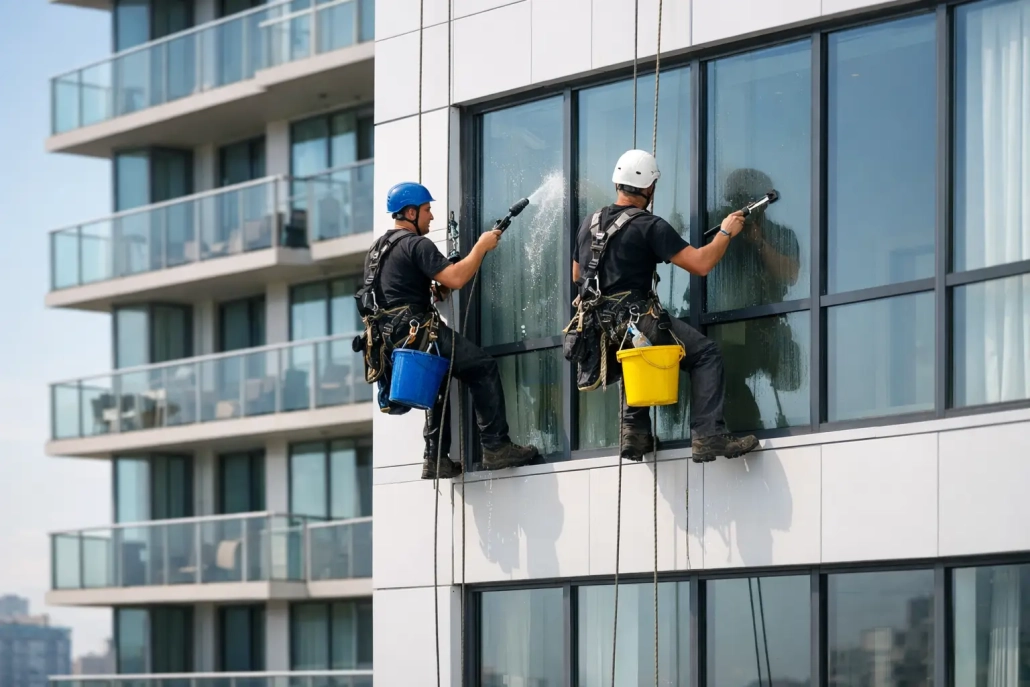
For many communities, exterior cleaning has traditionally meant scaffolding, boom lifts, rope-access crews, blocked parking areas, and weeks of resident questions. Those methods still have a role for certain repairs, but routine facade washing does not always require them. Drone-powered low-pressure cleaning can reach elevated exterior surfaces with less ground equipment, less disruption, and a more controlled approach to difficult access.
Why Condo Facades Get Dirty So Fast in South Florida
South Florida’s climate is hard on a building exterior. Warm temperatures and frequent moisture create ideal conditions for algae and mildew, especially on shaded elevations, overhangs, balconies, and walls near landscaping. After rain, dust and organic material can cling to textured stucco, painted concrete, EIFS, and other common facade materials.
Coastal properties have another challenge: salt carried in the air. Salt residue can leave a dull film on glass, metal details, railings, and painted surfaces. It may also hold moisture against the building, which is a good reason to keep up with a regular cleaning schedule rather than waiting until discoloration is visible from the street.
The issue is not just cosmetic. Heavy organic growth can make a property look poorly maintained, affect first impressions for prospective buyers and tenants, and lead to more aggressive cleaning needs later. Consistent exterior care protects curb appeal and helps boards stay ahead of avoidable buildup.
How Facade Cleaning Without Scaffolding Works
Drone exterior cleaning uses a remotely operated aerial system to apply a carefully selected cleaning solution and low-pressure rinse to upper-level surfaces. Instead of placing scaffolding against the building or moving a lift across the property, trained operators work from a controlled ground area while the drone reaches the cleaning zone.
The method is designed for washing, not for repairs or hands-on restoration. A drone can treat areas that are expensive or inconvenient to access with conventional equipment, including upper facade sections, vertical walls over landscaped areas, courtyard-facing elevations, and exterior surfaces above limited-access parking.
The right process begins before the drone leaves the ground. A professional team reviews the building height, facade material, surface condition, drainage, access points, nearby power lines, landscaping, pedestrian routes, and weather. The cleaning method should be adjusted to the property, not applied as a one-size-fits-all wash.
Low pressure matters. High-pressure washing can damage paint, force water behind vulnerable joints, scar softer surfaces, or disturb failing caulk. For most facade cleaning, the goal is to let the proper solution do the work, then rinse at a pressure appropriate for the material. This approach is especially valuable for painted stucco and other finishes common across Palm Beach County.
A cleaner property with fewer operational headaches
Scaffolding can be necessary when crews need to repair concrete, seal joints, replace components, or perform detailed hands-on inspections. But it adds time, cost, and logistical complications when the task is simply to remove surface-level dirt, mildew, and algae.
For a routine cleaning project, avoiding scaffolding can reduce the footprint on the property. Fewer large structures may mean less interference with parking, walkways, entrances, views, and resident routines. It can also reduce the time a building appears to be under active construction.
That distinction matters for occupied condos. A board needs a service plan that improves appearance without creating a new set of complaints about noise, access restrictions, and equipment staging.
The Safety Advantage Is About Planning, Not Shortcuts
Cleaning elevated building surfaces always involves risk. The benefit of drone cleaning is not that safety can be ignored. It is that the process can reduce the need to place workers on scaffolding, lifts, or suspended platforms for standard washing work.
A responsible project still requires a defined work zone, trained operators, weather monitoring, communication with property management, and careful protection of people and property below. Ground crews need to manage hoses, secure the cleaning area, and prevent pedestrian traffic from passing through active work zones.
Wind is one of the biggest factors. South Florida afternoon weather can change quickly, and high winds or approaching storms may require a project to pause. A dependable cleaning provider will not rush an aerial operation just to keep a calendar date. Safe conditions and a quality result come first.
Property managers should also expect advance coordination. Residents may need notice about temporary parking adjustments, balcony items, open windows, pets, or restricted walkway areas. Clear communication prevents surprises and helps the crew work efficiently.
What Can Be Cleaned With a Drone System?
Drone cleaning is well suited to many exterior surfaces, but suitability depends on the building and the condition of the facade. It is often effective for removing algae, mildew, dust, grime, salt residue, pollen, and general weathering from vertical exterior areas.
Common applications include painted stucco, concrete walls, exterior cladding, high-rise and mid-rise condo facades, commercial exteriors, courtyard elevations, and difficult-to-reach multi-story residential walls. It may also support cleaning around architectural features where a lift cannot be positioned easily.
However, cleaning is not the same as repair. Cracked stucco, loose material, failed sealant, active leaks, deteriorated paint, damaged flashing, and structural concerns should be evaluated before washing. Water can reveal existing weaknesses, and a cleaning contractor should point out visible concerns rather than treating them as cosmetic details.
Certain areas may still require conventional access. Deep recessed balconies, heavily obstructed surfaces, delicate decorative elements, or locations close to sensitive equipment may call for a different method. The best answer is sometimes a combined plan: drone cleaning for broad elevated facade areas and traditional ground-level or hands-on service for details that need it.
Choosing the Right Cleaning Schedule
There is no single schedule that fits every condominium. A beachfront tower, a shaded garden-style community, and an inland commercial property face different exposure levels. Most boards benefit from inspecting the facade regularly and scheduling cleaning before organic staining becomes widespread.
Visible streaks are an obvious signal, but they should not be the only trigger. Look at shaded sides of the building, areas beneath rooflines, walls near irrigation, and elevations exposed to prevailing coastal winds. These places often show buildup first.
A proactive schedule can also make each cleaning more manageable. When dirt and organic growth are allowed to sit for years, they may require more dwell time, more treatment, and more careful spot work. Regular maintenance keeps the building looking consistently cared for and reduces the risk of an urgent, disruptive project before a major inspection, board meeting, sale season, or community event.
Questions a Condo Board Should Ask Before Booking
The lowest quote is not always the lowest-risk choice. Before selecting a provider, a board or manager should understand how the work will be performed, what surfaces will be treated, and what protections are in place for residents and the property.
Ask whether the provider uses low-pressure methods appropriate for the facade material, how they manage runoff and nearby landscaping, and what happens if weather changes during the job. Confirm that the scope identifies excluded areas and any visible pre-existing damage. It is also useful to ask how resident notifications, work-zone control, and access limitations will be handled.
For drone-based service, experience matters. A drone is a specialized access tool, not a substitute for cleaning knowledge. The operator and cleaning team should understand how different exterior materials respond to moisture, detergents, pressure, and repeat cleaning. The result should be a visibly refreshed facade without unnecessary risk to finishes, windows, landscaping, or common areas.
A Better Way to Maintain a Visible Asset
A condominium facade is one of the community’s largest and most visible assets. When it is clean, the entire property feels more cared for, from the entrance drive to the balconies and common areas. When it is stained, even excellent interior maintenance can be overlooked.
For South Florida communities, drone-powered facade cleaning offers a practical middle ground between doing too little and committing to a major access operation for routine washing. The Cleaners Drones helps property decision-makers plan low-pressure exterior cleaning with safety, minimal disruption, and visible results in mind. A site-specific assessment can show whether your building is a good candidate and help your board choose the right path before buildup becomes the first thing residents and visitors notice.


Leave a Reply
Want to join the discussion?Feel free to contribute!