Eco Friendly Building Washing for South Florida
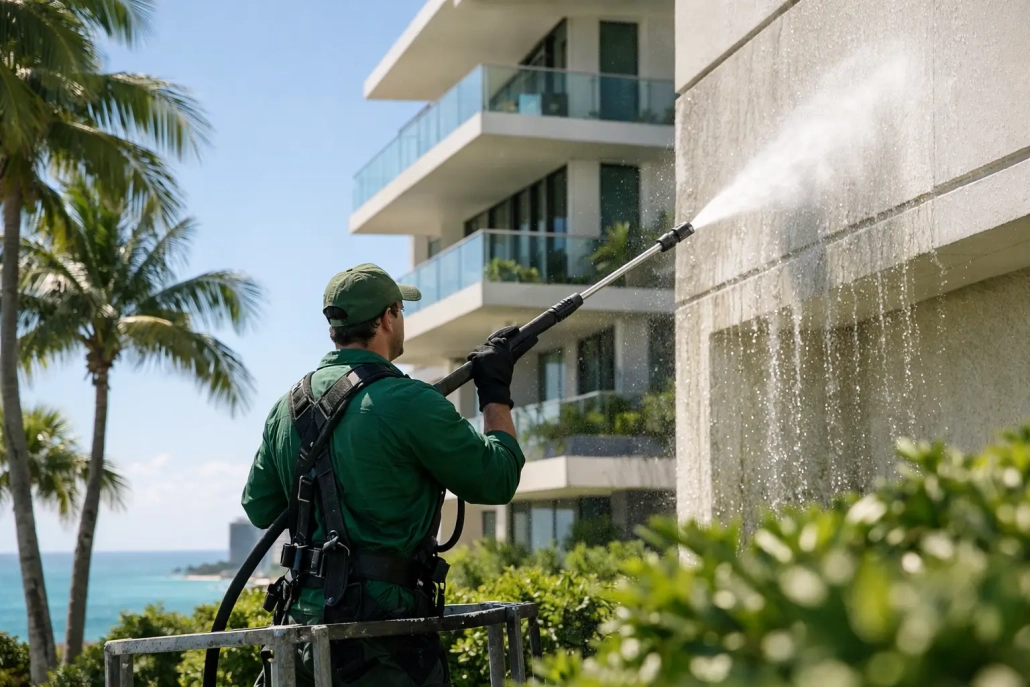
Salt air, humidity, wind-driven rain, and year-round sun can make a clean South Florida building look weathered faster than owners expect. Eco friendly building washing gives property managers, HOA boards, and homeowners a practical way to remove organic growth and surface grime without relying on harsh methods that can damage finishes, landscaping, or daily operations.
For a multi-story condominium, office building, hotel, or large residence, the challenge is not simply getting the exterior clean. It is reaching every elevation safely, treating each surface correctly, and keeping residents, customers, and neighbors comfortable while the work is underway. The best approach balances visible results with responsible chemistry, controlled water use, and low-pressure application.
What Eco Friendly Building Washing Really Means
Eco-friendly exterior cleaning is not just a label for using less water. It means selecting cleaning products and methods based on the building material, the type of buildup, and the surrounding property. A solution that works well on a concrete walkway may not be appropriate for painted stucco, glass, metal panels, tile roofing, or landscaping below.
In South Florida, exterior buildup commonly includes algae, mildew, mold, salt residue, pollen, airborne pollutants, and dark streaks caused by moisture. These contaminants can make a property look neglected, but aggressive pressure washing is not automatically the answer. Too much pressure can scar soft stucco, push water behind siding or window seals, strip paint, disturb caulking, and leave uneven results.
A lower-pressure wash uses properly diluted cleaning solutions to break down organic growth before a controlled rinse removes it. This approach lets the cleaning agent do the hard work rather than blasting the surface. When handled by trained professionals, it is effective on many exterior materials while reducing unnecessary stress on the building.
Why Low Pressure Matters for Exterior Surfaces
Pressure has a place in professional cleaning, particularly for durable concrete, pavers, and certain hardscape areas. But a building facade is rarely one uniform surface. Window frames, sealants, vents, screens, balconies, decorative finishes, and painted surfaces all require a more measured process.
Low-pressure washing is especially valuable for stucco, a common finish across Palm Beach County. Stucco can hold moisture and collect algae in its texture. A high-powered stream may remove visible staining in the moment while creating etching, chips, or water intrusion concerns that cost far more to repair later.
The same principle applies to roofs, painted trim, exterior wood, and aging surfaces. A professional cleaning plan should begin with an inspection, not a one-setting-fits-all machine. The technician should identify the surface condition, note delicate areas, choose the right solution concentration, and determine where controlled pressure is appropriate.
Drone Cleaning Changes the Access Problem
Traditional high-rise cleaning often requires lifts, scaffolding, rope access, or a large ground crew. Those options can be necessary for repairs and hands-on work, but they can also create long work zones, parking restrictions, noise, and added safety exposure for routine exterior washing.
Drone-powered cleaning offers a different option for suitable buildings. A trained operator can guide a specialized cleaning drone along upper stories and difficult-to-reach elevations, applying a low-pressure wash with consistent coverage. The process helps eliminate the need for scaffolding or lifts in many exterior cleaning situations.
For condominium boards and commercial property managers, that can mean fewer disruptions around entrances, parking areas, walkways, and resident routines. It also reduces the need for workers to spend extended periods at height. No method is right for every property, however. Buildings with complicated architecture, heavy deterioration, inaccessible water connections, or repair needs may require a combined approach. A site assessment helps determine whether drone cleaning is the safest and most efficient fit.
The Cleaners Drones uses aerial technology alongside established exterior cleaning practices, so the plan can account for both access and surface protection rather than treating the drone as a novelty.
Protecting Landscaping, People, and Waterways
Eco friendly building washing should include careful preparation before a single wall is cleaned. South Florida properties often have mature palms, flowering shrubs, turf, pool decks, and drainage areas close to the building. Those details matter.
Professionals protect nearby vegetation by pre-wetting it, applying cleaning products in controlled amounts, monitoring overspray, and rinsing thoroughly after the job. They should also manage runoff thoughtfully, especially near storm drains, waterways, pools, and outdoor living spaces. Products need to be used according to manufacturer directions and local requirements, not mixed or applied casually.
Occupant safety deserves the same attention. A well-managed project includes clear work-zone controls, communication with residents or tenants, and attention to slippery surfaces during and after rinsing. On a busy retail or office site, the cleaning schedule may need to happen before opening hours or in phases that preserve safe customer access.
When Building Washing Delivers the Best Value
Waiting until exterior staining becomes severe can make cleaning more difficult and may shorten the life of coatings and finishes. Regular maintenance is generally easier on the property than a major corrective wash after years of buildup.
The right schedule depends on exposure. A building near the coast may need more frequent washing because of salt air. A shaded side of a condominium can develop algae faster than the sun-facing elevation. Properties near busy roads may collect more dust and exhaust residue, while buildings surrounded by trees may deal with pollen, leaves, and moisture-related staining.
For many South Florida properties, an annual exterior assessment is a sensible starting point. The assessment can identify early algae growth, clogged areas around gutters or drains, fading paint, and locations where water is repeatedly collecting. From there, a professional can recommend whether the property needs a full wash, targeted cleaning, or routine maintenance on selected elevations.
Questions to Ask Before Hiring a Building Washing Company
The lowest bid does not always reflect the safest process or the best long-term value. Before choosing a provider, ask how they plan to clean your specific exterior material and whether they use high pressure, low pressure, or a combination of both. Ask what steps they take to protect landscaping, windows, outdoor furniture, vehicles, and pedestrian areas.
For multi-story properties, ask how the company will access upper elevations and what disruption the plan creates. If drone cleaning is proposed, confirm that the operator has experience with exterior washing, not simply drone photography. You also want clear communication about project timing, any access requirements, and what results are realistic for aged stains, oxidation, or permanent surface discoloration.
A capable provider will answer directly. They will explain the process in plain language, point out limitations before work begins, and avoid promising that every stain can be erased without considering the condition of the material underneath.
A Cleaner Exterior Without a Bigger Headache
A well-kept exterior supports property value, resident confidence, tenant experience, and curb appeal. Just as important, the cleaning process should not create avoidable risks for the surfaces you own or the people who use the property every day.
Choose a team that treats exterior washing as a material-specific maintenance service, not a race to use the most pressure. With the right low-pressure method, responsible product handling, and safer access for upper stories, your building can look noticeably cleaner while staying ready for the next stretch of South Florida weather.


Leave a Reply
Want to join the discussion?Feel free to contribute!