Carpet Cleaning That Works in South Florida
A carpet can look acceptable from across the room while holding weeks of tracked-in sand, pet hair, food residue, and moisture near the backing. In Palm Beach County, that buildup happens quickly. Professional carpet cleaning goes beyond brightening the surface – it removes the soil that makes carpet fibers look flat, feel rough, and hold onto odors.
For homeowners, condominium residents, property managers, and business owners, the right approach depends on the carpet, the problem, and how quickly the space needs to be back in use. A rushed cleaning method can leave residue behind or overwet the carpet. A material-specific process delivers the visible difference people expect while protecting the flooring underneath.
Why South Florida Carpets Get Dirty Faster
South Florida carpets work hard. Sand and fine grit come in on shoes, through sliding doors, and from entryways after a rainy afternoon. Those tiny particles act like sandpaper underfoot, gradually dulling fibers and wearing down high-traffic paths in hallways, living rooms, offices, and common areas.
Humidity adds another concern. When spills, pet accidents, or heavy cleaning leave too much moisture in the carpet, drying takes longer. That can lead to musty odors and create conditions where microbial growth is more likely. Fast, controlled drying is not an extra detail. It is part of a proper cleaning process in this climate.
Homes with children and pets usually need more frequent attention, especially around sofas, bedrooms, dining areas, and doorways. Commercial properties and multifamily buildings face a different version of the same issue: constant foot traffic, beverage spills, elevator-area soil, and the pressure to keep shared spaces presentable without disrupting residents or customers.
What Professional Carpet Cleaning Actually Removes
Vacuuming matters, but it only handles a portion of dry debris near the surface. Over time, carpet holds onto fine soil, oils from skin and shoes, pollen, dander, and sticky residue from spills. Some spots become darker because the fibers have been repeatedly compressed and soiled, not because one dramatic stain occurred.
A professional technician begins by identifying the fiber type, pile, age, and condition of the carpet. Synthetic carpet, wool, area rugs, and delicate blends do not all respond to the same products or water temperature. The stain itself also matters. Coffee, red wine, grease, pet urine, ink, and makeup each require a different treatment strategy.
The goal is not to use the strongest chemical possible. It is to use the right solution, enough agitation to loosen soil, and thorough extraction to remove contaminants and cleaning residue. When residue is left behind, carpet can resoil faster. That is why a carpet that looks good on cleaning day can look dull again a few weeks later after an incomplete job.
The Carpet Cleaning Process That Protects Your Floors
A dependable service should feel organized from the first walkthrough to the final inspection. Before cleaning begins, furniture placement, traffic patterns, visible stains, pet concerns, and drying needs should be discussed. This helps set realistic expectations, particularly with older stains or heavily worn carpet.
Inspection and Pre-Vacuuming
A close inspection identifies permanent discoloration, loose seams, damaged backing, bleach spots, and heavily worn lanes. These conditions cannot always be reversed with cleaning, but they should be recognized before work begins.
Pre-vacuuming removes loose dry soil that can otherwise turn into mud during wet extraction. It is an easy step to skip, but it makes a meaningful difference, particularly in homes with pets and in commercial entry areas.
Targeted Spot Treatment and Preconditioning
Stains are treated based on their source and the carpet material. A general-purpose cleaner may not remove an oily food stain, and an aggressive stain remover can damage certain fibers or alter color. Professional spot treatment is controlled, tested where appropriate, and followed by proper rinsing.
Preconditioning helps loosen embedded soil before extraction. High-traffic areas may receive additional attention because they usually contain a combination of dry grit, body oils, and residues from previous spot-cleaning products.
Deep Extraction and Controlled Drying
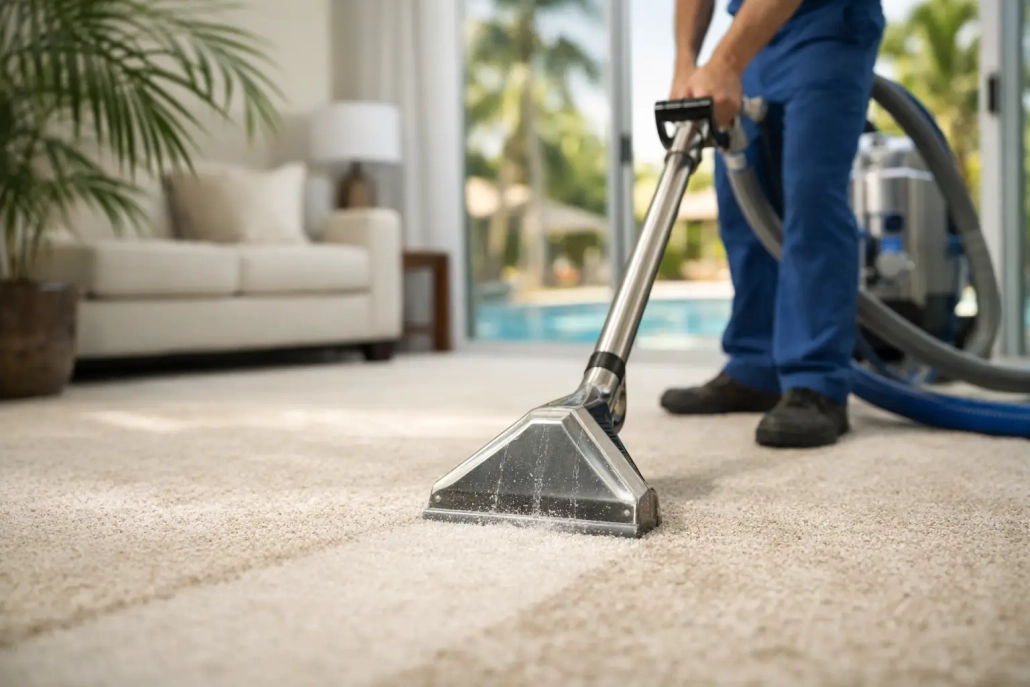
Hot water extraction is often the best choice for many installed carpets because it flushes soil from deeper in the pile while removing the cleaning solution. The process should use enough extraction power to recover moisture efficiently, not leave the carpet saturated.
Some carpets or situations may call for low-moisture cleaning instead. This can be a practical option for offices, occupied units, or spaces that need a shorter turnaround. The trade-off is that low-moisture methods are not always the best answer for deeply contaminated carpet, heavy pet issues, or extensive residue. The right method depends on the carpet’s condition, not a one-size-fits-all sales pitch.
Air movement, ventilation, and humidity levels affect drying time. Most carpets should be damp rather than soaked after service. Keeping the air conditioning running, using ceiling fans, and limiting foot traffic until the carpet is dry can help preserve the result.
When a Stain Is Still Worth Treating
Older stains can be frustrating, but age alone does not mean they are permanent. Some stains reappear because residue deep in the backing wicks upward as the carpet dries. Others have set into the dye sites of the fiber or have altered the carpet color. A professional inspection can tell the difference.
Pet urine deserves prompt attention because the visible spot is not always the full affected area. Odor-causing residue can move beyond the surface and into the backing or padding. Surface shampooing may temporarily mask the odor without addressing the source. Effective treatment may require locating affected areas, using specialized odor-control products, and allowing proper dwell time before extraction.
There are limits. Bleach damage, burned fibers, worn traffic lanes, and permanent dye loss are repair or replacement concerns rather than cleaning concerns. A trustworthy provider explains that clearly instead of promising impossible results.
How Often Should You Schedule Carpet Cleaning?
For many households, professional cleaning every 12 to 18 months is a sensible baseline. Homes with pets, young children, allergies, or frequent entertaining may benefit from service every 6 to 12 months. If the carpet looks gray along walking paths, has a noticeable odor, or feels sticky or matted, waiting for the annual calendar reminder is probably not necessary.
For rental properties, condos, offices, and common areas, frequency should follow traffic rather than a fixed schedule. A lightly used executive office may need periodic maintenance, while a busy lobby or unit turnover may require more frequent cleaning. Regular maintenance is usually easier on the carpet and more cost-effective than trying to restore it after years of buildup.
What to Do Before and After Carpet Cleaning
A little preparation helps the appointment move efficiently. Clear small items, fragile décor, pet bowls, and cords from the areas being cleaned. Point out stains, odors, and any spots that have been treated with store-bought products. That information helps the technician choose the appropriate method.
Afterward, avoid placing furniture back on damp carpet unless protective tabs or blocks are used. Keep pets and children off the area until it is dry, and wait before applying any additional spot products. If a spot returns during the drying process, take note of when and where it appears. That detail can help determine whether wicking or another issue is involved.
Choosing a Carpet Cleaning Company With Confidence
The lowest quote is not always the lowest overall cost. Ask what cleaning method will be used, whether spot treatment is included, how drying will be managed, and whether the company has experience with your carpet type. Clear answers are a good sign. So is a provider that explains limitations before starting work.
The Cleaners Drones brings the same detail-focused approach used across South Florida properties to interior cleaning needs, from family homes to managed commercial spaces. The priority is simple: clean carpet thoroughly, treat the material correctly, and leave the space ready to enjoy again.
A clean carpet changes more than the color of a room. It makes the space feel cared for, more comfortable underfoot, and ready for the people who live or work there every day.


Leave a Reply
Want to join the discussion?Feel free to contribute!