How to Remove Pet Urine From Carpet Safely
A pet accident can turn into a bigger carpet problem fast, especially in South Florida’s humidity. Knowing how to remove pet urine from carpet means treating more than the spot you can see. Urine can sink through carpet fibers, into the backing and padding, and leave behind odor-causing residue that comes back on warm or humid days.
The good news is that fresh accidents are usually manageable when handled promptly and correctly. Older stains and repeat accident areas require more care, and sometimes professional extraction, to avoid spreading the problem or damaging the carpet.
Why Pet Urine Odor Keeps Coming Back
Pet urine contains uric acid crystals. When a surface cleaner removes only the visible stain, those crystals may remain deep in the carpet. Moisture in the air can reactivate them, which is why a room may smell fine after cleaning but develop an odor again days later.
This is common in homes with wall-to-wall carpet, thick padding, or pets that repeatedly return to the same area. Cats can leave particularly persistent odors because their urine is more concentrated, while larger dogs can saturate a wider area of carpet and padding.
A proper cleanup has two goals: remove as much moisture as possible and use a cleaner that breaks down the odor source rather than covering it with fragrance.
How to Remove Pet Urine From Carpet When It Is Fresh
Speed makes a real difference. The less time urine has to travel into the backing and padding, the better the chance of a complete cleanup.
Blot, Do Not Scrub
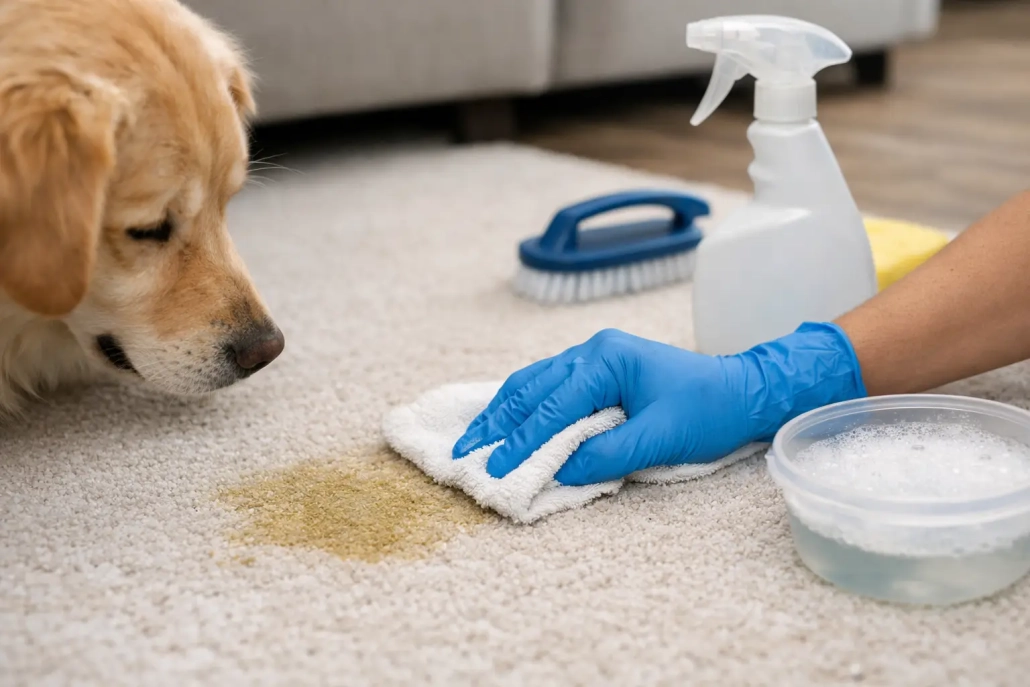
Start by placing clean white towels or paper towels over the wet area. Press down firmly to absorb moisture. Stand on the towels if needed, then replace them and repeat until they come away mostly dry.
Avoid rubbing the carpet. Scrubbing can push urine farther into the fibers, spread the affected area, and roughen the carpet pile. White towels are best because colored towels can transfer dye to damp carpet.
Apply an Enzymatic Pet Urine Cleaner
Use an enzymatic cleaner made specifically for pet urine. These products use enzymes and bacteria-based ingredients to break down the organic material that creates lingering odor. A general carpet spray or deodorizer may improve the smell temporarily, but it often will not treat the source.
Follow the product directions closely. In many cases, the cleaner needs to reach as deeply as the urine did. For a small fresh spot, that may mean lightly saturating the fibers. For a larger accident, it may require enough solution to reach the backing without soaking an unnecessarily wide section of carpet.
Let the cleaner dwell for the recommended time. Then blot excess moisture and allow the area to air-dry completely. Keep pets away from the spot while it dries so they do not track cleaner or return to the same location.
Check for Remaining Odor After the Carpet Dries
Do not judge the result while the carpet is still damp. Wet carpet can mask or alter odors. Once the area is fully dry, smell it at carpet level. If the odor remains, repeat the enzyme treatment rather than layering scented products over it.
For a fresh accident caught quickly, this process is often enough. If the stain has dried, the odor has returned several times, or the pet used the same area repeatedly, move to a more thorough approach.
Treating Dried or Older Pet Urine Stains
Older urine spots can be difficult to locate because the stain may no longer be obvious. A black light can help identify some dried urine residue in a darkened room, though it may also reveal other materials. Mark suspected areas with a small piece of painter’s tape before cleaning so you do not lose track of them.
Vacuum the carpet first to remove dry soil. Then apply an enzymatic cleaner according to its instructions, allowing enough contact time for the product to work below the surface. Avoid rushing this step. The cleaner needs time to break down residue, particularly in dense carpet fibers.
After treatment, blot the area and use fans to speed drying. Good airflow matters in Palm Beach County homes, where humidity can keep carpet damp longer and create conditions that hold onto odor. Keep air conditioning running as usual and avoid closing off the room until the carpet is dry.
If the stain remains after odor treatment, a carpet-safe stain remover may help, but test it first in an inconspicuous area. Some stain treatments can lighten carpet color, especially on wool, natural fibers, or darker carpets. Odor removal and stain removal are related, but they are not always solved by the same product.
What Not to Use on Pet Urine
A well-intended cleaning shortcut can make the problem harder to correct. Skip these common mistakes:
- Steam cleaning before odor treatment. High heat can set proteins and odors into carpet fibers, making them more difficult to remove.
- Ammonia-based cleaners. Urine naturally contains ammonia-like compounds, so the smell may encourage a pet to mark the same spot again.
- Heavy perfume sprays. Fragrance covers odor for a short time but does not remove the urine crystals underneath.
- Too much water. Overwetting can drive contamination deeper into padding and, in severe cases, contribute to mold or mildew concerns.
Vinegar and baking soda are often suggested for minor household cleanup, but results vary. Vinegar can help with some surface odor, while baking soda can absorb residual smell after the carpet is dry. Neither is as reliable as an enzymatic treatment for urine that has reached the backing or padding. Use them cautiously and do not mix cleaning products together.
When Professional Carpet Cleaning Is the Better Choice
There is a point where spot cleaning becomes guesswork. Professional service is often the better option when urine odor returns after multiple treatments, stains cover a large area, or accidents have occurred repeatedly in one location.
A trained carpet cleaning team can assess whether the contamination is limited to the carpet face fibers or has reached the backing, padding, or subfloor. Professional extraction removes deeply embedded moisture and soil without the excessive soaking that can come from rental machines or repeated home treatments.
The condition of the carpet also matters. Delicate wool, silk-blend rugs, antique area rugs, and carpets with specialty fibers need material-specific cleaning methods. Using the wrong chemistry can cause color loss, texture changes, or permanent damage. For rental properties, condos, and homes preparing for a move, professional odor treatment can also help restore the room before new residents or buyers arrive.
For persistent pet odor in Palm Beach County, The Cleaners Drones can help identify the right carpet-cleaning approach and deliver a deeper clean designed around your carpet type and the severity of the issue.
Preventing Repeat Accidents in the Same Spot
Once the carpet is clean, prevent the pet from returning to the area. Animals are highly scent-driven, and even a faint remaining odor can signal that the spot is an acceptable bathroom location.
Make sure the carpet is fully deodorized, then block access to the area for a few days if possible. For dogs, more frequent outdoor breaks and a consistent routine can help. For cats, keep litter boxes clean, easy to access, and appropriate for the number of cats in the home. A sudden change in bathroom behavior may also be worth discussing with a veterinarian, particularly if a previously house-trained pet starts having accidents.
Consider adding washable rugs or pet-friendly runners in high-risk areas such as entryways, bedrooms, and spaces near patio doors. They are easier to clean quickly and can protect the wall-to-wall carpet underneath.
A Cleaner Carpet Starts With the Right First Move
The best response to a pet accident is calm and prompt: blot thoroughly, treat the odor source with the right product, and let the carpet dry completely. When the smell persists or the accident has reached below the surface, getting expert help early can protect both your carpet and the comfort of your home.


Leave a Reply
Want to join the discussion?Feel free to contribute!