Area Rug Cleaning That Protects Your Investment
A beautiful area rug can make a Palm Beach County home feel finished, but it also collects more than most people realize. Sand tracked in from outside, pet hair, food spills, humidity-related odors, and fine dust settle deep below the surface. Effective area rug cleaning is not just about making colors look brighter. It is about removing the soil that wears fibers down, protecting the backing, and creating a cleaner space for the people who use it every day.
Vacuuming is essential, but it only handles part of the job. A rug may look acceptable from above while holding grit, oils, allergens, and residue in its foundation. The right cleaning method depends on the rug’s material, construction, dyes, age, and condition. That is why treating every rug like wall-to-wall carpet can lead to shrinkage, color bleeding, texture changes, or damage that cannot be reversed.
Why Area Rugs Need More Than Surface Cleaning
Every step across a rug presses soil farther into the pile. Sharp particles such as sand and grit act like tiny abrasives, gradually cutting at fibers as people walk across the surface. In South Florida, open doors, wet shoes, pets, and frequent indoor-outdoor activity can speed up that process.
Spills are another concern. A quick blot can prevent some stains from setting, but many common household products leave residue behind. Juice, coffee, wine, pet accidents, cooking oils, and store-bought spot treatments can attract more soil after the visible stain seems gone. Odors may also linger because the source has reached the rug backing or padding beneath it.
Professional care reaches beyond the top fibers to remove embedded contamination safely. The result is often a noticeable improvement in color, feel, and freshness, but the larger benefit is helping the rug last longer.
Area Rug Cleaning Starts With the Fiber
The most important question is not, “How dirty is this rug?” It is, “What is this rug made of?” A cleaning method that works well for one material may be risky for another.
Synthetic rugs made from nylon, polyester, olefin, or polypropylene are generally durable and common in high-traffic homes, condos, offices, and rental properties. Many respond well to professional hot-water extraction or low-moisture cleaning, depending on the backing and construction. They still need proper rinsing, because leftover detergent can make the rug feel stiff or cause it to attract dirt quickly.
Wool rugs require more caution. Wool is naturally resilient and can hold color beautifully, but overly aggressive agitation, high heat, alkaline products, and excessive moisture can damage it. A wool rug may also release dyes when wet, especially if it is handmade or richly colored. Controlled cleaning, color testing, and careful drying are part of protecting the investment.
Natural-fiber rugs, including jute, sisal, seagrass, and coir, are often the most sensitive. They can brown, shrink, develop water marks, or become misshapen if saturated. In many cases, a low-moisture approach and targeted spot treatment are safer than deep wet cleaning.
Silk, viscose, antique, hand-knotted, and heirloom rugs deserve specialized evaluation before any cleaning begins. These pieces can be delicate even when they appear sturdy. A professional should inspect the fibers, fringe, dye stability, backing, and previous damage before recommending a process.
When a Rug Should Be Cleaned Professionally
A routine professional cleaning is a smart choice when a rug has lost its brightness, feels matted, has a persistent odor, or leaves dirty-looking traffic paths around furniture. It is also the safer option after pet accidents, flooding, a large spill, or a failed do-it-yourself stain treatment.
Homeowners often call after trying a rental machine or a strong spot cleaner. The problem is not always the effort. It is that too much water, the wrong formula, or incomplete extraction can leave behind moisture and residue. In humid South Florida conditions, a rug that stays damp too long can develop an unpleasant smell and create concerns below the surface.
For homes with pets, children, allergy concerns, or frequent guests, cleaning may be needed more often. High-use rugs in entryways, living rooms, dining areas, and hallways usually need attention sooner than rugs in formal rooms. There is no single schedule that fits every property, but many households benefit from professional evaluation every 12 to 18 months, with faster service when spills or odors occur.
What to Do When a Spill Happens
Fast action can make a major difference, especially on a light-colored or natural-fiber rug. Start by blotting the spill with a clean white towel. Work from the outside edge toward the center so the stain does not spread. Avoid scrubbing, which can push the stain deeper and distort the pile.
Do not soak the rug, and do not use bleach, dish soap, or a mix of household products unless you know the fiber and dye can handle them. Some treatments remove color along with the stain. Others create a sticky residue that makes the area look dirty again within days.
If a pet accident has reached the backing, or if the rug has been exposed to a large amount of water, contact a cleaning professional promptly. Surface treatment alone may not remove the odor source. Moisture can also affect the floor underneath, particularly wood floors and laminate surfaces.
A Professional Process Protects the Rug and the Floor
Good results begin with inspection. A trained technician looks for fiber type, loose threads, fringe damage, wear patterns, stains, backing condition, and dye concerns. That assessment determines whether the rug can be cleaned in place or should receive specialized off-site treatment.
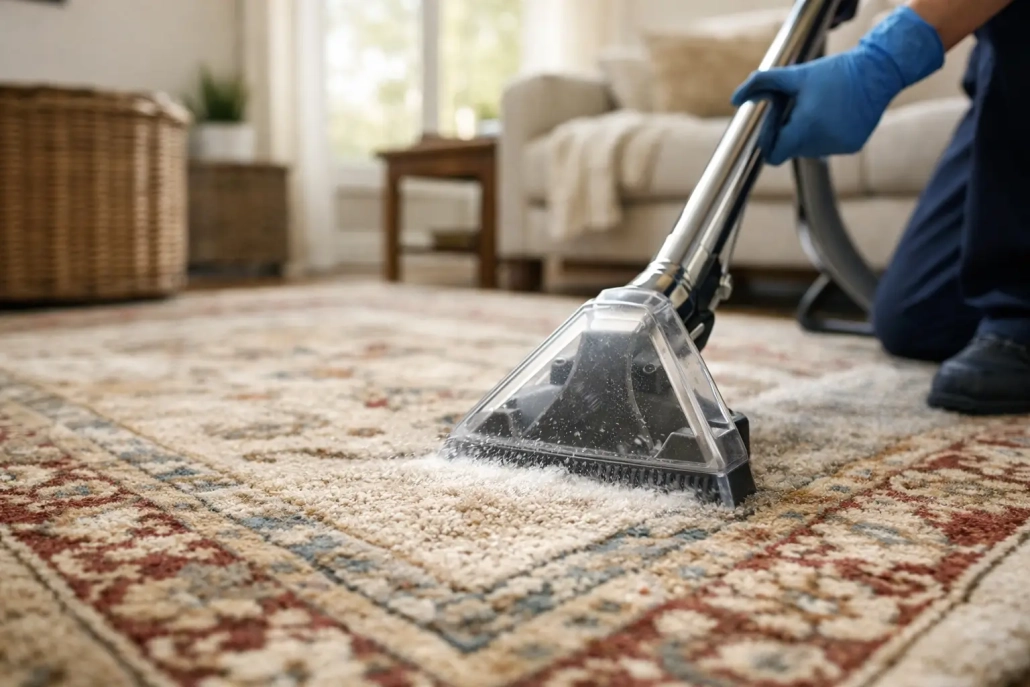
For rugs that are suitable for in-home service, the process may include thorough dry soil removal, pre-treatment of spots and traffic areas, controlled cleaning, extraction or low-moisture soil removal, grooming, and monitored drying. The goal is not to use the most water or the strongest chemical. The goal is to remove soil effectively while leaving the rug clean, stable, and properly dried.
The floor beneath the rug matters too. Moisture control is particularly important on hardwood, engineered wood, laminate, and delicate flooring. A careful cleaning team protects nearby furniture and flooring, communicates what the rug can realistically achieve, and identifies stains that may be permanent rather than promising an unrealistic result.
How to Keep Rugs Cleaner Between Appointments
Regular care extends the life of professional area rug cleaning. Vacuum both sides when the rug’s construction allows it, especially on durable synthetic rugs. This helps remove loose grit that settles through the pile. For delicate rugs, use gentle suction and avoid aggressive beater bars that can pull fibers or fringe.
Rotate rugs every few months if they receive uneven sunlight or foot traffic. Rotation helps colors fade more evenly and keeps one section from becoming permanently crushed. Use a quality rug pad to reduce slipping, cushion foot traffic, and limit wear from friction against the floor.
Entry rugs deserve extra attention because they catch the dirt before it reaches the rest of the home or business. If possible, use doormats at exterior doors and encourage guests, residents, or employees to wipe their feet before coming inside. Small habits like these reduce the amount of abrasive soil that reaches valuable rugs.
Choosing a Cleaning Team You Can Trust
Before scheduling service, ask how the company identifies rug fibers and handles delicate materials. The answer should be more specific than “we shampoo rugs.” A reputable cleaner will explain the recommended method, discuss stain expectations honestly, and confirm how they will protect your floors and furnishings.
Experience matters when a rug is expensive, sentimental, handmade, or located in a busy condo, office, or commercial common area. Property managers and HOA boards should also consider drying time, access needs, scheduling, and how the work will affect residents or daily operations.
The Cleaners Drones brings the same detail-focused approach used across South Florida properties to interior cleaning needs, including rugs that require careful material-specific service. The right process can bring back a rug’s appearance without creating unnecessary disruption or risk.
A rug does not need to look completely ruined before it deserves professional attention. Cleaning it before grit, stains, and odor become permanent is one of the simplest ways to protect the comfort, appearance, and value it brings to your space.


Leave a Reply
Want to join the discussion?Feel free to contribute!