How to Remove Mildew From Patio Concrete
That dark green or black film on a patio is more than an appearance problem. In Palm Beach County, warm temperatures, humidity, shade, and frequent rain can allow mildew, algae, and organic buildup to return quickly. Knowing how to remove mildew from patio concrete correctly helps restore the clean, bright surface you want without damaging the concrete, surrounding plants, or nearby finishes.
For a small, recent patch, a careful DIY cleaning can work well. For widespread buildup, slippery surfaces, pavers near a pool, or stains that keep returning, the method matters just as much as the cleaner. Concrete is durable, but it is not indestructible. Aggressive pressure, the wrong chemical concentration, or poor rinsing can leave behind etched areas, streaking, or runoff problems.
Why Patio Concrete Gets Mildew in South Florida
Mildew needs moisture and organic material to grow. Patio concrete provides a textured, porous surface where pollen, leaf debris, dirt, and moisture can settle. Areas beneath trees, beside privacy walls, behind furniture, and near sprinklers usually develop growth first because they dry more slowly.
What looks like mildew may also be algae, particularly when the stain is green and feels slick underfoot. Black spotting can be mildew, mold, embedded grime, or staining from leaves and irrigation. The distinction does not always change the cleaning approach, but it does explain why a patio can become hazardous before it looks severely dirty.
Regular sweeping and drainage make a real difference. If water repeatedly pools along an edge or downspout, cleaning alone will not be a long-term fix. The surface will likely grow dark again until the moisture source is addressed.
What You Need Before You Clean
Start on a dry day with enough time for the patio to be fully rinsed and air out. Move furniture, planters, rugs, toys, and grills off the concrete. Sweep away loose leaves and sand so the cleaning solution can reach the buildup instead of getting diluted by debris.
For most small residential areas, gather a stiff nylon push broom or deck brush, a bucket, a garden hose with a spray nozzle, gloves, eye protection, and a cleaner suitable for exterior concrete. A nylon brush is the safer choice. Wire brushes can leave metal fragments behind that later rust on the concrete.
Protect the edges of the work area before applying any solution. Wet nearby grass and plants with plain water, cover sensitive landscaping when practical, and keep pets and children away until the patio has been thoroughly rinsed and dried. Never mix cleaning chemicals. In particular, bleach should never be combined with ammonia, acids, or other household cleaners.
How to Remove Mildew From Patio Concrete Safely
Begin by testing your chosen cleaner in a small, less visible spot. This is especially useful on colored concrete, decorative coatings, stamped finishes, or concrete close to painted walls. Follow the product label rather than assuming that a stronger mix will give a better result.
Apply the solution evenly to a manageable section of patio. Let it sit only for the recommended dwell time. The goal is to loosen and kill surface growth, not allow chemical to dry into the concrete. In South Florida sun, solutions can dry faster than expected, so work in smaller sections or choose a cooler part of the day.
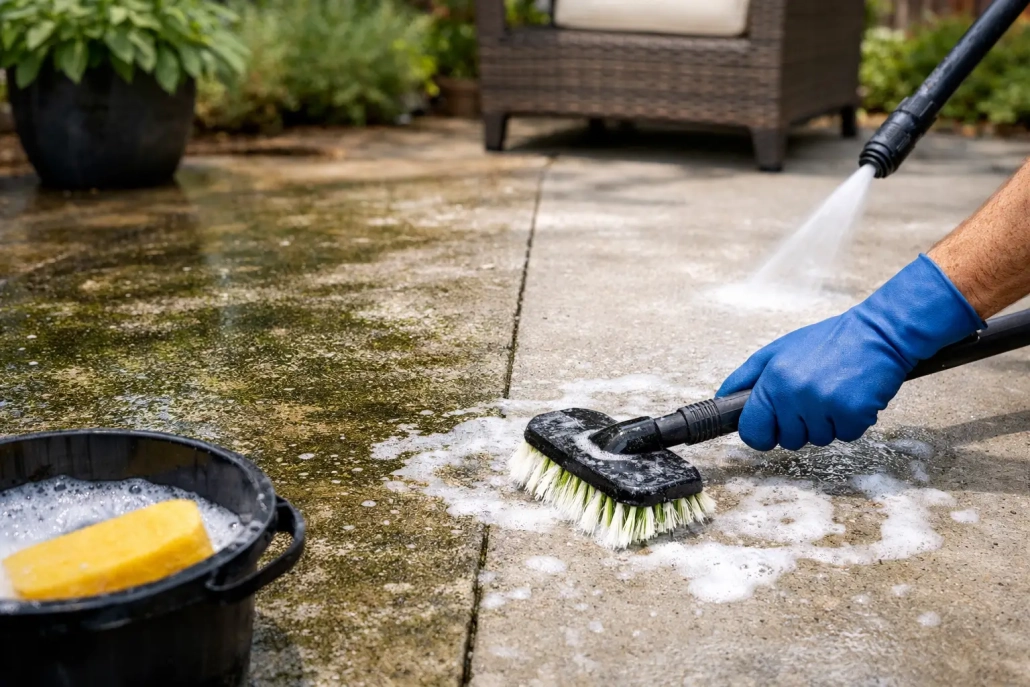
Scrub the treated area with a stiff nylon brush, paying extra attention to textured concrete, joints, corners, and shaded edges. You should see the dark film begin to lift. Then rinse thoroughly with clean water, directing runoff away from planting beds, doors, pool equipment, and storm drains where possible.
If staining remains after the first pass, repeat the process rather than immediately escalating to stronger chemicals or extreme water pressure. Some dark discoloration is embedded in the pores and needs a second controlled treatment. A patio with years of organic buildup may require professional surface cleaning to achieve an even result.
Choosing Between Bleach-Based and Oxygen-Based Cleaners
A properly diluted bleach-based exterior cleaner can be effective on mildew and algae, particularly on plain, unsealed concrete. The trade-off is that bleach can affect landscaping, fabrics, nearby painted surfaces, and metal fixtures if it is not carefully controlled and rinsed. It also requires attentive handling around pool decks and enclosed patio areas.
Oxygen-based cleaners are often a gentler option for homeowners concerned about plants and routine maintenance. They may need more dwell time and scrubbing, and they may not cut through heavy black staining as quickly. Enzyme or specialty exterior cleaners can also be useful, but performance depends on the type of growth and the condition of the concrete.
The best choice depends on the surface and the problem. A lightly affected patio may respond well to an oxygen-based product and brush work. A large, slippery patio with established growth needs a more deliberate process that balances cleaning strength with runoff control and surface protection.
Should You Use a Pressure Washer?
A pressure washer can make concrete look dramatically better, but it is not automatically the safest solution. Used correctly, it can rinse away loosened mildew and remove ground-in dirt efficiently. Used too close to the surface or at excessive pressure, it can etch concrete, expose aggregate, blow out weak joints, and create visible wand marks.
Pressure washing is also less effective when it is used as the only step. Water may remove the top layer of growth while leaving spores and organic residue in the concrete pores. That is why professional cleaning commonly pairs the right treatment with controlled rinsing rather than relying on force alone.
Avoid using a narrow, high-impact tip on patio concrete. Keep the spray moving in even passes, maintain a safe distance from the surface, and do not aim directly at expansion joints, cracks, door thresholds, screens, or pool coping. If the patio is stamped, painted, sealed, recently repaired, or already showing surface wear, a low-pressure cleaning approach may be the better option.
Common Mistakes That Make the Problem Worse
The fastest way to create a disappointing result is to treat all concrete the same. These mistakes often lead to uneven color, surface damage, or mildew that returns sooner than expected:
- Applying a cleaner to hot concrete and allowing it to dry before rinsing.
- Using a wire brush that can scratch the surface and leave rust-prone fragments.
- Overusing bleach without protecting or pre-wetting nearby landscaping.
- Blasting a pressure washer close to the concrete until lines or etched spots appear.
- Cleaning the patio while leaves, mulch, and standing water remain against its edges.
Another common issue is overlooking the source of recurring moisture. Trim back dense vegetation that blocks airflow, adjust sprinklers that spray the patio, clear gutters and downspouts, and avoid leaving wet outdoor rugs in place for long periods. These small changes help a freshly cleaned surface stay clean longer.
When Professional Patio Cleaning Makes Sense
Professional service is worth considering when the affected area is large, the patio has become slippery, stains remain after careful cleaning, or the concrete is part of a broader exterior maintenance issue. This is especially true for condo common areas, HOA walkways, restaurant patios, pool surrounds, and commercial entryways where appearance and safe footing both matter.
A qualified cleaning team can assess whether the surface needs pretreatment, low-pressure washing, controlled pressure cleaning, stain treatment, or a combination of methods. The goal is not simply to make one spot lighter. It is to clean the patio evenly while protecting landscaping, drainage areas, walls, windows, and adjacent finishes.
For multi-story residences and commercial properties, exterior buildup is often connected to dirty walls, balconies, walkways, and hard-to-reach areas. The Cleaners Drones provides locally focused exterior cleaning solutions designed to reduce disruption while delivering visible results. Ground-level concrete requires its own material-specific approach, while drone-powered cleaning can help address upper exterior surfaces without the delays and access challenges of scaffolding or lifts.
Keep the Patio Cleaner Between Deep Cleanings
After mildew has been removed, sweep the patio regularly and rinse away pollen, leaves, and soil before they settle into the concrete. Check shaded spots after rainy weeks, because early growth is much easier to manage than a season of buildup. If furniture legs or planters create consistently dark patches, shift them occasionally to let those areas dry.
A clean patio should feel safe underfoot and look cared for without looking overworked. Start with a measured approach, protect the surfaces around it, and let the condition of the concrete guide the cleaning method. That attention now can keep a small patch of mildew from becoming a larger restoration project later.


Leave a Reply
Want to join the discussion?Feel free to contribute!