Does Steam Cleaning Shrink Upholstery? What to Know
A sofa can look dramatically better after a deep clean, but no homeowner wants that improvement to come with tighter cushions, puckered seams, or distorted fabric. So, does steam cleaning shrink upholstery? It can, but only under certain conditions. The real risk comes from using too much heat, too much moisture, or the wrong cleaning method for the fabric.
Professional upholstery cleaning is not a one-setting process. A qualified technician identifies the fiber type, checks the manufacturer’s cleaning code, tests a hidden area, and controls heat and drying time. That approach helps remove soil, odors, and stains while protecting the fit, feel, and appearance of the furniture.
Does Steam Cleaning Shrink Upholstery?
Natural fibers are the most likely to shrink when exposed to high heat or excessive water. Cotton, linen, rayon, silk, wool, and some blends can tighten, wrinkle, lose shape, or develop water marks if they are cleaned aggressively. Even a durable-looking couch may have a delicate face fabric, cotton backing, or glued components underneath the upholstery.
Synthetic materials such as polyester, olefin, acrylic, and many microfiber fabrics are generally more stable. Still, that does not mean they are safe for unlimited heat. Hot steam can affect certain finishes, cause pile distortion, set some stains, or loosen adhesives used in cushions and trim.
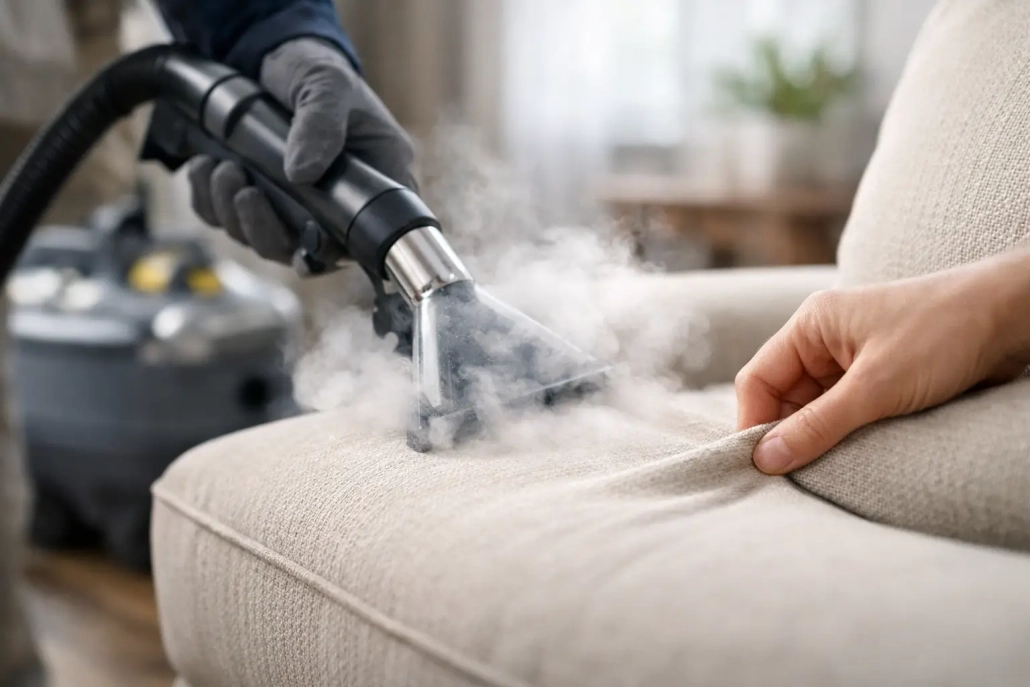
The word “steam cleaning” also creates confusion. Many people use it to describe any machine that sprays hot water and extracts it. True vapor steam is very hot and contains relatively little water. Hot-water extraction uses warm cleaning solution, agitation, and powerful recovery equipment. Both methods can be effective, but neither is appropriate for every piece of upholstery.
What Actually Causes Upholstery to Shrink
Shrinkage usually happens when moisture and heat change the structure of a natural fiber. Fabric that becomes saturated may contract as it dries, especially if it dries unevenly or too quickly under intense heat. That is why a do-it-yourself rental machine, household steamer, or handheld tool can create problems when used without fabric-specific guidance.
Several other factors can make the risk higher:
- Fabric construction: Loose weaves, unpreshrunk cotton, rayon blends, and delicate natural fibers require more controlled cleaning.
- Cushion design: Removable covers may shrink around the foam or become difficult to reinstall after washing.
- Hidden materials: Cotton or jute backing, foam, cardboard supports, and adhesives can react badly to overwetting.
- Previous wear: Older furniture, sun-faded fabric, weakened seams, and prior spot treatments may be less stable than they appear.
- Drying conditions: South Florida humidity can slow drying. When furniture stays damp too long, it may develop odor, browning, dye migration, or mildew concerns.
A common issue is not full shrinkage of the entire sofa. Instead, homeowners may see ripples, pulled seams, stiff spots, cushion cover distortion, or a skirt that no longer hangs evenly. These changes are often difficult, and sometimes impossible, to reverse.
Read the Upholstery Cleaning Code Before Using Heat
Most upholstered furniture has a care tag under a cushion, beneath the frame, or attached to the underside. The tag may list a cleaning code that provides a useful starting point.
W means water-based cleaning methods are typically permitted. S means use a solvent-based cleaner only. WS or SW means either water- or solvent-based methods may be suitable. X means vacuuming or professional cleaning only, with no water- or solvent-based spot cleaning recommended at home.
These codes matter, but they are not a complete cleaning plan. A W-coded sofa may still need low moisture, moderate temperature, and careful drying. A fabric’s colorfastness, texture, backing, and condition all affect the safest method.
If you cannot find the tag, do not assume the furniture is washable. This is especially true for custom pieces, vintage furniture, imported upholstery, velvet, silk, wool, and furniture with down-filled cushions.
Fabrics That Need Extra Caution
Rayon is one of the more challenging upholstery fibers because it can brown, shrink, and lose texture easily. Cotton and linen can also shrink or develop water rings. Wool can felt or change texture when exposed to heat and agitation. Silk should not be treated with ordinary steam-cleaning equipment.
Velvet deserves special attention as well. Whether it is cotton, polyester, or a blend, excessive heat or brushing can crush the pile and leave permanent shading. Leather is not upholstery fabric in the usual sense, but it also should not be steam-cleaned like a cloth sofa. It needs a leather-specific cleaning and conditioning process.
Microfiber often responds well to professional cleaning, but there are exceptions. Some microfiber is water-safe; other types require solvent-based products. Applying water to an S-coded microfiber couch can leave dark rings or stiff patches.
How Professionals Clean Upholstery Without Overwetting It
Safe upholstery cleaning starts with inspection, not a machine. A technician should check the care code, identify likely fibers, inspect stains, and look for fading, weakened seams, pet damage, ink, dye transfer, or previous cleaning residue. A small test in an inconspicuous area helps confirm that the color and texture remain stable.
From there, the method is matched to the piece. Some furniture benefits from low-moisture hot-water extraction with fast recovery. Others need dry foam, solvent cleaning, encapsulation, or detail hand-cleaning. The goal is not to apply the most heat or water. The goal is to remove embedded soil while leaving the fabric only lightly damp.
Drying is part of the service, not an afterthought. Professional extraction equipment removes more moisture than consumer machines, and air movement can be used to speed dry time. In Palm Beach County and throughout South Florida, managing indoor humidity is especially helpful. Air conditioning, ceiling fans, and proper airflow can help upholstery dry evenly and reduce the chance of lingering odors.
When Steam Cleaning Is the Wrong Choice
Steam cleaning is not the right answer when the upholstery code prohibits water, when the fabric is unstable, or when a stain requires specialized chemistry rather than heat. Protein stains, such as blood, dairy, or some pet accidents, can become more difficult to remove if high heat is applied first. Heat can also permanently set certain dyes and make some spills spread.
Furniture with severe urine contamination may need more than surface cleaning. Odor treatment has to reach the affected padding and underlying materials without soaking the entire piece. Similarly, smoke odor, mold concerns, water damage, and heavily stained vintage upholstery require a careful assessment before any cleaning begins.
A professional may recommend against cleaning when the fabric is too fragile or the risk of damage outweighs the likely improvement. That is not a lack of effort. It is an honest recommendation designed to protect an expensive piece of furniture.
Smart Steps Before You Clean a Sofa at Home
For light maintenance, vacuum upholstery regularly using a brush or upholstery attachment. This removes dry soil before it works deeper into the fabric. Address fresh spills by blotting gently with a clean white towel. Avoid rubbing, which can spread the stain and damage fibers.
Do not saturate a spot with store-bought cleaner, and do not use a garment steamer as a substitute for upholstery equipment. Test any product in a hidden area first, then allow that area to dry completely before treating a visible section. If a stain remains after one careful attempt, repeated applications often create more risk than benefit.
Protect the Furniture You Use Every Day
A professionally applied fabric protector can help upholstered furniture resist everyday spills and make future maintenance easier. It is particularly useful for family rooms, dining chairs, pet-friendly homes, rental properties, and high-use condo furnishings. Protection does not make fabric stain-proof, but it gives you more time to blot a spill before it penetrates the fibers.
For furniture that needs a deeper refresh, The Cleaners Drones uses material-appropriate methods designed to deliver visible results without treating every fabric the same way. The safest clean is the one tailored to your upholstery, its condition, and the kind of use it sees every day.
Before putting heat, water, or a rental machine on a favorite sofa, check the care label and consider the fabric behind the visible surface. A careful assessment can preserve both the clean look you want and the furniture you paid for.


Leave a Reply
Want to join the discussion?Feel free to contribute!