Exterior Access Savings Example for South Florida
A dirty exterior can create a costly decision long before cleaning begins: how will the crew safely reach it? This exterior access savings example shows why that question matters for South Florida condominiums, commercial buildings, HOAs, and multi-story homes. The biggest savings often come from changing the access method, not from cutting corners on the cleaning itself.
For a building with algae-stained walls, salt residue, mildew, and dark streaking, traditional access can mean lifts, scaffolding, sidewalk closures, extended setup, and work zones that affect residents or customers. Drone-powered exterior cleaning offers a different approach. It uses controlled, low-pressure application from the air, allowing trained operators to treat many elevated surfaces without placing a lift or scaffold against the building.
Why exterior access drives the real cost
A cleaning proposal is not just a price for labor and solution. For elevated surfaces, it also includes the cost and logistics of reaching the work safely. On a three-story or higher property, that can involve equipment rental, delivery, setup, repositioning, traffic or pedestrian control, and extra time for a crew to work around parked cars, landscaping, residents, and business operations.
Those access costs can rise quickly in Palm Beach County. A condominium near the coast may have limited staging space. A retail center may need entrances and parking lanes open throughout the day. An HOA may need to coordinate multiple buildings while minimizing disruption for residents. Even when a lift is the right choice, the property should understand that the equipment is often a significant part of the project cost.
Drone cleaning does not eliminate every onsite preparation step. Ground-level protection, water management, a site assessment, and safety controls still matter. But when aerial access is appropriate, it can remove the need for some of the most expensive and disruptive parts of the job.
Exterior access savings example: a four-story condo
Consider a four-story condominium with approximately 24,000 square feet of exterior wall surfaces that need soft washing. The building has visible mildew on shaded elevations, windblown debris near upper-level balconies, and staining that makes the property look neglected from the street. The manager wants the building cleaned before seasonal occupancy increases.
With a traditional lift-based approach, the contractor may need a boom lift or multiple lift positions to reach upper walls. The work may also require a ground crew to move hoses, protect landscaping, direct residents away from the work area, and relocate equipment as the cleaning progresses.
Here is an illustrative comparison, not a universal price quote:
- Lift rental, delivery, and pickup: $3,500
- Access setup, repositioning, and added labor: $2,400
- Ground protection and traffic or pedestrian management: $1,100
- Exterior cleaning labor and materials: $6,000
- Estimated traditional project total: $13,000
If drone-powered cleaning can safely access the relevant elevations, the lift rental and much of the repeated repositioning may no longer be necessary. The drone operation still requires experienced technicians, site controls, cleaning solution, water access, and careful treatment of the surface. A comparable drone-based project might look like this:
- Drone cleaning operation and aerial access: $3,800
- Ground protection and site management: $700
- Exterior cleaning labor and materials: $6,000
- Estimated drone-based project total: $10,500
In this exterior access savings example, the direct project savings are about $2,500, or roughly 19 percent. The more meaningful benefit may be the reduced interruption to the property. Fewer large machines on site can mean less pressure on parking, fewer blocked walkways, less noise from equipment movement, and a shorter visible work zone.
Actual pricing depends on building height, surface area, access conditions, staining severity, water availability, surface material, local requirements, and whether a lift is still needed for specific sections. The point is not that every building will save the same amount. It is that access should be evaluated as its own cost category before selecting a cleaning method.
Savings that do not always appear on the invoice
The equipment line item is easy to see. The operational savings are often less obvious until a property manager has dealt with a long exterior project.
Less disruption for residents and tenants
Scaffolding and lifts can remain onsite for days, depending on the size and layout of the property. They can restrict parking, create bottlenecks near entrances, and generate complaints when residents cannot use familiar paths. For an occupied condo or office property, a shorter and more contained cleaning process has real value.
Drone cleaning can be especially useful when the property needs a visible exterior refresh without turning the site into a construction zone. The building still receives professional attention, but the process is designed around keeping the property functional.
Lower exposure around elevated work
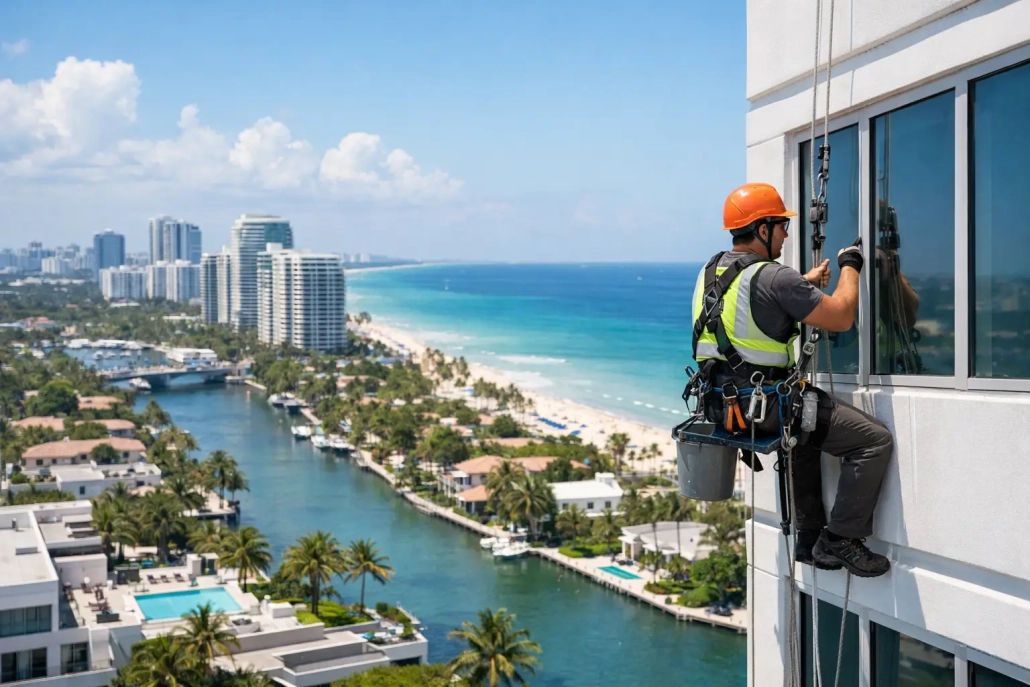
Traditional exterior cleaning at height requires careful safety planning, trained operators, and the right equipment. That work can be completed safely, but every added access step introduces another element to manage. A drone-based approach keeps technicians on the ground while the cleaning system reaches elevated surfaces.
That does not mean a drone should be used without a plan. Weather, wind, airspace considerations, nearby people, overhead lines, balconies, and the specific facade all need review. The right provider will assess the site instead of promising that one method fits every exterior.
Faster return to normal operations
A restaurant, medical office, retail center, or residential community may measure disruption in ways that do not show up as a cleaning expense. A blocked entrance can affect customer traffic. A reserved parking area can frustrate tenants. A prolonged work zone can require extra staff communication and coordination.
When access equipment is minimized, the property may return to normal use sooner. That is a practical advantage for managers who need maintenance completed without creating a second management project.
When drone cleaning is the better value
Drone cleaning is often a strong fit for broad exterior wall areas, multi-story facades, difficult-to-reach elevations, and properties where lifts or scaffolding would interfere with daily activity. It is particularly useful for low-pressure exterior washing where the goal is to remove organic growth, dirt, and environmental staining without damaging the finish.
South Florida conditions make regular exterior care more than a cosmetic task. Humidity, heavy rain, coastal air, and constant sun can leave surfaces with mold, mildew, algae, and grime. Waiting until staining becomes severe can make a building look poorly maintained and may require more intensive cleaning later.
Still, the best method depends on the surface and the condition. Fragile materials, localized damage, enclosed areas, narrow courtyards, or sections that need hands-on restoration may call for traditional ground crews, lift access, or a combination of methods. A clear inspection should identify what can be cleaned by drone and what requires another solution.
How to compare exterior cleaning proposals
When reviewing estimates, ask each provider what is included in access, protection, and site coordination. A lower base cleaning number can become less attractive if equipment rental, delivery, extended setup, or access-related labor are added later.
Ask how the provider plans to protect landscaping, windows, vehicles, outdoor furniture, and pedestrian areas. Confirm whether the cleaning method is appropriate for the exterior material, especially painted stucco, stone, tile, metal, and delicate finishes. It is also reasonable to ask how long equipment will remain onsite and what areas may be temporarily restricted.
The Cleaners Drones approaches exterior cleaning with the same goal property managers care about most: visible results without unnecessary disruption. For buildings where aerial access makes sense, low-pressure drone cleaning can reduce equipment needs while helping exterior surfaces look cleaner, brighter, and better maintained.
A clean exterior should not require a property to surrender its parking, entrances, and routine for longer than necessary. Before approving a lift or scaffold, ask for an access plan and compare the full cost of getting the job done. The right solution is the one that protects the building, the people around it, and the property budget at the same time.


Leave a Reply
Want to join the discussion?Feel free to contribute!