Highrise Drone Cleaning for South Florida Buildings
A clean building exterior does more than improve curb appeal. In South Florida, it helps protect the impression residents, tenants, visitors, and prospective buyers form before they ever step inside. Highrise drone cleaning gives property owners and managers a practical way to remove algae, mildew, salt residue, dirt, and other visible buildup without turning the property into a long-term construction zone.
For condominium boards, HOAs, commercial operators, and owners of multi-story homes, exterior cleaning has traditionally meant lifts, scaffolding, rope crews, blocked access points, and a schedule that can stretch far beyond the actual cleaning work. Drone-powered cleaning changes the access equation. It brings controlled, low-pressure cleaning to difficult exterior surfaces while reducing the equipment and disruption required on the ground.
Why South Florida Buildings Get Dirty So Quickly
Palm Beach County buildings face conditions that are tough on exterior surfaces. Humidity encourages organic growth. Frequent rain carries debris onto walls, windows, ledges, and architectural details. Coastal air can leave salt deposits, while intense sun makes discoloration and streaking more noticeable.
The result is often a combination of green algae, black mildew staining, airborne dirt, pollen, and runoff marks. On stucco, painted surfaces, concrete, metal, and other exterior materials, that buildup can make a well-maintained property look neglected long before there is a structural problem.
Waiting until staining becomes severe is rarely the best approach. Routine exterior care makes it easier to maintain a consistent appearance and can reduce the need for more aggressive cleaning later. The right timing depends on a building’s location, shade exposure, landscaping, proximity to the coast, and the type of surface being cleaned.
How Highrise Drone Cleaning Works
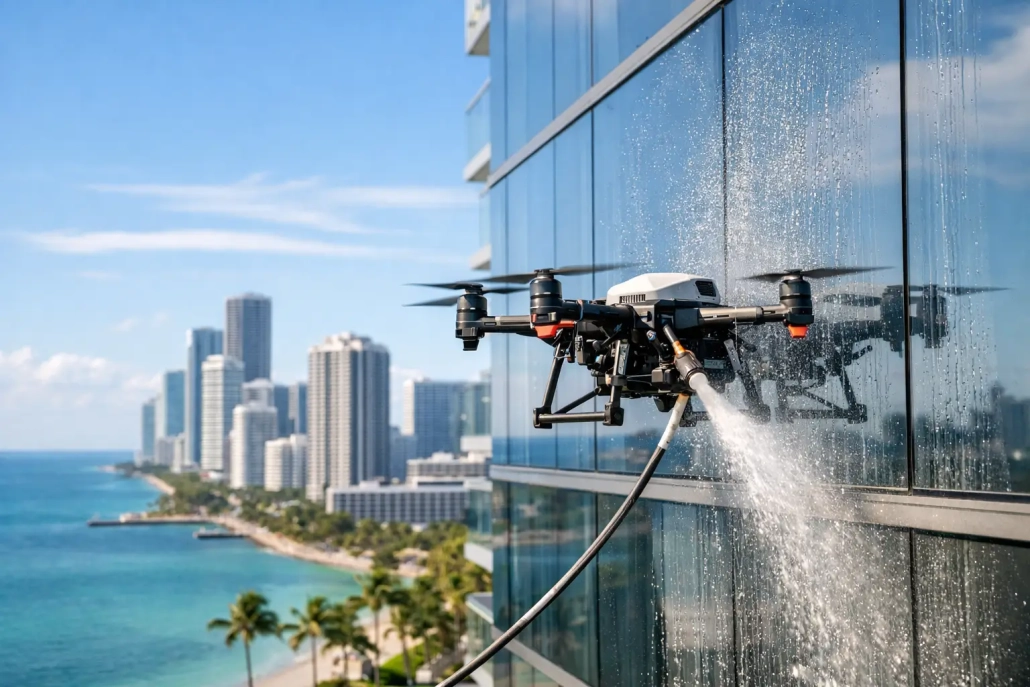
Drone cleaning is not simply a drone carrying a pressure washer. It is a professional exterior-cleaning method that combines aerial access with controlled application techniques. A trained operator positions the drone to treat high or difficult-to-reach sections of a structure, applying an appropriate cleaning solution and low-pressure rinse process for the surface and level of buildup.
This is particularly useful for facades, upper-level walls, exterior cladding, balconies, architectural features, roofs where appropriate, and other areas that can be costly or inconvenient to reach with conventional equipment. The purpose is not to blast away dirt with excessive force. It is to use the right cleaning chemistry, dwell time, water volume, and pressure for the job.
Low-pressure methods matter because many exterior finishes can be damaged by an overly aggressive wash. Paint can be stripped, stucco can be scarred, seals can be compromised, and water can be pushed where it does not belong. A careful service provider evaluates the material, condition, drainage, nearby landscaping, and access needs before work begins.
A Different Approach to Access
Traditional exterior cleaning may require a boom lift or scaffolding to reach upper stories. Those options still have a place on certain projects, especially when repair work, detailed inspection, or hands-on restoration is required. But for many cleaning-only applications, they create extra expense and operational complications.
Aerial cleaning can reduce the footprint of the job. Fewer large access systems can mean less impact on parking, sidewalks, entrances, landscaping, and daily activity around the building. For active residential communities and commercial properties, that is a meaningful advantage.
It also allows crews to address sections of the building that are awkward to reach from the ground. Instead of designing the entire project around equipment placement, the cleaning plan can focus more directly on the areas that need attention.
The Benefits for Condos, HOAs, and Commercial Properties
High-rise and multi-story properties have to balance appearance with safety, resident communication, budget, and business continuity. Drone-powered exterior cleaning is valuable because it helps address several of those concerns at once.
The most immediate benefit is reduced disruption. A property may be able to avoid or minimize the long periods of blocked parking, restricted walkways, noise, and visual clutter associated with scaffolding or large lifts. That can make a difference for communities with residents coming and going all day, retail properties that need clear access, and offices that want to preserve a professional environment.
Safety is another major consideration. Any work at height needs careful planning, trained personnel, and proper site control. By limiting the need for workers to spend extended time on scaffolds, lifts, or suspended platforms, drone cleaning can reduce certain access-related risks. It does not eliminate the need for a professional safety plan, but it gives property managers another option for handling elevated surfaces responsibly.
Then there is speed. Setup and repositioning often take less time when a project does not depend entirely on moving large access equipment around the property. Actual project duration still depends on building size, staining, weather, water access, surface type, and required preparation. Still, a more efficient access method can help a property return to normal faster.
Where Drone Cleaning Delivers the Best Results
Drone cleaning is especially effective where the primary challenge is access. Multi-story condominium exteriors, apartment buildings, hotels, office properties, parking structures, and tall residential facades are common examples. It can also be a strong fit for upper-level architectural surfaces that are visible from the street but difficult to reach safely from below.
That said, not every exterior problem has the same solution. Heavy mineral staining, failing paint, damaged sealant, rust, deteriorated stucco, or deep cracks may require specialized restoration or repair before cleaning. Cleaning can improve appearance, but it cannot correct material failure.
The same is true for delicate surfaces. A reputable provider should assess the material and use a method that fits it. An eco-friendly cleaning solution and low-pressure process may be appropriate for many surfaces, but the exact approach should never be one-size-fits-all. Good results come from matching the cleaning process to the property, not forcing every property into the same process.
What Property Managers Should Ask Before Scheduling
Before approving an exterior cleaning project, ask how the provider will protect people, vehicles, landscaping, windows, and surrounding surfaces. Confirm that the company has a clear plan for site setup, weather monitoring, water management, and communication with residents or tenants.
It is also worth asking what cleaning agents will be used and why. Eco-friendly does not mean ineffective, and effective does not need to mean unnecessarily harsh. The goal is a cleaning process that addresses organic growth and surface dirt while respecting the building materials and the property environment.
Request a scope that identifies the areas to be cleaned, any exclusions, and the expected results. Severe staining may improve dramatically but still leave permanent discoloration if it has penetrated or damaged the surface. Setting clear expectations before the work starts protects everyone involved.
Finally, look for direct experience with both cleaning and property care. A company that understands surface-specific cleaning, not just drone operation, is better positioned to make sound decisions about pressure, chemicals, rinse methods, and finish protection.
Planning a Cleaner Exterior Without the Headaches
A successful exterior cleaning project starts with a walkthrough or visual assessment. The provider should identify the most affected elevations, note sensitive landscaping and access routes, and determine whether a test area is useful. This is also the time to coordinate with building staff, residents, tenants, or security teams.
For larger properties, cleaning may be scheduled by elevation or zone to keep entrances and parking areas available. Weather matters in South Florida, so a realistic plan includes flexibility for wind, rain, and lightning conditions. A dependable company will prioritize safe operating conditions over rushing a job.
The Cleaners Drones brings this technology-led approach to South Florida properties while applying the same practical attention to detail used across professional cleaning and restoration services. The goal is visible improvement without making your property harder to live in, work from, or visit while the job is underway.
A building exterior is one of the first things people notice and one of the hardest parts of a property to maintain. When access is the obstacle, highrise drone cleaning offers a cleaner, safer path forward – one that keeps the focus where it belongs: on a property that looks cared for from the ground all the way up.


Leave a Reply
Want to join the discussion?Feel free to contribute!