Drone Facade Cleaning for South Florida Buildings
A clean exterior is one of the first things residents, customers, and prospective buyers notice. In South Florida, though, a building facade can collect algae, mildew, salt residue, pollen, and traffic grime faster than many owners expect. Drone facade cleaning gives property teams a practical way to address that buildup on elevated surfaces without turning the property into a long-term construction zone.
For condominium boards, property managers, and commercial operators, the issue is not simply appearance. Dirty exterior walls can make a well-managed property look neglected, affect curb appeal, and create avoidable complaints from residents or tenants. Traditional access methods can work, but they often bring lifts, scaffolding, sidewalk closures, staging requirements, and added liability. A drone-based approach changes the access equation while keeping the focus where it belongs: a visibly cleaner building and a controlled, professional process.
What Is Drone Facade Cleaning?
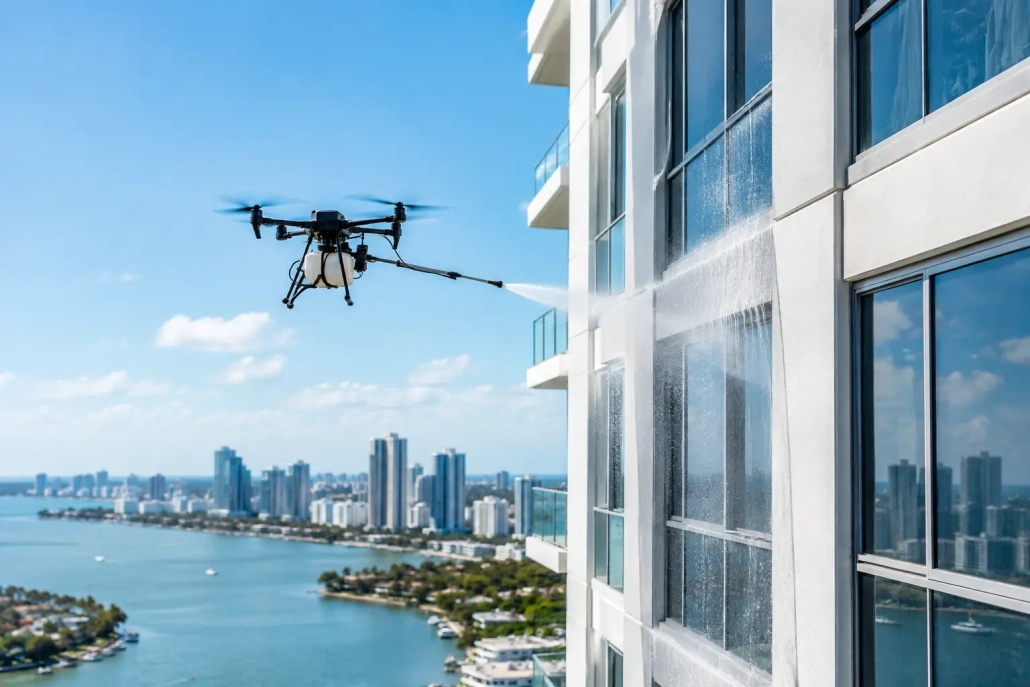
Drone facade cleaning uses an aerial cleaning system to apply a controlled, low-pressure cleaning solution to exterior building surfaces that are difficult or expensive to reach from the ground. Rather than placing technicians on suspended platforms or relying on large lifts, the operator guides the cleaning drone along the facade from a safe working position.
The goal is not to blast the building with high pressure. On many exterior materials, excessive pressure can force water behind joints, disturb aged caulking, damage paint, or create streaking. A properly planned service uses the appropriate solution, application method, dwell time, and rinse process for the material and the type of buildup present.
This makes drone cleaning especially useful for multi-story condominiums, office buildings, hotels, parking structures, mixed-use properties, and residences with exterior areas that are difficult to access. It can also be a strong option when a property needs regular exterior maintenance but wants to minimize disruption for residents, customers, and neighboring businesses.
Why South Florida Facades Get Dirty So Quickly
South Florida gives buildings plenty of sun, but it also creates ideal conditions for organic growth. Humidity, rain, heat, coastal air, landscaping runoff, and shaded areas all contribute to discoloration. North-facing walls, soffits, overhangs, balcony exteriors, and areas behind trees often show growth first because they stay damp longer.
Salt air can add another layer of maintenance for properties near the coast. It leaves residue on glass, painted surfaces, metal elements, and exterior finishes. Rain can then carry contaminants down the face of a building, creating uneven streaks that are especially noticeable on light-colored stucco or painted concrete.
Waiting until the facade looks heavily stained usually makes the job more difficult. A scheduled cleaning plan helps preserve a consistent appearance and lets property managers deal with emerging problem areas before they become a major visual issue. The ideal frequency depends on the building’s exposure, surrounding vegetation, material type, and the expectations of the community or brand.
The Real Benefit: Better Access With Less Disruption
The biggest value of drone facade cleaning is access. A lift may require a large staging area, parking restrictions, turf protection, traffic control, and repeated repositioning. Scaffolding can remain in place for days or weeks, affecting entrances, walkways, storefront visibility, and resident comfort.
A drone system can reduce much of that setup. It does not eliminate the need for careful site planning, but it can limit the equipment footprint and allow crews to work more efficiently on elevated exterior surfaces. For occupied properties, that can mean fewer blocked parking spaces, less noise from heavy access equipment, and shorter work zones.
Safety is another key consideration. Exterior cleaning at height always requires planning. Reducing the need to place workers on elevated platforms or near difficult rooflines can lower exposure to some common access-related risks. A professional operator still needs a clear work area, weather monitoring, trained personnel, and a plan for protecting people, vehicles, landscaping, and nearby building components.
Low Pressure Matters More Than Many Owners Realize
Property owners often use the terms pressure washing and exterior cleaning interchangeably. They are not always the same service. High pressure can be useful on durable surfaces such as certain concrete areas, but it is not automatically the right answer for a building facade.
Stucco, EIFS, painted surfaces, aging masonry, decorative trim, and areas around windows may need a gentler approach. Low-pressure cleaning relies on the right cleaning chemistry and adequate contact time to break down organic staining. The rinse is then used to carry away the loosened buildup without unnecessarily stressing the surface.
That material-specific approach is why a site evaluation matters. A facade with peeling paint, failed sealant, open cracks, loose stucco, oxidation, or existing water intrusion needs more than a quick wash. Cleaning may improve appearance, but it should not be used to hide a maintenance issue that requires repair.
What a Professional Assessment Should Cover
Before work begins, the cleaning team should identify the facade material, visible staining, drainage concerns, access limitations, and sensitive areas. That includes windows, doors, exterior lighting, electrical fixtures, HVAC equipment, landscaping, outdoor furniture, vehicles, and pedestrian routes.
For a larger condominium or commercial property, the assessment should also consider resident communication and operating hours. Cleaning an active retail frontage during peak business traffic requires a different schedule than cleaning a residential tower on a weekday morning. A good plan respects the property’s daily routine instead of forcing the property to work around the cleaning crew.
When Drone Cleaning Is the Right Fit
Drone cleaning is not a replacement for every exterior cleaning method. Ground-level walkways, pool decks, driveways, patios, and lower walls may be more efficiently cleaned with conventional equipment. Interior courtyards, heavily enclosed spaces, or areas with overhead obstructions may also call for another approach.
It is most valuable when vertical reach is the central challenge. If the work involves broad exterior walls several stories above ground, balcony-facing sections, upper-level architectural features, or areas where lift access is limited, aerial cleaning can provide a clear advantage.
Weather matters, too. High winds, lightning, heavy rain, and certain airspace restrictions can affect scheduling. In Palm Beach County, summer storms can arrive quickly, so reliable service means planning for safe weather windows rather than promising to work through conditions that could compromise results or safety.
What Property Managers Can Do Before Service Day
A little preparation helps the project move faster and protects the property. The cleaning provider should handle the technical work, but the property team can support the process by notifying residents or tenants, clearing designated work areas, and identifying any special concerns before the crew arrives.
For multifamily communities, clear communication is especially helpful. Residents should know when exterior cleaning is scheduled, which sections of the building are included, whether balconies need to be cleared, and where temporary access restrictions may apply. Commercial properties may need to coordinate deliveries, customer entrances, or parking changes around the work area.
It is also smart to document existing damage before any major exterior service. Photos of cracked stucco, loose fixtures, damaged screens, or worn sealant help distinguish pre-existing conditions from areas that need follow-up maintenance. A professional cleaning crew should point out visible concerns rather than ignore them.
Choosing a Provider for Drone Facade Cleaning
The technology is impressive, but the equipment alone does not guarantee a good result. Look for a provider that understands exterior materials, low-pressure application, jobsite safety, and occupied-property logistics. The operator should be able to explain how the work area will be managed, what cleaning method fits your facade, and what results are realistic for the condition of the building.
Ask how the team protects windows, landscaping, vehicles, and pedestrian areas. Ask whether the proposed service is designed for routine organic growth, deep restoration, or preparation for painting or repairs. These are different scopes of work, and they should not be treated as interchangeable.
For South Florida properties, local experience adds real value. A team familiar with humid conditions, coastal residue, stucco construction, HOA expectations, and rapid weather changes can plan more effectively from the start. The Cleaners Drones combines that local cleaning knowledge with aerial access technology for properties that need a safer, less disruptive way to care for hard-to-reach exteriors.
A building exterior does not need to wait for stains to become the first thing people notice. With the right method and a thoughtful maintenance schedule, the facade can reflect the same level of care that goes into the rest of the property.


Leave a Reply
Want to join the discussion?Feel free to contribute!