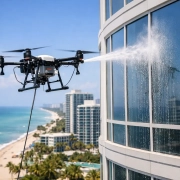
Drone Cleaning for Tall South Florida Buildings

A building can look neglected long before there is a structural problem. In Palm Beach County, salt air, humidity, windblown debris, mildew, and algae leave their mark on stucco, concrete, roofs, balconies, and exterior walls. Drone cleaning gives property owners and managers a practical way to address that buildup on hard-to-reach surfaces without turning the property into a long-term construction zone.

For a high-rise condominium, a multi-story office, or a large HOA community, the challenge is rarely deciding whether the exterior needs attention. The challenge is access. Traditional exterior cleaning may require lifts, scaffolding, rope-access crews, blocked parking areas, and days of resident or tenant disruption. A drone-powered approach changes the access plan while keeping the focus where it belongs: a cleaner property, safer work conditions, and visible results.

What Drone Cleaning Is Designed to Do

Drone cleaning uses specialized aerial equipment to apply a controlled, low-pressure cleaning solution to elevated exterior surfaces. Rather than forcing water at a surface with high pressure, the process is designed to treat organic growth and surface grime, then rinse it away carefully. That difference matters for materials such as painted stucco, exterior coatings, siding, and other finishes that can be damaged by an overly aggressive approach.

For South Florida properties, this method is especially useful where moisture and salt create recurring exterior buildup. Algae streaks on walls, mildew on upper elevations, and dull, dirty surfaces can make an otherwise well-managed property look uncared for. Regular exterior cleaning helps restore the color and appearance residents, guests, tenants, and prospective buyers notice first.

Drone cleaning is an access solution, not a one-size-fits-all substitute for every exterior service. Ground-level sidewalks, driveways, patios, and heavily soiled hardscape may still need conventional pressure washing. Delicate windows, loose materials, active leaks, and surfaces with existing damage require inspection and a material-specific plan. A professional assessment should determine the safest method before work begins.

Why Access Changes the Entire Cleaning Plan

On a low building, crews can often work from the ground with extension tools or standard equipment. Once the work reaches multiple stories, the cost and complexity increase quickly. Lifts require staging space. Scaffolding can affect entrances, parking, landscaping, and daily operations. Rope access has its place, but it requires specialized planning and can limit how quickly a large façade is completed.

With drone-powered exterior cleaning, the equipment reaches upper elevations from the air. That can reduce the need for bulky access equipment and help keep common areas more usable during the project. For condo boards and property managers, that means fewer questions from residents about blocked walkways, restricted parking, or how long equipment will remain onsite.

Safety is another major consideration. Exterior maintenance always involves risk when workers must reach elevated areas. Reducing the need for crews to work from scaffolding or suspended platforms can reduce exposure to those risks. The work still requires trained operators, proper site control, weather awareness, and a clear plan around people, vehicles, landscaping, and building features. Technology supports safer access, but professional judgment remains essential.

Low Pressure Is Not the Same as Low Results

Many property owners have seen what happens when high pressure is used where it does not belong. It can strip paint, drive water behind vulnerable areas, scar softer surfaces, or disturb damaged caulking. The goal is not simply to blast away dirt. It is to remove the buildup while respecting the material underneath.

A low-pressure cleaning approach relies on the appropriate solution, dwell time, and controlled rinsing. Results depend on the surface condition, the type of staining, and how long growth has been present. Heavily neglected areas may need more attention than surfaces maintained on a routine schedule. That is why a walkthrough and clear expectations matter before scheduling a large exterior project.

Which Properties Benefit Most From Drone Cleaning?

The strongest fit is any property where exterior surfaces are too high, too broad, or too difficult to reach efficiently with conventional equipment. In South Florida, that often includes mid-rise and high-rise condominiums, apartment buildings, hotels, office buildings, retail centers, warehouses, assisted living communities, and multi-story homes.

HOA boards can use aerial cleaning as part of a broader appearance and maintenance plan. Clean exterior walls and common areas support curb appeal, resident pride, and a better first impression for visitors. Commercial property operators benefit from a process that can help maintain a professional exterior without unnecessarily interfering with customers, deliveries, tenants, or normal business hours.

It can also be a smart option for properties with limited staging space. A crowded parking lot, landscaped perimeter, narrow access area, or active entrance can make lifts and scaffolding more difficult to manage. Every site is different, but reducing the footprint of the access equipment can simplify planning.

What Property Managers Should Ask Before Scheduling

A good exterior cleaning proposal should be based on more than building height. Ask how the contractor will evaluate the façade material, identify fragile areas, protect surrounding property, and manage the work zone. The answers should be direct and specific to your building.

You should also discuss the source of the staining. Green or black growth may be related to shade, irrigation overspray, roof runoff, or persistent humidity. Salt residue can be more common near the coast. Understanding the cause helps determine a realistic maintenance interval instead of waiting until discoloration becomes severe again.

For larger communities and commercial properties, communication is part of the service. Residents and tenants need practical information about where work will occur, whether parking or entrances are affected, and what precautions to take around the work area. A professional crew should coordinate around the property schedule whenever possible, especially at busy locations with deliveries, guests, or daily operations.

Maintenance Is Easier Than Recovery

Exterior buildup is easier to manage when it is addressed before it becomes deeply established. Routine cleaning can help prevent the streaked, uneven appearance that makes a building look older than it is. It also gives property teams a regular opportunity to notice loose seals, damaged finishes, drainage issues, or other conditions that may need attention from the appropriate trade.

The right timing depends on the property. A coastal building exposed to salt spray and heavy moisture may need service more often than an inland property with open sun and less vegetation. Buildings near trees, canals, golf courses, or irrigation systems may also see faster algae growth. There is no universal calendar, but a scheduled inspection makes it easier to plan ahead.

A Cleaner Exterior Without the Usual Disruption

Drone cleaning is valuable because it solves a practical problem: how to clean elevated exterior surfaces without relying on the access methods that can make a project expensive, slow, and disruptive. It combines modern aerial technology with the basics that still matter most: appropriate solutions, careful application, respect for the property, and a crew that understands the materials being cleaned.

For South Florida decision-makers, appearance is not a superficial concern. A clean building supports property value, tenant confidence, resident satisfaction, and the reputation of the people responsible for maintaining it. The Cleaners Drones helps property owners and managers evaluate whether drone-powered exterior cleaning is the right fit for their building, then build a plan around safety, access, and the result they want to see.

If upper-level grime, algae, or salt buildup is changing the look of your property, a site evaluation can turn a difficult access problem into a clear maintenance plan.
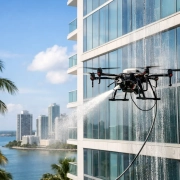
Soft Washing Contractor Ratings: What They Reveal

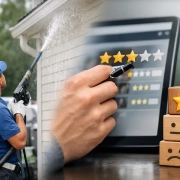
A black-streaked tile roof, green algae on stucco, or mildew around a condominium walkway can make any South Florida property look neglected fast. Soft washing contractor ratings can help you narrow the field, but the star average alone does not tell you whether a company understands your surface, protects your landscaping, shows up as promised, or can safely reach difficult exterior areas.

For homeowners, HOA boards, and property managers, a strong rating should be the start of the conversation, not the finish. The best reviews reveal what happens before, during, and after the cleaning crew arrives.

What Soft Washing Contractor Ratings Should Tell You

Soft washing uses low pressure and cleaning solutions designed to treat organic growth such as algae, mold, mildew, and lichen. It is often a better fit than high-pressure washing for delicate exterior materials, including many roofs, painted surfaces, siding, screens, pavers, and stucco. The method is not simply “pressure washing turned down.” Proper results depend on solution selection, dwell time, rinsing practices, surface knowledge, and job-site protection.

That is why ratings are most useful when reviewers describe the work itself. A five-star rating that says only “great service” is positive, but it offers limited guidance. A review explaining that the crew protected plants, removed algae without damaging the paint, communicated around resident access, and left the property clean is much more valuable.

Look for a consistent pattern across recent reviews. One unhappy customer does not automatically mean a contractor is unreliable, just as one glowing review does not prove long-term quality. Read enough feedback to see whether clients repeatedly mention punctuality, care, responsiveness, visible improvement, and professional follow-through.

Read Beyond the Overall Star Score

A high average matters, especially when it comes from a meaningful number of customers over time. Still, averages can hide details that affect your particular project. A contractor may earn excellent feedback for driveways but have little proof of experience with tile roofs, multi-story façades, or occupied commercial properties.

Start by checking whether the reviews are recent. South Florida exterior cleaning is highly seasonal, and a company’s team, equipment, scheduling capacity, and service standards can change. Recent feedback is more likely to reflect the experience you will receive now.

Then look for reviews from properties that resemble yours. A single-family homeowner may care most about roof appearance and landscaping. A condo board may need evidence that a contractor can coordinate with management, work around residents, control access areas, and keep disruption low. A commercial operator may place more weight on scheduling, safety procedures, and maintaining a professional appearance during business hours.

Specific language is a good sign. Comments about a restored roof color, clean soffits, careful handling of exterior fixtures, or clear arrival updates indicate that the reviewer noticed the details. Repeated comments about vague estimates, missed appointments, overspray, damaged plants, or work that did not last should prompt direct questions before you sign anything.

Pay Attention to How Problems Are Handled

No service company can prevent every issue. Weather changes, blocked access, fragile materials, and unexpected stains can affect exterior cleaning work. What separates a dependable contractor is how the company responds.

Read critical reviews with a practical eye. Does the complaint involve an isolated scheduling issue, or does it describe a repeated concern? Did the company respond respectfully and offer a solution? A calm, specific reply is generally more reassuring than an argument or a generic copied response.

You should also listen for patterns in how customers describe communication. For an HOA or commercial site, one unanswered call can become a resident complaint or a disrupted workday. Reliable updates about scheduling, rain delays, site preparation, and completion matter nearly as much as the cleaning itself.

Match Reviews to the Work You Need

Not all exterior surfaces should be cleaned the same way. Reviews may tell you a contractor produces dramatic results, but your estimate conversation should confirm how those results will be achieved on your building.

Ask what cleaning approach is recommended for your roof, stucco, painted trim, pavers, screen enclosure, or building exterior. A qualified contractor should be able to explain why soft washing is appropriate, when another approach may be safer, and what level of improvement is realistic. Old stains, oxidation, failing paint, rust, and permanent surface wear do not always disappear with cleaning alone.

For roof cleaning, ask how the crew will manage runoff and protect surrounding vegetation. For pavers, ask whether the service includes only cleaning or whether sealing and joint-sand work are separate. For multi-story work, ask how the contractor will access high areas without creating prolonged closures, lift traffic, scaffolding, or unnecessary risk.

This is where a rating from a similar property is especially helpful. A review from a high-rise manager describing safe, low-disruption exterior service carries more relevance for another high-rise than a review about a small patio. The Cleaners Drones uses drone-powered, low-pressure cleaning for difficult-to-reach exterior surfaces, helping many multi-story properties avoid the expense and disruption associated with traditional access equipment.

Questions Ratings Cannot Answer for You

Even detailed reviews cannot replace a clear written estimate. Before choosing a soft washing contractor, confirm the scope of work, the surfaces included, the preparation expected from you, and how the company handles weather delays. Make sure you understand whether the quote covers only the visibly stained areas or the full roof, façade, walkway, or enclosure.

Ask about insurance and the crew’s experience with your property type. This is especially relevant for roofs, elevated work, shared communities, and commercial sites where an accident or damaged surface can become costly quickly. A professional contractor should be comfortable discussing safety practices, access plans, and protection for landscaping, furniture, vehicles, windows, and nearby residents.

It also helps to ask about the expected lifespan of the result. In Palm Beach County, heat, humidity, salt air, shade, and frequent rain encourage organic growth. A fresh cleaning can make a major visual difference, but no honest company should promise that algae will never return. Maintenance timing depends on the surface, nearby trees, drainage, sun exposure, and the property’s location.

Signs a Rating Profile Deserves More Trust

Trustworthy reviews usually look natural. They include different property types, different levels of detail, and comments written over a period of months or years. They may mention a range of services, from roof and exterior cleaning to tile, upholstery, or restoration work, because customers often return to companies that have earned their confidence.

Be cautious if every review sounds nearly identical, appears within a very short window, or uses broad claims without any details. That does not prove the feedback is unreliable, but it is a reason to dig deeper. Compare the review profile with the company’s estimate process. A contractor who listens, inspects the surfaces, explains the method, and provides straightforward answers is giving you better evidence than a star score ever could.

For larger properties, request a site-specific plan rather than relying on a general online promise. The right plan should account for access, occupied areas, drainage, landscape protection, staging, and a schedule that respects residents, tenants, customers, and staff.

Use Ratings to Set Better Expectations

The smartest use of soft washing contractor ratings is to create a short list of companies worth speaking with. Choose the contractor that demonstrates the right experience for your surfaces and property scale, not simply the highest number on the screen.

A clean exterior protects curb appeal, supports resident and customer confidence, and helps property issues become visible before they get worse. When ratings point to careful work and your estimate confirms a safe, surface-appropriate plan, you can schedule cleaning with a clearer idea of what good service should look like.

Exterior Drone Cleaning for South Florida Buildings

Salt air does not wait for a convenient maintenance window. In Palm Beach County, exterior walls, windows, balconies, roofs, and architectural details can collect salt residue, algae, mildew, dust, and windblown debris faster than many owners expect. Exterior drone cleaning gives property decision-makers a practical way to remove that buildup on hard-to-reach surfaces without turning the property into a weeks-long construction zone.

For condominium boards, property managers, commercial operators, and homeowners with multi-story residences, access is often the real challenge. The dirt may be visible, but reaching it safely can require lifts, scaffolding, lane closures, restricted parking, and crews working around residents or customers. Drone-powered cleaning changes the access plan while keeping the focus where it belongs: a cleaner, better-maintained property.

What Exterior Drone Cleaning Does Differently

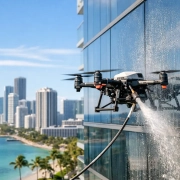
A cleaning drone is not simply a drone with a camera. It is purpose-built equipment operated by trained professionals to apply water and cleaning solutions to exterior surfaces from the air. The system can reach upper stories, façades, rooflines, and other elevated areas that are costly or difficult to service with traditional equipment.

The method is especially useful when a building needs regular exterior maintenance but does not need the heavy force of conventional pressure washing. Low-pressure cleaning, paired with the right eco-friendly solution, can break down organic growth and surface grime while treating the building material with appropriate care. That matters for painted stucco, coated surfaces, delicate trim, and exterior areas where excessive pressure can cause damage.

The visible benefit is straightforward: a cleaner exterior that improves curb appeal. The operational benefit is often even more valuable. With no scaffolding or lifts required for many applications, a property can avoid much of the setup, noise, blocked access, and extended disruption associated with high-access cleaning.

Why South Florida Exteriors Need Consistent Care

South Florida weather is hard on exterior surfaces. Humidity supports algae and mildew growth. Afternoon rain leaves moisture behind. Coastal salt can cling to surfaces, while storms and landscaping add dirt, pollen, and organic debris. On shaded sides of a building, staining can become noticeable long before a full property inspection is scheduled.

Waiting until discoloration becomes severe can make cleaning more difficult and can leave residents, tenants, guests, or prospective buyers with the impression that the property is not being cared for. For HOAs and commercial properties, exterior appearance is part of the day-to-day experience of living, working, or visiting there.

A recurring cleaning schedule is usually more manageable than a major catch-up project. The right timing depends on the property’s exposure, materials, landscaping, height, and proximity to the coast. A beachfront condominium may need a different maintenance rhythm than an inland office building or a two-story home surrounded by mature trees.

Where Drone Cleaning Makes the Most Sense

Exterior drone cleaning is a strong fit for buildings with elevated surfaces that are difficult to access from the ground. High-rise and mid-rise condominiums are obvious examples, but they are not the only ones. Multi-story residences, hotels, office buildings, retail centers, apartment communities, warehouses, and clubhouse facilities can all benefit when upper-level cleaning is part of the scope.

It is particularly useful for vertical walls and exterior features where a lift cannot easily be positioned or where lift access would interfere with parking, traffic flow, pedestrian areas, landscaping, or daily operations. A property manager may be able to schedule a drone cleaning with far fewer access complications than a conventional elevated work plan.

That does not mean a drone is the best tool for every cleaning job. Ground-level sidewalks, driveways, pool decks, and heavily soiled concrete may require conventional pressure washing. Deeply embedded stains, damaged paint, loose stucco, failing sealant, or an active leak are not cleaning issues alone and may need repair before washing. A professional assessment should match the method to the surface rather than forcing every area into one approach.

Safety and Reduced Disruption for Occupied Properties

For occupied condominiums and active commercial sites, exterior cleaning has to work around real life. Residents need access to their homes. Customers need to enter the business. Delivery drivers, maintenance teams, and emergency services need clear routes. Scaffolding and lifts can be necessary in certain situations, but they can also introduce scheduling, safety, and logistics concerns.

Drone cleaning reduces the need for people to work at height on many exterior surfaces. Operators remain on the ground while controlling the cleaning path and monitoring the work. The service area is still managed carefully, with attention to pedestrians, vehicles, nearby windows, landscaping, and building entrances, but the footprint is generally smaller than a large elevated-access setup.

Less equipment on site can also mean less visual disruption. That is a meaningful advantage for properties preparing for showings, inspections, events, seasonal occupancy, or board walkthroughs. Clean exterior surfaces can make a building look refreshed without making the property feel like a construction site.

Low Pressure Is Not Low Results

Some property owners assume that effective exterior cleaning always requires high pressure. That is not the case. High pressure has its place, particularly on durable ground-level concrete and certain hardscape surfaces. On building exteriors, however, more force is not always better.

A low-pressure approach relies on the proper cleaning solution, controlled application, adequate dwell time, and a thorough rinse. Instead of blasting contaminants away, the process treats and lifts organic growth and grime with less risk to sensitive finishes. The result can be a dramatic improvement in color, brightness, and overall appearance without unnecessarily stressing the surface.

Material matters. Painted surfaces, stucco, metal panels, glass, awnings, and exterior trim all respond differently. Before work begins, the cleaning team should consider the surface condition, visible staining, drainage, surrounding plant life, and any manufacturer guidance that applies to the building materials.

What to Ask Before Scheduling Exterior Drone Cleaning

A quality service provider should be able to explain the cleaning plan in plain language. Ask what surfaces will be cleaned, which areas are excluded, and whether low-pressure or conventional pressure washing is recommended for each part of the property. You should also ask how the team protects landscaping, manages runoff, secures the work area, and communicates with residents or tenants before service.

For larger properties, clear scheduling is just as valuable as the cleaning itself. A condominium board may need notice requirements, access coordination, and a phased plan by elevation or building section. A retail or office property may prefer work outside peak customer hours. The best approach is one that achieves visible results without creating unnecessary interruptions.

It is also reasonable to ask about operator training, insurance, and the equipment being used. Drone cleaning is specialized work. A professional provider should treat it as part of a complete property-care plan, not as a novelty added to a standard wash service.

A Better Maintenance Plan Starts With the Building You Have

The Cleaners Drones brings local cleaning experience and aerial access technology together for South Florida properties that need practical exterior care. The goal is not to use a drone just because it is new. The goal is to use the safest, most effective method for the surface, height, and access conditions involved.

If upper-level grime, algae, or weather staining is starting to affect the appearance of your property, take photos of the affected areas and note where the buildup returns most often. That simple information can help shape a cleaning plan that protects your building’s appearance, supports safer access, and keeps maintenance from becoming a larger problem later.

Low Pressure Versus Power Washing Explained

A black-streaked roof, algae-covered stucco, or slippery paver walkway can make a well-kept South Florida property look neglected fast. But low pressure versus power washing is not simply a question of which method cleans harder. The right choice depends on the surface, the type of buildup, the condition of the material, and how much risk the property can tolerate.

For homeowners, HOAs, condo boards, and commercial property managers in Palm Beach County, this decision affects more than curb appeal. It can affect roof life, paint condition, resident safety, landscaping, and the cost of future repairs. A professional cleaning plan should remove organic growth and grime without creating avoidable damage.

What Is the Difference Between Low Pressure and Power Washing?

Low-pressure washing uses a controlled stream of water, typically paired with a cleaning solution, to break down algae, mildew, mold, dirt, salt residue, and other organic buildup. The cleaning chemistry does much of the work, while the rinse removes contaminants gently. This process is often called soft washing.

Power washing is commonly used to describe high-pressure cleaning. Technically, power washing can also refer to heated high-pressure water, while pressure washing usually uses unheated water. In everyday conversation, however, property owners often use the terms interchangeably. What matters most is the force reaching the surface and whether that force is appropriate for the material.

High pressure can be highly effective on durable, hard surfaces. It can also scar, strip, loosen, or force water into surfaces that were never designed to handle it. Low pressure is usually the safer choice for delicate or elevated exterior areas, especially when algae and mildew are the main problems.

Low Pressure Versus Power Washing by Surface

The best method is rarely based on how dirty something looks from the street. A surface may need a gentle treatment because it is porous, painted, aging, sealed, or vulnerable to water intrusion.

Roofs Need a Gentle Approach

South Florida roofs are exposed to humidity, rain, airborne debris, and intense sun. Those conditions create ideal growth environments for algae and mildew, particularly on tile roofs. Blasting a roof with high pressure may remove visible staining quickly, but it can crack or dislodge tiles, wear down protective coatings, disturb granules on asphalt shingles, and push water beneath roofing materials.

Low-pressure roof cleaning treats the biological growth first, then rinses with controlled pressure. The result is a cleaner roof without using force that can shorten its service life. Proper application, runoff control, and landscape protection are essential parts of the process.

Stucco, Siding, and Painted Exteriors

Stucco is common throughout Palm Beach County, and it needs careful handling. High pressure can etch the finish, worsen existing cracks, remove paint, or drive moisture into weak areas. The same concern applies to many painted surfaces, vinyl siding, wood trim, and decorative exterior finishes.

Low-pressure washing is generally the smarter choice for these materials. It removes the green or black organic staining that builds up during wet weather while protecting the finish underneath. When a building exterior needs cleaning at height, drone-powered low-pressure cleaning can provide access without scaffolding, lifts, or a large ground-level work zone.

Pavers, Concrete, and Driveways Can Handle More Force

Concrete driveways, sidewalks, curbs, and many unsealed pavers are more durable than roofs or stucco. High-pressure cleaning can remove ground-in dirt, tire marks, mud, and surface grime efficiently. It is especially useful where a low-pressure treatment alone will not lift embedded debris.

Even here, more pressure is not automatically better. Improper technique can create uneven cleaning lines, expose aggregate in concrete, remove joint sand from pavers, or damage a deteriorating surface. Older concrete, cracked pavers, and decorative coatings should be evaluated before cleaning begins. Paver areas may also need sanding and sealing after a more intensive wash to restore a finished appearance.

Pool Decks and Patios Require Balance

A clean pool deck is not just about appearance. Algae on a damp patio or walkway becomes a slip hazard for family members, guests, residents, and customers. Yet many pool decks have coatings, textured finishes, grout lines, or drainage details that can be damaged by aggressive pressure.

A professional may use a combination of treatment and controlled pressure, adjusting the process to the deck material and the level of buildup. The goal is to improve traction and appearance without stripping coatings or sending dirty runoff into the pool.

Why Cleaning Solutions Matter More Than Raw Pressure

The biggest misunderstanding about exterior cleaning is that pressure alone creates the result. On many South Florida surfaces, discoloration is caused by living organic growth. If that growth is only blasted away at the surface, remaining spores can return quickly.

A properly selected cleaning solution addresses the source of algae, mildew, and mold before rinsing. This allows for lower pressure on sensitive materials and often produces a more even, longer-lasting result. The solution must be used at the right concentration, applied carefully, and managed with attention to nearby plants, drainage, pets, and people.

This is also why a single cleaning method should not be used across an entire property. A driveway, stucco wall, roof, and pool deck may all look dirty, but they do not have the same cleaning needs.

When High Pressure Is the Right Choice

High pressure has a place in professional exterior maintenance. It is often the efficient choice for durable surfaces with deeply embedded grime, including certain concrete parking areas, sidewalks, loading zones, dumpster pads, curbs, and driveways.

It is most effective when the technician matches pressure, nozzle type, spray distance, and cleaning pattern to the material. A surface cleaner may be used on broad, flat concrete areas to avoid streaking and provide a consistent finish. For commercial properties, this approach can restore cleaner common areas and improve the impression tenants and visitors get before they enter the building.

High pressure should be avoided or used with extreme caution when a surface is painted, aged, cracked, sealed, soft, loosely bonded, or near vulnerable seals and openings. The wrong setting can turn routine maintenance into an expensive repair.

A Practical Way to Choose the Right Method

Before scheduling exterior cleaning, consider four questions:

  • What is the surface made of, and is it painted, coated, sealed, or aging?
  • Is the staining caused by algae and mildew, or is it embedded dirt, oil, rust, or tire marks?
  • Are there cracks, loose tiles, weak grout, damaged caulking, or drainage concerns?
  • Does the work require access to upper stories, occupied walkways, landscaping, or active business areas?

These answers guide the cleaning plan. A roof with black algae streaks needs a different process than a concrete loading area with tire marks. A multi-story condominium needs a different access strategy than a one-story home with a dirty patio.

For condo associations and commercial operators, timing also matters. The right provider can plan work around resident traffic, business hours, parking needs, and safety requirements. Reduced disruption is especially valuable when the property needs exterior cleaning but cannot accommodate long-term scaffolding or blocked access routes.

What Professional Exterior Cleaning Should Protect

A quality cleaning service should protect the property while improving its appearance. That means more than arriving with a machine and spraying every surface at the same setting.

Look for a team that assesses material condition, identifies the cause of staining, uses the appropriate pressure level, and protects surrounding areas. On a South Florida property, that also includes attention to landscaping, exterior fixtures, screens, windows, vehicles, and drainage. Visible results matter, but careful preparation and cleanup matter just as much.

The Cleaners Drones uses low-pressure, eco-friendly exterior cleaning methods for hard-to-reach building surfaces, helping property owners avoid unnecessary access equipment and disruption. For ground-level surfaces, the cleaning method can be adjusted to match the durability and condition of the material.

A cleaner exterior should never come at the cost of damaged tile, stripped paint, washed-out paver joints, or a disrupted property. A quick professional assessment of the surface and buildup is the best starting point for choosing a method that leaves the property looking cared for and ready for what South Florida weather brings next.

Highrise Drone Cleaning for South Florida Buildings

A clean building exterior does more than improve curb appeal. In South Florida, it helps protect the impression residents, tenants, visitors, and prospective buyers form before they ever step inside. Highrise drone cleaning gives property owners and managers a practical way to remove algae, mildew, salt residue, dirt, and other visible buildup without turning the property into a long-term construction zone.

For condominium boards, HOAs, commercial operators, and owners of multi-story homes, exterior cleaning has traditionally meant lifts, scaffolding, rope crews, blocked access points, and a schedule that can stretch far beyond the actual cleaning work. Drone-powered cleaning changes the access equation. It brings controlled, low-pressure cleaning to difficult exterior surfaces while reducing the equipment and disruption required on the ground.

Why South Florida Buildings Get Dirty So Quickly

Palm Beach County buildings face conditions that are tough on exterior surfaces. Humidity encourages organic growth. Frequent rain carries debris onto walls, windows, ledges, and architectural details. Coastal air can leave salt deposits, while intense sun makes discoloration and streaking more noticeable.

The result is often a combination of green algae, black mildew staining, airborne dirt, pollen, and runoff marks. On stucco, painted surfaces, concrete, metal, and other exterior materials, that buildup can make a well-maintained property look neglected long before there is a structural problem.

Waiting until staining becomes severe is rarely the best approach. Routine exterior care makes it easier to maintain a consistent appearance and can reduce the need for more aggressive cleaning later. The right timing depends on a building’s location, shade exposure, landscaping, proximity to the coast, and the type of surface being cleaned.

How Highrise Drone Cleaning Works

Drone cleaning is not simply a drone carrying a pressure washer. It is a professional exterior-cleaning method that combines aerial access with controlled application techniques. A trained operator positions the drone to treat high or difficult-to-reach sections of a structure, applying an appropriate cleaning solution and low-pressure rinse process for the surface and level of buildup.

This is particularly useful for facades, upper-level walls, exterior cladding, balconies, architectural features, roofs where appropriate, and other areas that can be costly or inconvenient to reach with conventional equipment. The purpose is not to blast away dirt with excessive force. It is to use the right cleaning chemistry, dwell time, water volume, and pressure for the job.

Low-pressure methods matter because many exterior finishes can be damaged by an overly aggressive wash. Paint can be stripped, stucco can be scarred, seals can be compromised, and water can be pushed where it does not belong. A careful service provider evaluates the material, condition, drainage, nearby landscaping, and access needs before work begins.

A Different Approach to Access

Traditional exterior cleaning may require a boom lift or scaffolding to reach upper stories. Those options still have a place on certain projects, especially when repair work, detailed inspection, or hands-on restoration is required. But for many cleaning-only applications, they create extra expense and operational complications.

Aerial cleaning can reduce the footprint of the job. Fewer large access systems can mean less impact on parking, sidewalks, entrances, landscaping, and daily activity around the building. For active residential communities and commercial properties, that is a meaningful advantage.

It also allows crews to address sections of the building that are awkward to reach from the ground. Instead of designing the entire project around equipment placement, the cleaning plan can focus more directly on the areas that need attention.

The Benefits for Condos, HOAs, and Commercial Properties

High-rise and multi-story properties have to balance appearance with safety, resident communication, budget, and business continuity. Drone-powered exterior cleaning is valuable because it helps address several of those concerns at once.

The most immediate benefit is reduced disruption. A property may be able to avoid or minimize the long periods of blocked parking, restricted walkways, noise, and visual clutter associated with scaffolding or large lifts. That can make a difference for communities with residents coming and going all day, retail properties that need clear access, and offices that want to preserve a professional environment.

Safety is another major consideration. Any work at height needs careful planning, trained personnel, and proper site control. By limiting the need for workers to spend extended time on scaffolds, lifts, or suspended platforms, drone cleaning can reduce certain access-related risks. It does not eliminate the need for a professional safety plan, but it gives property managers another option for handling elevated surfaces responsibly.

Then there is speed. Setup and repositioning often take less time when a project does not depend entirely on moving large access equipment around the property. Actual project duration still depends on building size, staining, weather, water access, surface type, and required preparation. Still, a more efficient access method can help a property return to normal faster.

Where Drone Cleaning Delivers the Best Results

Drone cleaning is especially effective where the primary challenge is access. Multi-story condominium exteriors, apartment buildings, hotels, office properties, parking structures, and tall residential facades are common examples. It can also be a strong fit for upper-level architectural surfaces that are visible from the street but difficult to reach safely from below.

That said, not every exterior problem has the same solution. Heavy mineral staining, failing paint, damaged sealant, rust, deteriorated stucco, or deep cracks may require specialized restoration or repair before cleaning. Cleaning can improve appearance, but it cannot correct material failure.

The same is true for delicate surfaces. A reputable provider should assess the material and use a method that fits it. An eco-friendly cleaning solution and low-pressure process may be appropriate for many surfaces, but the exact approach should never be one-size-fits-all. Good results come from matching the cleaning process to the property, not forcing every property into the same process.

What Property Managers Should Ask Before Scheduling

Before approving an exterior cleaning project, ask how the provider will protect people, vehicles, landscaping, windows, and surrounding surfaces. Confirm that the company has a clear plan for site setup, weather monitoring, water management, and communication with residents or tenants.

It is also worth asking what cleaning agents will be used and why. Eco-friendly does not mean ineffective, and effective does not need to mean unnecessarily harsh. The goal is a cleaning process that addresses organic growth and surface dirt while respecting the building materials and the property environment.

Request a scope that identifies the areas to be cleaned, any exclusions, and the expected results. Severe staining may improve dramatically but still leave permanent discoloration if it has penetrated or damaged the surface. Setting clear expectations before the work starts protects everyone involved.

Finally, look for direct experience with both cleaning and property care. A company that understands surface-specific cleaning, not just drone operation, is better positioned to make sound decisions about pressure, chemicals, rinse methods, and finish protection.

Planning a Cleaner Exterior Without the Headaches

A successful exterior cleaning project starts with a walkthrough or visual assessment. The provider should identify the most affected elevations, note sensitive landscaping and access routes, and determine whether a test area is useful. This is also the time to coordinate with building staff, residents, tenants, or security teams.

For larger properties, cleaning may be scheduled by elevation or zone to keep entrances and parking areas available. Weather matters in South Florida, so a realistic plan includes flexibility for wind, rain, and lightning conditions. A dependable company will prioritize safe operating conditions over rushing a job.

The Cleaners Drones brings this technology-led approach to South Florida properties while applying the same practical attention to detail used across professional cleaning and restoration services. The goal is visible improvement without making your property harder to live in, work from, or visit while the job is underway.

A building exterior is one of the first things people notice and one of the hardest parts of a property to maintain. When access is the obstacle, highrise drone cleaning offers a cleaner, safer path forward – one that keeps the focus where it belongs: on a property that looks cared for from the ground all the way up.

Future of Aerial Building Maintenance in South Florida

A South Florida building can look weathered far sooner than its age suggests. Salt air, humidity, wind-driven rain, algae, mildew, and traffic residue collect on exterior walls, balconies, windows, soffits, and facades. For a condo board or property manager, the hard part is rarely recognizing the problem. It is finding a safe, practical way to clean it without turning the property into a long-term work zone. That is where the future of aerial building maintenance is already taking shape.

Drone-powered cleaning is changing how multi-story properties approach exterior care. Rather than relying only on scaffolding, boom lifts, rope access, or crews working from difficult angles, trained operators can use aerial equipment to deliver controlled, low-pressure cleaning where it is needed. The result is a cleaner property with less disruption below.

Why Traditional Exterior Access Is Under Pressure

Traditional methods still have a place, especially for repairs, painting, sealant work, and detailed hands-on restoration. But for routine exterior washing, they often create a costly access problem before cleaning even begins.

Scaffolding can block entrances, reduce parking availability, interrupt pedestrian traffic, and remain in place for extended periods. Lifts need room to operate and may be limited by landscaping, pool decks, narrow access lanes, or soft ground. Rope-access crews can be effective, but they require detailed planning, specialized safety procedures, and favorable conditions.

For occupied condos, hotels, office buildings, and retail properties, those logistics affect more than the cleaning budget. Residents may lose access to balconies or parking areas. Tenants may be distracted by equipment and noise. Visitors see a building under construction instead of a well-managed property.

Aerial cleaning does not eliminate planning. It changes the kind of planning required. The focus shifts from building a large ground-level access operation to creating a controlled flight plan, protecting the work area, checking weather conditions, and using the correct solution and pressure for the surface.

The Future of Aerial Building Maintenance Is Practical

The strongest case for drone cleaning is not that it looks futuristic. It is that it solves real property-management problems.

A cleaning drone can reach elevated exterior surfaces without placing workers on scaffolding or repeatedly moving a lift around the site. That can reduce setup time, limit ground-level congestion, and shorten the period when residents or customers notice active work. On many properties, that matters as much as the final appearance.

For South Florida buildings, regular exterior maintenance also helps prevent the buildup from becoming a larger restoration issue. Organic growth can leave staining on stucco, painted surfaces, pavers, and other exterior materials. Salt and pollution can dull finishes and make a property look neglected. Addressing buildup early is often more manageable than waiting until the discoloration is deeply set.

The right process is not about blasting every surface with high pressure. Delicate finishes, painted walls, stucco, window frames, and certain architectural materials can be damaged by the wrong equipment or technique. Low-pressure cleaning, surface-appropriate solutions, and trained judgment remain essential. The drone is the access tool. Professional cleaning knowledge is what protects the property.

What Better Aerial Maintenance Looks Like

A successful aerial cleaning project begins before the drone leaves the ground. A qualified provider should evaluate the building height, facade material, exterior staining, access points, nearby trees, power lines, pedestrian areas, and drainage considerations. A clear plan helps determine whether drone cleaning is the best choice for the entire job or one part of a broader maintenance program.

Safer Access Without Unnecessary Equipment

Keeping crews off elevated scaffolding or suspended platforms can reduce exposure to high-risk work. It also reduces the need to position large access equipment next to landscaping, parked vehicles, entryways, and busy common areas.

That does not mean the work is risk-free. Flight operations require trained personnel, controlled work zones, and close attention to wind, rain, and nearby activity. A responsible provider pauses work when conditions are not right. Speed should never come before safety.

Less Disruption for Residents and Businesses

For an HOA or commercial manager, exterior cleaning is easier to approve when it does not create weeks of inconvenience. Drone-based work can help preserve access to drive lanes, walkways, patios, and storefronts that might otherwise be affected by a large lift or scaffold setup.

The exact disruption level depends on the property. A busy high-rise in downtown West Palm Beach needs a different scheduling approach than a waterfront condominium or a multi-story home in Palm Beach County. Communication still matters. Residents and tenants should know where work is happening, what areas are temporarily restricted, and how long the project is expected to take.

More Consistent Preventive Care

Exterior cleaning should not be treated only as an emergency response to visible staining. Buildings benefit from an ongoing plan that considers seasonal weather, shade, moisture exposure, landscaping, and the materials used on the facade.

A property close to the coast may need more frequent attention than an inland building with less salt exposure. A shaded north-facing wall may develop mildew faster than a sun-exposed elevation. Instead of using a one-size-fits-all calendar, managers can build maintenance around the areas that actually soil first.

Where Drones Work Best, and Where They Do Not

Drone cleaning is especially useful for multi-story exterior walls, upper-level facades, difficult-to-reach architectural features, and areas where lift access would be impractical or disruptive. It can be a strong fit for condominiums, apartment communities, hotels, office buildings, retail centers, parking structures, and larger residences.

Still, it is not the answer to every exterior job. Deep cracking, failed caulk, loose materials, structural concerns, and painting preparation may require hands-on inspection and repair. Ground-level pressure washing, detailed window work, gutters, and heavily soiled surfaces may call for other equipment or manual techniques. Wind conditions can also limit aerial operations, particularly near taller buildings where gusts behave unpredictably.

The best maintenance providers do not force one method onto every surface. They recommend the approach that protects the building, fits the scope, and keeps the site manageable.

Technology Is Improving, but Accountability Matters More

As aerial systems improve, building owners can expect better control, more precise application, improved camera visibility, and more detailed documentation of exterior conditions. Before-and-after images can help boards and managers confirm results across upper elevations that are otherwise hard to inspect from the ground.

This visibility can also support smarter budgeting. When a manager can identify early staining, runoff patterns, recurring mildew areas, or surface deterioration, maintenance decisions become more proactive. Small cleaning needs can be addressed before they become larger appearance or restoration concerns.

But better equipment does not replace accountability. Property decision-makers should still ask practical questions: Is the provider experienced with the building material? What safety measures protect residents, pedestrians, and vehicles? What low-pressure methods and cleaning solutions are being used? How will the work area be managed? What happens if weather changes?

Those answers matter more than a dramatic drone video.

A Better Standard for South Florida Properties

The future of aerial building maintenance is not about replacing every cleaning crew with a machine. It is about giving property owners a safer, more efficient option for the work that has historically required expensive, disruptive access equipment.

For South Florida condos, HOAs, commercial properties, and multi-story homes, that can mean cleaner exterior surfaces, fewer access headaches, and a maintenance plan that fits the way the property is actually used. The Cleaners Drones combines aerial access with the same attention to surface care needed for every cleaning job, from exterior walls to interior floors and upholstery.

If your building is showing algae, mildew, salt residue, or general exterior staining, do not wait for the issue to become part of the property’s image. A professional assessment can clarify which areas need attention now, which method makes sense, and how to keep the work from disrupting the people who live, work, and visit there.

Can Drones Clean Solar Panels Safely and Well?

A solar array can look clean from the driveway while pollen, salt mist, dust, bird droppings, and algae film are quietly limiting its performance. So, can drones clean solar panels? In the right setting, yes. A professionally operated cleaning drone can help reach difficult panels with controlled, low-pressure rinsing and far less disruption than traditional access equipment. But it is not a one-size-fits-all answer, and the cleaning method matters as much as the drone itself.

For South Florida homes, condos, and commercial properties, the question is usually not whether panels can get dirty. They do. The real question is how to clean them safely without putting workers on a steep roof, damaging delicate equipment, or creating a large work zone around the property.

Can Drones Clean Solar Panels Without Damage?

Drones can clean solar panels when they are paired with the right equipment, trained operators, appropriate water flow, and a site-specific plan. The drone provides access. It does not eliminate the need for professional judgment.

Solar panels are built to handle weather, but that does not mean they should be treated like a driveway or a concrete wall. High pressure, abrasive pads, harsh chemicals, and careless contact can scratch glass, affect seals, damage frames, or leave residue behind. A proper aerial cleaning approach uses low pressure and an eco-friendly solution or purified-water rinse when appropriate, keeping the process gentle on the panel surface.

The safest drone cleaning systems maintain controlled distance from the panels rather than scraping across them. That is especially useful on multi-story buildings, elevated canopies, large carport arrays, and roofs where ladder work introduces unnecessary risk.

Still, a drone should not be sent up simply because panels are out of reach. Before work begins, a professional needs to assess panel angle, roof pitch, wind conditions, mounting hardware, electrical components, drainage paths, nearby power lines, and safe operating space. Those details determine whether aerial cleaning is the best option or whether another access method is more appropriate.

Why Solar Panels Get Dirty Faster in South Florida

South Florida solar systems deal with more than ordinary dust. Coastal air can carry salt deposits, while frequent rain can leave behind minerals and airborne particles as it dries. Pollen, tree debris, insects, bird droppings, construction dust, and humidity-driven organic growth can also collect along panel edges and lower sections.

Rain does not always clean panels as effectively as people expect. A light shower may move loose dust around, but it can also create streaks and leave residue as the water evaporates. Bird droppings and stuck-on debris are even more stubborn. Because solar cells are connected in groups, a concentrated dirty spot can affect more than the small area it covers.

The impact varies by property. An open residential roof with regular rain exposure may need little more than periodic inspection. Panels near the coast, under trees, beside busy roads, or on a commercial building with airborne debris may need a more consistent maintenance schedule. Production monitoring can help reveal whether soiling is likely affecting output, but visible buildup is not the only sign to watch for.

Where Drone Cleaning Makes the Most Sense

Drone-powered cleaning is most valuable when access is the problem. For a one-story home with a simple roof and easy ground-level access, a conventional low-pressure panel cleaning method may be perfectly practical. The value of a drone increases when reaching the panels would otherwise require lifts, extensive ladder work, scaffolding, roof walking, or a large restricted work area.

This can make a meaningful difference for condominium associations, apartment communities, commercial facilities, parking structures, hotels, warehouses, and multi-story residences. Fewer ground-based access systems can mean less disruption for residents, customers, and daily operations. It can also reduce the time a driveway, sidewalk, or parking area needs to be controlled for work overhead.

Aerial cleaning may also reduce the need for workers to walk directly on certain roof areas. That matters when roof surfaces are steep, fragile, crowded with equipment, or difficult to navigate safely. The goal is not to replace every traditional cleaning method. It is to use the safest, most efficient access solution for the property in front of you.

What a Professional Solar Panel Cleaning Visit Should Include

A quality service begins with inspection, not spraying. The crew should identify the condition of the panels and look for concerns that cleaning alone will not solve, such as cracked glass, loose mounts, damaged wiring, exposed connectors, standing water, or heavy staining that requires a different approach.

The cleaning itself should use low pressure and materials suited to solar glass and frames. The objective is to lift away surface contamination without forcing water into electrical areas or leaving a film that attracts more dirt. In many cases, purified or low-mineral water is preferred because hard-water spotting can reduce the clean, clear finish owners expect.

Afterward, the panels should be visually checked for remaining debris, especially around lower edges, frames, and areas where bird droppings or organic matter had adhered. A professional cleaning company should also be honest about limitations. Cleaning can improve panel exposure to sunlight, but it will not correct an inverter issue, a failed cell, shading from growing trees, or a mechanical problem within the system.

The Trade-Offs of Using Drones on Solar Arrays

Drone cleaning offers clear benefits, but it has operating limits. Wind is one of the biggest factors. South Florida weather can change quickly, and safe aerial work requires suitable conditions. Rain, lightning risk, strong gusts, and limited visibility can delay a job for good reason.

Panel layout also matters. Tight spaces between modules, low-clearance locations, roof obstructions, and nearby utility lines may limit where a drone can operate effectively. Some heavily soiled panels may need targeted manual attention after a drone rinse, particularly if debris has hardened onto the glass or collected beneath the frame.

There is also a difference between cleaning the panels and cleaning the entire solar system area. Leaves packed under panels, nests, clogged roof drains, damaged bird guards, or roof surface growth may require separate maintenance. A good provider will explain what is included, what needs another method, and what should be referred to a solar technician.

How Often Should Solar Panels Be Cleaned?

There is no universal schedule. For many South Florida properties, an inspection every six to 12 months is a sensible starting point, with cleaning based on visible buildup, location, weather exposure, and system performance. Properties near saltwater, construction activity, mature trees, or areas with heavy bird activity may benefit from more frequent service.

Avoid cleaning panels during the hottest part of a bright day when possible. Very hot glass and cold water can create unnecessary thermal stress, while rapid evaporation can leave spots. Early morning, later afternoon, or an overcast period may offer better conditions, assuming the roof and weather are safe.

Property managers and HOA boards can often reduce cost and disruption by scheduling solar panel cleaning alongside other exterior maintenance. When a provider is already addressing hard-to-reach building surfaces, coordinated planning can make access, resident communication, and site preparation easier.

Questions to Ask Before Hiring a Drone Cleaning Provider

Before approving aerial solar cleaning, ask how the company controls water pressure, what products it uses, how it protects electrical components, and whether it evaluates weather and site hazards before flight. You should also ask whether the team has experience with your property type, particularly if the panels are located on a high-rise, parking canopy, or complex roofline.

Insurance, trained operation, and clear communication matter just as much as the equipment. The drone is a tool, not a substitute for professional standards. A provider should be able to explain the work plan in plain language, identify any access limitations, and avoid promising results that a cleaning service cannot guarantee.

For difficult-to-reach exterior surfaces across Palm Beach County, The Cleaners Drones applies the same practical mindset: use the right method, protect the property, and minimize disruption wherever possible.

Clean solar panels are not just about appearance. They are about giving a valuable system the clear exposure it was installed to have. If your array is high, hard to reach, or collecting the effects of South Florida weather, start with a professional assessment and choose the cleaning method that makes safety and long-term care the priority.

How to Dry Floors After a Water Leak Safely

A small leak behind a refrigerator, under a sink, or from an upstairs bathroom can leave a much bigger problem than a visible puddle. If you are searching for how to dry floors after water leak damage, the goal is not simply to make the surface feel dry. Water can move beneath flooring, into baseboards, under cabinets, and through carpet padding long after the standing water is gone.

In South Florida, warm, humid conditions can slow evaporation and give moisture more time to cause warping, staining, odors, and mold growth. Acting quickly protects the floor you can see and the materials underneath it.

Start by Making the Area Safe

Before moving furniture or setting up fans, stop the source of water if it is safe to do so. Shut off the local supply valve for an appliance or fixture, or turn off the home’s main water supply if you cannot isolate the leak. If water is coming from a roof leak, place containers under active drips only if the area is safe and contact a qualified professional to address the source.

Do not walk through water near outlets, power strips, appliances, or electrical panels. Turn off power to the affected area at the breaker only when you can do so without stepping into water. If there is any doubt about electrical safety, stay out of the area and call for help.

The type of water matters, too. Clean water from a broken supply line is generally less hazardous than water from a toilet overflow, backed-up drain, washing machine discharge, or outdoor flooding. Water that may contain sewage, chemicals, or flood contaminants should not be handled as a routine cleanup. Keep people and pets away, avoid using household fans that could spread contaminants, and arrange professional water damage service.

Remove Standing Water First

Drying cannot begin in earnest while water is still pooled on the floor. For a minor clean-water leak on a hard surface, use towels, mops, or a wet/dry vacuum to remove as much water as possible. A wet/dry vacuum is particularly useful along baseboards, around toilet bases, and in the seams where flooring meets walls.

Work from the outside of the wet area toward the center so you are collecting water rather than spreading it. Change soaked towels often. Leaving saturated towels on a floor may keep moisture trapped against the material.

For carpet, extraction is more effective than blotting alone. A shop vacuum can remove some surface moisture, but it may not pull enough water from the carpet backing and padding after a substantial leak. If the carpet squishes when stepped on, water is likely beneath the surface. Lift a corner only if you can do so without damaging the installation, then check the pad and subfloor below.

Move lightweight furniture, rugs, baskets, and other items away from the wet area. Put foil, plastic blocks, or protective tabs under furniture legs that cannot be moved immediately. Wet wood furniture can stain flooring, while metal legs may rust and transfer discoloration to carpet or tile.

How to Dry Floors After a Water Leak by Material

Every floor dries differently. The wrong approach can turn a manageable water issue into permanent damage.

Tile, Vinyl, and Sealed Concrete

Tile and vinyl may look unaffected after you wipe them down, but water can still reach the subfloor through grout lines, loose tiles, damaged caulk, seams, or flooring edges. Dry the surface thoroughly, then inspect walls, baseboards, cabinets, and nearby rooms for dampness.

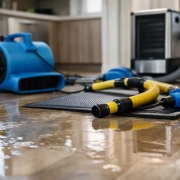
Run air conditioning and a dehumidifier to lower indoor humidity. Place fans so they move air across the floor rather than directly into a wall or under cabinets. If tile feels loose, grout is cracked, or water entered from below, professional moisture testing is a smart next step. Dry-looking grout does not confirm that the floor assembly underneath is dry.

Hardwood and Engineered Wood

Wood flooring needs fast, controlled drying. Standing water can cause cupping, crowning, buckling, gaps, dark staining, and finish damage. Wipe up water immediately, remove rugs, and use a wet/dry vacuum around seams and edges if available.

Then use dehumidification and steady air movement. Do not blast hardwood with high heat, such as space heaters or hair dryers. Rapid, uneven heating can dry the top of the boards faster than the underside and worsen distortion. Keep the air-conditioned space stable and dry instead.

If boards are lifting, edges are curling, or water has been present for more than a few hours, call a restoration professional. Some wood floors can be saved with prompt structural drying and later refinishing. Others may need repair or replacement, especially if water reached the subfloor or remained trapped beneath planks.

Laminate Flooring

Laminate is one of the least forgiving flooring materials after a leak. Its core can absorb water and swell at seams, even when the surface is wiped dry quickly. Remove standing water, dry the edges, and inspect for raised joints, bubbling, soft spots, or separated planks.

Do not assume a fan alone will solve the issue if water has gone underneath. Once laminate has swollen, drying may stop further damage but usually will not restore its original shape. Prompt inspection can help determine whether only a small section is affected or whether moisture has traveled farther than expected.

Carpet and Area Rugs

A wet carpet can be salvageable after a small clean-water leak if drying begins immediately. Extract water, lift furniture, increase air circulation, and use a dehumidifier. Carpet padding is often the deciding factor. It holds a large amount of water and may need replacement after a significant leak, even if the carpet itself can be cleaned and dried.

Area rugs should be removed from the wet floor as soon as possible. Natural fibers, wool, silk, and rugs with delicate dyes need specialized care. Do not leave a wet rug folded or rolled, since color bleeding and mildew can develop quickly.

Use Air Movement and Dehumidification Together

Fans alone move moisture from the floor into the air. In a humid Palm Beach County home, that moisture may remain indoors and settle elsewhere unless it is removed. Dehumidifiers pull water vapor from the air, while air conditioning helps maintain a lower-humidity environment.

Set up fans to circulate air across wet surfaces and toward open areas. Avoid aiming a fan directly at one spot for hours, particularly on hardwood. Check and empty portable dehumidifier reservoirs often, or use a unit with a drain hose when appropriate.

Open windows only if outdoor air is drier than indoor air. In South Florida, that is often not the case, especially after rain. Running the AC with windows closed is usually a better drying strategy during humid weather.

Check What You Cannot See

The most common mistake after a leak is stopping once the floor feels dry underfoot. Water may have migrated under baseboards, into drywall, beneath cabinets, or below flooring. A musty odor, discoloration, soft drywall, loose trim, warped boards, recurring humidity, or a persistent damp spot are all warning signs.

Professional restoration teams use moisture meters and thermal imaging to identify hidden moisture without guessing. This is especially valuable in condos, multi-story homes, and commercial properties, where water may travel between units or through ceiling and wall cavities.

Documentation also matters if the leak is significant. Take photos and videos before cleanup, save receipts for emergency services, and record the source and time the leak was discovered. Your insurer may request this information, particularly when flooring, cabinetry, drywall, or personal property has been affected.

When to Call a Water Damage Professional

A few towels and a fan may be enough for a small spill caught immediately on an intact tile floor. Call for professional help when water has soaked carpet or padding, reached wood or laminate flooring, entered walls or cabinets, involved contaminated water, or remained unnoticed for an unknown amount of time.

You should also call when a room has a strong odor, visible mold is present, flooring has begun to buckle, or the leak affects a condominium, HOA, office, or rental property. Fast extraction and measured drying can reduce downtime, limit demolition, and protect the appearance of the property.

The Cleaners Drones provides local water damage restoration support for Palm Beach County properties, with practical attention to the materials involved and the moisture that may be hidden below the surface.

After the floor is dry, do not rush to put everything back in place. Give the area time to stabilize, keep monitoring for odors or changes in the flooring, and make sure the original leak has been repaired. A dry-looking floor is encouraging, but a verified dry floor is what helps protect your home or property for the long term.

Cleaning Robotics for Safer Property Care

A dirty upper facade is not just a cosmetic problem when it takes scaffolding, lift rentals, blocked parking, and weeks of disruption to address it. For South Florida property owners and managers, cleaning robotics offers a more practical way to reach difficult exterior surfaces while keeping people, residents, and daily operations safer.

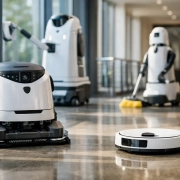
The term covers more than one kind of machine. Robotic floor scrubbers can maintain large indoor spaces, while aerial cleaning drones are designed to help trained crews clean elevated building exteriors. The right solution depends on the property, the material being cleaned, the level of buildup, and the access challenge. Technology is valuable when it improves the work, not when it replaces the judgment needed to protect a property.

Why Cleaning Robotics Matters in South Florida

Palm Beach County properties face conditions that make routine exterior cleaning a necessity. Humidity, salt air, wind-blown debris, mold, mildew, algae, pollen, and heavy rain can leave roofs, walls, balconies, windows, pool decks, and walkways looking neglected faster than many owners expect.

On a one-story home, a skilled ground crew may be able to handle most surfaces with the appropriate equipment. On a condominium, hotel, commercial building, or multi-story residence, access changes the equation. Traditional methods may require boom lifts, suspended platforms, scaffolding, large work zones, and substantial setup time. Those methods still have a place for certain repairs and specialized projects, but they are not always the most efficient choice for exterior cleaning.

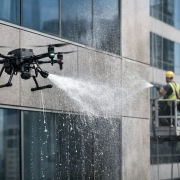
Drone-based cleaning gives professional teams another option. Instead of placing workers at height for every section of a building, a trained operator can guide an aerial system to targeted areas while the cleaning crew manages the process from the ground. This can reduce the need for bulky access equipment and help keep entrances, parking areas, and common spaces more available.

How Aerial Cleaning Drones Work

A cleaning drone is not a consumer camera drone with a spray bottle attached. Professional aerial cleaning requires purpose-built equipment, experienced operation, carefully managed hoses and cleaning solutions, and a site plan that accounts for people, vehicles, landscaping, wind, and the building itself.

The drone carries or directs a low-pressure cleaning application to the surface. For many exterior materials, low pressure is the safer starting point because it allows the cleaning solution to do the work rather than relying on force alone. This matters on painted stucco, siding, exterior panels, certain roof surfaces, and other finishes that can be damaged by overly aggressive pressure washing.

The process should begin with an assessment. A qualified crew looks at the surface material, staining or organic growth, water access, drainage, nearby pedestrian areas, and sensitive features such as landscaping, windows, solar panels, vents, and outdoor furnishings. The cleaning method is then matched to the property rather than treating every dirty surface the same way.

After the work area is prepared, the operator performs controlled passes over the planned sections. Ground staff monitor hose position, runoff, exclusion zones, and the condition of the surface. The goal is visible improvement without creating unnecessary disturbance for residents, tenants, customers, or neighboring properties.

The Real Benefits Are Safety and Access

The most meaningful advantage of cleaning robotics is not novelty. It is a better approach to difficult access.

For HOA boards and property managers, reducing work at height can lower the exposure that comes with placing technicians on ladders, lifts, or suspended equipment. It can also minimize the footprint of the project. A lift may need staging space, route access, and parking restrictions. Scaffolding can stay in place for extended periods. Drone cleaning can often work with a smaller ground-level setup, although every property has its own operational requirements.

Less disruption also matters to the people who live and work on-site. Residents do not want a cleaning project to block their entrance, close a pool deck, or take over visitor parking longer than necessary. Commercial operators need to protect customer access and keep their property presentable during business hours. A well-planned aerial cleaning service can help reduce those interruptions while still addressing high, exposed surfaces.

There is a visual benefit, too. Mold streaks, algae growth, and traffic film can make a well-maintained building appear older than it is. Regular exterior cleaning supports curb appeal, protects the impression a property makes on prospective buyers or tenants, and helps managers stay ahead of buildup before it becomes a larger restoration issue.

Where Cleaning Robotics Fits Best

Aerial cleaning is especially useful when a surface is elevated, broad, or awkward to reach from the ground. Multi-story condominiums, apartment buildings, office properties, hotels, warehouses, schools, and large residential homes are common examples. It can also be a strong fit for exterior walls, upper-story facades, hard-to-reach overhangs, roof-adjacent areas, and other locations where access equipment would add significant cost or inconvenience.

That does not mean a drone is the answer to every cleaning job. Ground-level driveways, patios, sidewalks, tile, grout, carpets, upholstery, and interior floors often require hands-on cleaning methods and specialized tools. Deep stains, damaged coatings, loose building materials, and areas needing repair should be evaluated before any cleaning begins. A drone can improve access, but it cannot correct a failing surface or replace needed maintenance.

Wind and weather also affect scheduling. South Florida rain patterns and afternoon storms can change conditions quickly, and safe drone operation depends on suitable weather. A professional provider should be direct about those limits instead of promising a one-size-fits-all timeline.

What Property Managers Should Ask Before Scheduling

The best cleaning plan starts with clear questions. Ask what cleaning method is appropriate for your exterior material and whether low-pressure treatment is recommended. Confirm how the provider will protect landscaping, vehicles, pedestrians, pool areas, and nearby windows. Discuss where water will be sourced, how runoff will be managed, and whether residents need advance notice.

It is also reasonable to ask about operator experience, insurance, site controls, and the expected condition of the surface after cleaning. Organic buildup may clear quickly, while deeply embedded staining, oxidation, or permanent discoloration can require a different approach. Honest expectations matter. A professional cleaning company should explain what can be cleaned, what may need restoration, and what maintenance schedule makes sense for the property.

For larger communities and commercial sites, planning is often as important as the cleaning itself. The work may need to be divided by building section, scheduled around resident activity, or coordinated with security and facility teams. Clear communication helps prevent surprises and keeps the project moving efficiently.

Technology Still Needs Skilled Cleaning Professionals

A drone is only one part of the service. The results depend on the crew’s understanding of cleaning chemistry, pressure selection, surface conditions, and property protection. Using the wrong solution, too much pressure, or poor runoff control can turn a simple cleaning job into an expensive problem.

That is why the strongest approach combines advanced access technology with established cleaning experience. The Cleaners Drones brings drone-powered exterior cleaning together with practical services for interiors, floors, hard surfaces, and restoration needs. A property does not have to work with separate providers just because its cleaning challenges are at different heights.

For homeowners, the value is a cleaner exterior without turning the property into a construction zone. For HOAs, condominium boards, and commercial managers, it is a way to maintain building appearance while putting safety, access, and operational continuity first.

If an upper facade, exterior wall, or difficult-access surface has been put off because the equipment requirements felt excessive, it may be time to evaluate a drone-powered cleaning plan. The right inspection can turn a complicated access problem into a manageable maintenance project with visible results.

Drone Building Washing for Safer, Cleaner Exteriors

A stained exterior can make a well-managed property look neglected long before anyone steps inside. In Palm Beach County, salt air, humidity, wind-driven rain, algae, mildew, and everyday airborne debris can build up quickly on stucco, glass, painted surfaces, balconies, and upper-level walls. Drone building washing gives property owners and managers a practical way to clean those hard-to-reach areas without turning the property into a long-term construction zone.

For high-rise condominiums, HOA communities, commercial properties, and multi-story homes, the challenge is rarely deciding whether the exterior needs cleaning. The challenge is access. Traditional washing may require lifts, scaffolding, ropes, restricted parking areas, and extended work around residents or tenants. Drone-powered cleaning changes the access equation by bringing controlled, low-pressure cleaning directly to elevated surfaces from the air.

Why South Florida Buildings Get Dirty So Fast

South Florida weather is tough on exterior finishes. Moisture creates the ideal environment for algae and mildew growth, especially on shaded elevations and areas with limited airflow. Ocean-adjacent and coastal properties also collect salt residue that can leave surfaces dull and contribute to premature wear when it is left in place.

A building’s location and construction matter. White or light-colored stucco makes organic staining highly visible. Textured finishes hold more dirt than smooth surfaces. Buildings near busy roads can collect exhaust residue and dust, while properties surrounded by mature landscaping often experience more pollen, leaf debris, and moisture-related staining.

Regular exterior cleaning is about more than curb appeal. Removing buildup before it becomes heavily established helps preserve the appearance of painted surfaces, siding, concrete, and trim. For condominium boards and commercial operators, a cleaner building also supports resident satisfaction, tenant confidence, and a stronger first impression for visitors.

How Drone Building Washing Works

Drone building washing uses specialized aerial equipment to apply a cleaning solution and rinse elevated exterior surfaces with controlled, low pressure. The drone operator can reach upper floors and difficult angles without sending a technician onto scaffolding or positioning a lift across driveways, sidewalks, and landscaping.

The process starts with a property assessment. A professional team identifies the exterior materials, the type of staining present, the building height, nearby landscaping, pedestrian areas, access points, and any locations that need extra care. This matters because a cleaning method that works well for durable stucco may not be appropriate for every painted surface, window system, or delicate architectural feature.

Once the plan is in place, the crew prepares the work area and protects nearby surfaces as needed. The drone applies an eco-friendly cleaning solution designed to break down algae, mildew, grime, and environmental residue. Rather than relying on aggressive pressure to force contaminants off the building, low-pressure washing lets the solution do much of the work. The surface is then rinsed carefully to reveal a cleaner, more even exterior.

This approach is especially valuable for broad wall sections, upper-story facades, exterior towers, and areas where equipment access is limited. It is not a replacement for every exterior-cleaning method. Ground-level patios, sidewalks, driveways, heavily soiled concrete, and certain detail areas may still call for conventional pressure washing or hand cleaning. The right service plan often combines methods based on the surface and the result needed.

Safer Access With Less Disruption

The biggest advantage of aerial cleaning is not simply that it looks advanced. It is that it reduces the access-related complications that often make exterior projects slow and disruptive.

Scaffolding can block walkways, limit entrances, take up parking spaces, and remain in place for days or weeks. Boom lifts need room to operate and may be difficult to position around landscaping, pool decks, narrow drives, or occupied properties. Rope access can be effective in some situations, but it requires specialized planning and creates additional work at height.

With drone cleaning, the work can often move more efficiently across elevated areas while keeping the crew on the ground. That means fewer obstacles around the property and less impact on normal operations. For a retail center, that can mean less interruption for customers. For a condo community, it can mean fewer blocked parking spaces and less inconvenience for residents. For a homeowner with a multi-story exterior, it can mean cleaning upper walls without bringing large equipment onto the property.

Safety is still a serious part of the job. A drone should be operated by trained professionals who understand property conditions, controlled work zones, wind considerations, surface limitations, and how to protect people and surrounding areas. Technology helps, but it does not eliminate the need for experienced planning and careful execution.

Low Pressure Protects More Than Appearance

Many people hear “washing” and assume more pressure means better cleaning. That is not always true. High pressure can damage certain finishes, force water into vulnerable openings, strip paint, disturb caulking, or leave visible marks on softer materials. On exterior walls, the goal is to remove staining without creating a new maintenance problem.

Low-pressure cleaning is particularly useful for organic growth and general atmospheric grime because it pairs the correct cleaning solution with gentle rinsing. The solution has time to address the buildup, which reduces the need to blast the surface. It is a more controlled approach for many building exteriors, especially when the work involves painted stucco, siding, trim, and upper-level surfaces.

There are trade-offs. Deep oxidation, failing paint, cracked stucco, loose sealant, and existing water intrusion will not be repaired by washing. In fact, cleaning can reveal defects that dirt had been hiding. That is useful information for a property manager or owner, but it also means expectations should be clear before work begins. Professional cleaning restores the appearance of sound surfaces. It is not a substitute for needed repairs or repainting.

When Is the Right Time to Schedule Exterior Cleaning?

For many South Florida properties, exterior washing works best as planned maintenance rather than an emergency response to visible staining. A building that is cleaned before algae becomes heavy is usually easier to maintain and presents better year-round.

The ideal frequency depends on location, shade, exposure, landscaping, and the property’s appearance standards. A coastal condominium with bright stucco may need more regular attention than an inland building with darker finishes. A commercial property that relies on walk-in traffic may choose service before seasonal events, lease tours, or busy periods. HOA boards may schedule cleaning around community calendars to minimize inconvenience.

Weather also matters. Operators monitor wind and rain conditions, since aerial work requires a controlled environment. A reputable provider will not force a job to continue when conditions are unsuitable. Rescheduling for safe conditions is better than rushing a project and compromising results.

What Property Managers Should Ask Before Hiring

Aerial cleaning should be treated as a professional exterior-maintenance service, not a novelty. Before selecting a provider, ask how they assess surface materials and what cleaning method they recommend for the specific building. Confirm that they use low-pressure techniques when appropriate, explain how they manage work zones, and can describe how they protect landscaping, windows, vehicles, and pedestrian areas.

It is also smart to discuss the full scope of the property. A clean facade can make dirty sidewalks, stained entry pavers, or neglected common-area surfaces stand out more clearly. Coordinating exterior wall cleaning with pressure washing, window-area detailing, or other maintenance services can create a more complete result while reducing the number of separate visits.

The Cleaners Drones brings this approach to Palm Beach County and the broader South Florida market, combining established cleaning experience with specialized aerial access for properties that are difficult to reach by traditional methods.

A Better Way to Keep Elevated Exteriors Looking Cared For

A cleaner building is visible proof that a property is being looked after. Whether you manage a condominium, oversee an HOA, operate a commercial site, or own a multi-story home, the best cleaning plan is one that respects the surface, protects the people around it, and limits disruption to daily life.

When upper walls begin to show algae, salt residue, or weather staining, waiting usually makes the job harder. A professional assessment can identify the right timing and method, helping your property look cared for without the cost and inconvenience of unnecessary scaffolding or lifts.