
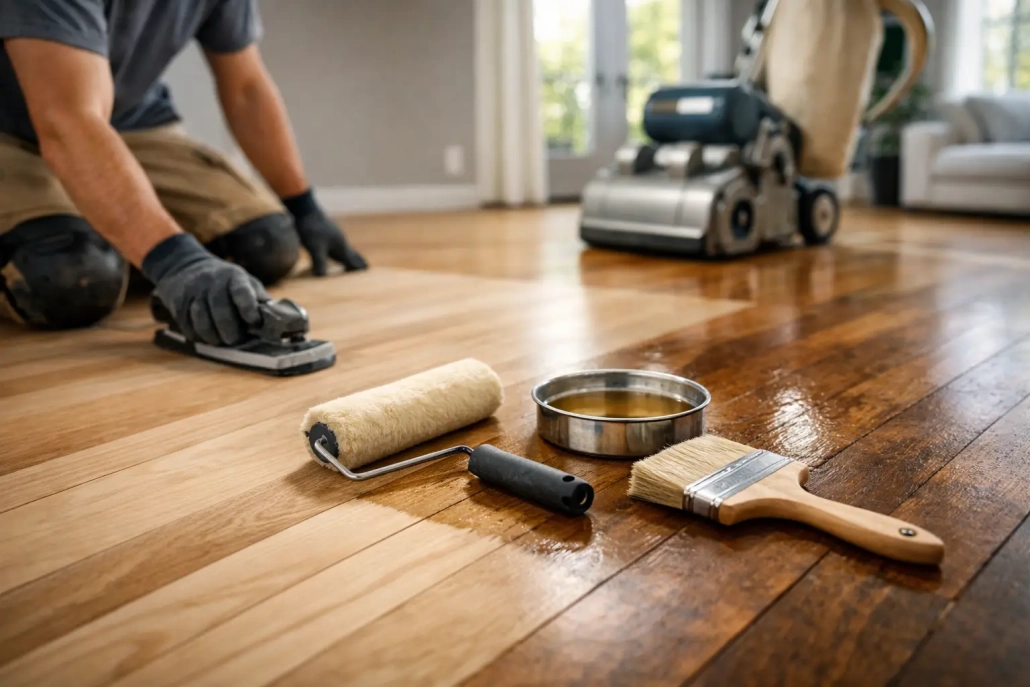
When Wood Floor Refinishing Is the Right Move
A hardwood floor can make a Palm Beach County home, condo, or commercial space feel finished and well cared for. But when the surface is dull, scratched, faded near windows, or showing dark water marks, routine cleaning will not bring it back. Wood floor refinishing removes the worn surface layer and creates a fresh protective finish, giving the room a visible reset without replacing the entire floor.
The right approach depends on what is underfoot. Some floors need a full sanding and refinishing process. Others may only need a lighter screen and recoat. And some damaged engineered floors are better served by repair or replacement. A professional evaluation prevents a costly mistake and helps protect the character and value of your property.
What Wood Floor Refinishing Actually Fixes
Refinishing addresses wear in the finish and, when sanding is appropriate, shallow damage in the wood itself. It is often the best option for solid hardwood floors that still have good structural integrity but no longer look their best.
Homeowners commonly call for help after years of foot traffic, pets, moving furniture, or sun exposure have left the floor uneven in color and sheen. In South Florida, humidity also plays a role. Wood naturally expands and contracts as moisture levels change. Entryways, sliding doors, kitchens, and areas near leaks can show wear sooner than the rest of the home.
A refinishing service may improve scratches, dullness, light stains, small dents, uneven color, and worn polyurethane. It can also remove an outdated amber-toned finish and replace it with a clearer, more current look. The result should not look artificially coated or overly glossy. It should look clean, protected, and appropriate for the wood species and the space.
Refinishing cannot solve every problem. Boards that are deeply warped, loose, heavily rotted, or stained by long-term water damage may need repair before any finish is applied. Dark black stains from moisture can sometimes be reduced, but they do not always disappear completely. Honest expectations matter, especially when a floor has a long history.
Is Wood Floor Refinishing Better Than Recoating?
This is one of the most useful distinctions for property owners. A recoat, sometimes called a screen and recoat, lightly abrades the existing finish and applies a new topcoat. It is less invasive than full refinishing and works well when the floor is simply losing its protective layer but the color and wood surface are still in good condition.
Full wood floor refinishing goes further. The existing finish is sanded down, usually along with a thin layer of wood, before stain and protective coating are applied. This gives you more control over scratches, color, and surface inconsistencies. It also creates a more dramatic transformation.
A recoat can be a smart maintenance decision for a lightly worn floor. It is usually faster, creates less disruption, and helps extend the time before a full sanding is needed. But it will not erase deep scratches, remove major stains, or correct a floor that has become uneven in color.
Full refinishing is the stronger choice when damage reaches beyond the finish. It is also the right time to consider a color change. The trade-off is greater preparation, more labor, and time for the finish to cure properly before rugs and furniture return.
Signs Your Floor Is Ready for Refinishing
Waiting until the floor is severely damaged can make restoration more complicated. Watch for these clear signs that the finish is no longer doing its job:
- Scratches are widespread and visible from across the room, not just in isolated spots.
- The floor looks gray, cloudy, or dull even after professional cleaning.
- Water no longer beads on the surface and instead darkens or soaks into the wood.
- High-traffic paths, doorways, and sunny areas look noticeably lighter or more worn.
- The finish is peeling, flaking, or separating around board edges.
A simple water-bead test can offer an early clue. Place a few drops of water on a clean area of the floor. If the water stays beaded, the finish may still be protecting the wood. If it quickly absorbs and darkens the surface, the floor may need professional attention. This is not a complete diagnosis, but it is a useful reason to schedule an inspection.
The Refinishing Process for a Cleaner Result
A quality result begins before the sanding equipment is turned on. The room must be cleared, and the floor should be assessed for loose boards, exposed nails, damaged transitions, old waxes, and previous coatings. Some products can interfere with adhesion, which is why using household polish or wax on a wood floor can create problems later.
Preparation and surface repairs
Minor gaps, nail holes, and damaged boards may be addressed before refinishing begins. Floor protection and dust-control measures are especially important in occupied homes, condos, and business spaces. While no sanding project is completely dust-free, professional containment and cleanup make a meaningful difference for the rest of the property.
For condominium residents and property managers, planning is equally important. Confirm building rules, elevator access, permitted work hours, and any requirements for protecting common areas. A well-organized project reduces disruption for neighbors and keeps the work moving on schedule.
Sanding, staining, and finishing
The sanding stage removes the old finish and levels surface wear. The goal is not to remove more wood than necessary. Skilled refinishing uses the correct sequence of abrasives to create a smooth, even surface without leaving swirl marks or sanding lines.
After the floor is prepared, stain may be applied if the property owner wants to adjust the color. Natural finishes remain popular because they keep the original grain visible and often make rooms feel brighter. Dark stains can look striking, but they may show dust, scratches, and pet hair more readily. Medium tones are often a practical balance for active households and rental properties.
The final protective coat has a major effect on appearance and maintenance. Matte and satin finishes hide everyday marks better than high gloss, which reflects more light but can reveal scratches and footprints. For many South Florida homes, a durable low-sheen finish offers the clean look people want with less day-to-day frustration.
Curing time is not optional
A floor can feel dry before it is fully cured. Light foot traffic may be allowed after a short period, depending on the finish, but furniture, area rugs, and heavy use should wait until the coating has hardened as recommended. Rushing this stage can leave impressions, reduce durability, or cause rugs to stick to the finish.
Can Every Wood Floor Be Refinished?
Solid hardwood can usually be refinished several times over its life, provided enough wood remains above the tongue-and-groove joint. Engineered wood is different. It has a real wood veneer over a layered base, and that veneer varies in thickness. Some engineered floors can be lightly sanded once or more, while others are too thin for traditional refinishing.
Laminate and luxury vinyl plank are not wood floors and cannot be refinished in the same way. Their printed or factory-wear layers cannot be sanded without damage. This is why identifying the floor material before making a decision is essential.
Older floors deserve special care as well. They may have beautiful grain and can often be restored impressively, but repairs, moisture issues, and previous refinishing work need to be considered first. The best recommendation is not always the biggest project. It is the one that protects the floor for the longest practical period.
Keeping a Refinished Floor Looking Its Best
Once the floor is restored, simple habits help preserve it. Use felt pads under furniture, place mats at exterior doors, clean spills quickly, and avoid soaking the floor with water. Sweep or vacuum with a hard-floor setting regularly so grit does not act like sandpaper under shoes.
Choose cleaning products made specifically for the floor’s finish, and skip steam mops, oil soaps, waxes, and harsh all-purpose chemicals unless the finish manufacturer specifically approves them. In humid months, consistent indoor climate control can also help limit excessive movement in the wood.
The Cleaners Drones approaches floor restoration with the same practical focus used across South Florida properties: assess the material, protect the space, and deliver a result you can see. When wear starts to distract from an otherwise well-kept room, a timely professional assessment can keep a beautiful wood floor in service for years to come.



Leave a Reply
Want to join the discussion?Feel free to contribute!