
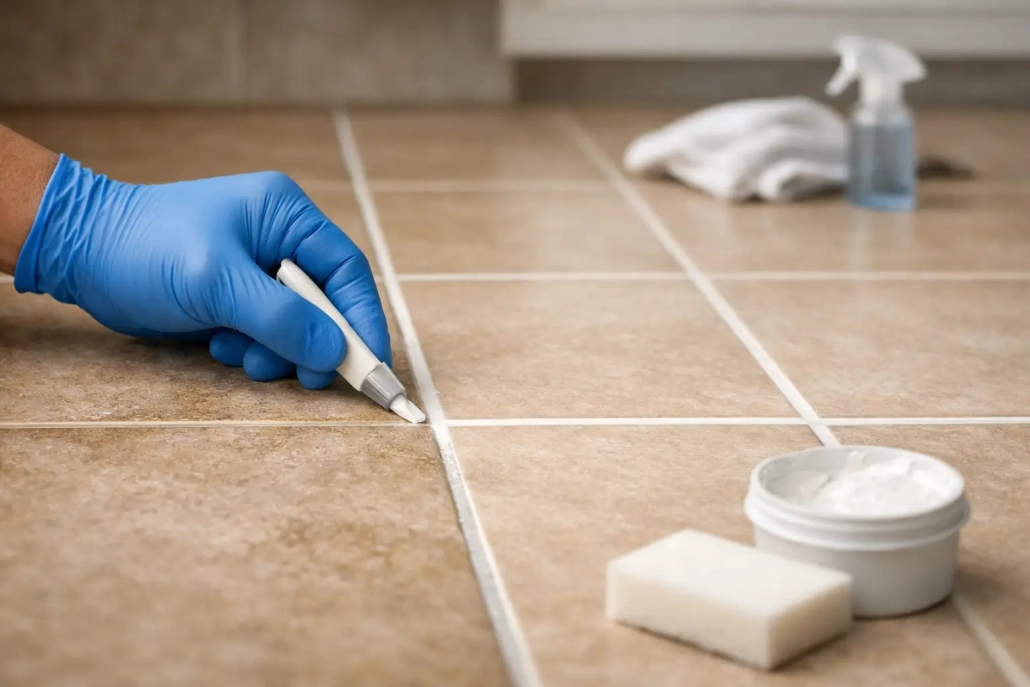
Tile Grout Color Sealing Restores Worn Floors
A tile floor can be freshly mopped and still look dirty when the grout lines are dark, blotchy, or permanently stained. Tile grout color sealing addresses that problem at its source, restoring a consistent grout color while creating a protective finish that makes future cleanup easier. For South Florida homes, condos, restaurants, and common areas, it can dramatically improve the appearance of a room without the cost and disruption of replacing tile.
What Tile Grout Color Sealing Actually Does
Grout is porous. Over time, it absorbs soil, spills, cleaning residues, oils, soap film, and moisture. In kitchens, that often means dark paths in front of the sink, range, and refrigerator. In showers and bathrooms, the issue can be mildew staining, mineral buildup, and discoloration around the perimeter of the room. High-traffic condo corridors and commercial entryways collect a different mix of dirt and moisture, but the visual result is much the same: tile that looks worn well before the tile itself has reached the end of its life.
Color sealing is not simply applying a clear sealer over the existing grout. A professional-grade grout color seal is a pigmented coating designed to bond to cleaned grout lines. It covers stubborn discoloration, evens out inconsistent color, and adds a protective barrier over the grout surface.
The difference is visible right away. Instead of highlighting every darkened grout line, the floor has a uniform, maintained appearance. Because the sealer limits absorption at the surface, routine cleaning is less likely to drive soil deeper into the grout.
Why Clear Sealer Is Not Always Enough
Clear penetrating sealers can be useful on new or lightly used grout. They help reduce absorption while preserving the grout’s original appearance. But they cannot hide an existing stain, correct faded sections, or make mismatched repair areas blend in.
Tile grout color sealing is the better option when the grout is structurally sound but no longer looks clean after professional cleaning. It is especially effective when grout has uneven coloring from years of traffic, harsh cleaners, previous spot treatments, or grout repairs that do not match the original installation.
That said, color sealing is not a fix for every grout problem. Cracked, loose, crumbling, or missing grout should be repaired before sealing. Grout lines that repeatedly crack may point to tile movement, a subfloor issue, or an expansion-joint problem. Covering that damage with color seal will not make the underlying issue disappear.
The Visible Benefits for South Florida Properties
South Florida floors work hard. Sand, rainwater, humidity, pool traffic, pets, and frequent entertaining can quickly dull grout in both residential and commercial settings. A color-sealed floor is easier to keep presentable, which matters when a property needs to make a strong first impression.
For homeowners, the benefit is often a kitchen, bathroom, or living area that looks cleaner without a renovation project. For HOA boards and property managers, restored tile and grout can improve common-area appearance while avoiding the noise, mess, and downtime associated with tile replacement. Business owners can refresh restrooms, dining areas, lobbies, and entryways with far less disruption than a new flooring installation.
Color sealing can also create a more intentional design. A light grout color can brighten a space, while a medium gray or taupe can offer a practical, modern look that hides day-to-day traffic better. The right choice depends on the tile, the room, lighting, and the amount of use the floor receives.
How the Tile Grout Color Sealing Process Works
The quality of the preparation determines the quality of the finished result. Applying a color seal over dirty grout, soap residue, or a failing previous coating can leave uneven adhesion and shorten the life of the treatment.
A professional process begins with an inspection of the tile, grout condition, traffic patterns, and any problem areas. This helps identify cracked grout, loose tile, efflorescence, heavy mineral deposits, and old topical products that may need special attention. The technician should also confirm that the tile itself is compatible with the cleaning method and color seal being used.
Next comes deep cleaning. Professional equipment and grout-specific cleaning solutions lift embedded soil from the grout lines and tile surface. In bathrooms and showers, this may include addressing soap film, mildew staining, and mineral buildup. In kitchens, the focus is often oils and tracked-in soil. The floor is then thoroughly rinsed and allowed to dry as needed.
Once the grout is clean and stable, the color seal is applied carefully to the grout lines. Excess material is removed from the face of the tile before it dries. This step requires patience and close attention, particularly with textured tile, narrow joints, natural stone, or tile that has a matte finish.
After curing, the grout should have a consistent color and a more protected surface. A skilled technician will review the finished area for missed spots, uneven coverage, or residue before returning the space to normal use.
When Color Sealing Is a Good Fit
Color sealing is often a smart choice for ceramic or porcelain tile with cement-based grout in kitchens, bathrooms, foyers, laundry rooms, and common areas. It is particularly valuable when the tile is in good condition but the grout makes the entire surface look aged.
Before moving ahead, consider four practical factors:
- The grout should be intact, firmly bonded, and free of persistent cracking.
- Moisture problems should be corrected first, especially around showers, toilets, exterior doors, or slab areas.
- Natural stone, unglazed tile, and very textured surfaces require material-specific testing and care.
- The selected grout color should work with the room’s lighting, tile pattern, and expected traffic.
Shower walls deserve special attention. Color sealing can improve the appearance and cleanability of grout, but it is not a substitute for correcting failed caulk, leaking plumbing, damaged waterproofing, or chronic moisture behind the tile. A reliable assessment should distinguish a cosmetic grout issue from a water-management issue.
Choosing the Right Grout Color
Matching the original grout color is a common choice, especially when the goal is to make the floor look newly cleaned rather than redesigned. A close match preserves the existing tile pattern and can make repairs disappear into the surrounding grout.
A color change can be equally effective. Light grout can make a room feel brighter but may show dirt faster in busy entryways or homes with pets. Darker grout offers contrast and can be more forgiving in high-traffic locations, though it may make a small room feel more defined or visually busy. Mid-tone gray, beige, and taupe shades are often practical choices for Palm Beach County properties because they balance a clean appearance with everyday wear.
A small test area is worthwhile whenever possible. Grout color can look different once it dries and can shift depending on daylight, interior lighting, and the surrounding tile.
Keeping Color-Sealed Grout Looking Its Best
Color sealing reduces maintenance, but it does not eliminate it. Regular sweeping or vacuuming prevents gritty sand from wearing on the floor. For mopping, use a neutral cleaner recommended for tile and grout, rather than bleach-heavy products, acids, or harsh abrasive powders that can dull the finish over time.
Wipe spills promptly, especially cooking oils, hair dye, cosmetics, wine, and pet accidents. In showers, reducing standing water and using proper ventilation helps limit soap residue and moisture-related staining. Avoid steam cleaning or aggressive scrubbing until you have confirmed that the method is appropriate for the specific grout coating and tile.
A professional maintenance plan may be useful for large common areas, restaurants, and rental properties where floors receive constant use. Routine cleaning helps preserve the finish and makes it easier to spot grout repairs or moisture issues before they become larger problems.
Why Professional Application Matters
DIY grout color products can seem straightforward, but the work is detail-sensitive. Uneven preparation, the wrong product, poor color selection, or seal residue left on tile can create a result that is difficult to correct. This is not just a matter of making grout look darker or lighter. It requires matching cleaning methods and coatings to the specific tile, grout, and condition of the surface.
The Cleaners Drones approaches tile and grout restoration with the same focus used across residential and commercial cleaning: identify the surface, clean it thoroughly, and choose a process that delivers a visible, durable improvement. That matters in a home where every room should feel cared for, and in a managed property where appearance affects residents, guests, and tenants every day.
When tile is worth keeping but grout is holding the room back, color sealing offers a practical middle ground between repeated scrubbing and full replacement. Start with an honest inspection, address any repairs or moisture concerns first, and let the condition of the floor guide the right solution.



Leave a Reply
Want to join the discussion?Feel free to contribute!