
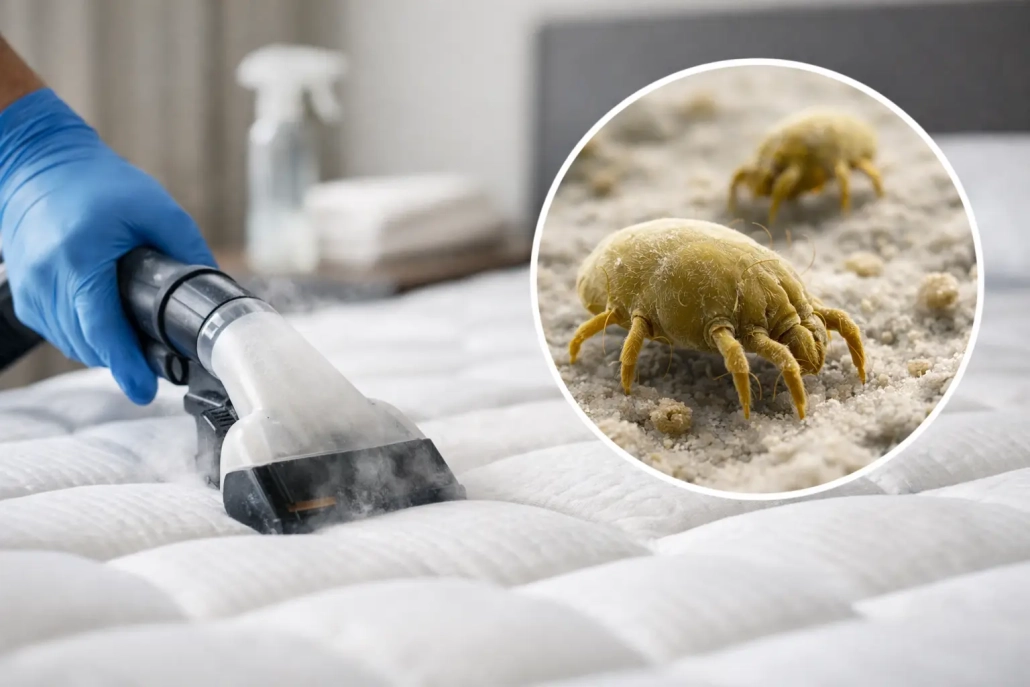
Mattress Cleaning for Dust Mites: What Works
A mattress can look clean while holding the dust, skin flakes, and moisture that dust mites feed on. That is why mattress cleaning for dust mites is less about making the bed look better and more about reducing the allergens that can affect sleep, allergies, asthma, and morning congestion.
For Palm Beach County homes, humidity makes the job more challenging. Warm, humid air creates conditions dust mites prefer, especially in bedrooms with limited airflow, heavy bedding, pets, or upholstered headboards. A routine that controls moisture and removes allergen buildup can make a noticeable difference, but it needs to be the right routine for the mattress material.
What Dust Mites Leave Behind
Dust mites are microscopic pests that feed primarily on shed skin cells. They do not bite people, and seeing no visible bugs does not mean the mattress is free of allergen triggers. The bigger concern is the proteins found in mite waste and body fragments. These particles can become airborne when you move in bed, change sheets, or vacuum nearby.
For people with allergies or asthma, exposure may contribute to sneezing, itchy eyes, coughing, a stuffy nose, or symptoms that feel worse first thing in the morning. Children, older adults, and anyone with respiratory sensitivities may be especially affected.
A mattress is not the only place mites collect. Pillows, comforters, upholstered furniture, rugs, and curtains can also hold dust. Still, the mattress deserves special attention because it is used for hours every night and absorbs body oils, perspiration, and dead skin over time.
Mattress Cleaning for Dust Mites Starts With Moisture Control
No cleaning method permanently eliminates dust mites. The realistic goal is to lower the allergen load and make the bedroom less favorable for future buildup. In South Florida, controlling indoor humidity is one of the most useful steps you can take.
Keep the bedroom well ventilated and aim for indoor humidity below 50 percent when possible. Air conditioning helps, but a dehumidifier may be worthwhile in rooms that feel damp, have musty odors, or stay closed for much of the day. Letting a mattress air out after waking up can also help. Pull back heavy bedding for a short time rather than trapping overnight moisture under layers of blankets.
Waterproof, allergen-resistant mattress and pillow encasements create an effective barrier between sleepers and the mattress core. They are particularly helpful for older mattresses that have had years to accumulate allergens. Choose covers that fully zip around the mattress, and wash them according to the manufacturer instructions.
A Practical At-Home Cleaning Routine
Regular home care can reduce surface dust and improve the condition of the bed between professional cleanings. It should be gentle. Soaking a mattress, saturating it with sprays, or using too much steam can leave moisture deep in the padding, where odors and microbial growth may become another problem.
Start by stripping the bed and washing sheets, pillowcases, blankets, and mattress protectors in hot water when the fabric care label allows it. Heat is useful for reducing mite populations in washable bedding. Dry items completely before putting them back on the bed.
Vacuum the mattress slowly using a clean upholstery attachment or a vacuum with a HEPA filter. Work across the top, sides, seams, and piping, where dust often settles. This will not reach every particle inside the mattress, but it removes loose debris from the surface and helps keep buildup from becoming heavier.
If there is a fresh spill, blot it immediately with a clean white cloth. Use only a small amount of an upholstery-safe cleaner if needed, then allow the area to dry fully before remaking the bed. Avoid heavy fragrances and harsh household chemicals, especially if someone in the household has asthma, sensitive skin, or allergies.
For most households, washing bedding weekly and vacuuming the mattress monthly is a sensible baseline. Homes with pets that sleep on the bed, allergy sufferers, frequent guests, or young children may benefit from more frequent care.
When DIY Cleaning Is Not Enough
A vacuum and clean sheets are useful maintenance tools, but they cannot fully address what has settled below the surface over months or years. Professional mattress cleaning is often the better choice after an illness, a pet accident, a major spill, a move, or a long period without deep cleaning.
It is also worth scheduling service if the mattress has persistent odors, visible staining, a dusty smell when bedding is moved, or symptoms that consistently improve away from home. Those signs do not automatically mean dust mites are the only issue. Body oils, bacteria, moisture, pet dander, and old spills can all be part of the problem.
A professional should inspect the mattress construction before selecting a method. Memory foam, pillow-top, hybrid, latex, and traditional innerspring mattresses do not respond the same way to moisture, extraction, heat, or cleaning solutions. The safest process uses controlled application, thorough soil removal, and proper drying rather than a one-size-fits-all approach.
The Cleaners Drones provides detailed interior cleaning for South Florida homes and properties, including mattress cleaning designed to refresh heavily used sleeping surfaces without unnecessary saturation. The goal is a cleaner, more comfortable bed and a process matched to the material in front of us.
What to Expect From Professional Mattress Cleaning
The right cleaning appointment should begin with a close look at the mattress, including its fabric, age, stains, odors, and prior damage. This helps identify whether cleaning is appropriate or whether a damaged mattress may need replacement. For example, a mattress with widespread mold, deep urine contamination, or significant water damage may not be a good candidate for restoration.
A professional process commonly includes targeted vacuuming, treatment for stains or odors where appropriate, and deep cleaning methods suited to the fabric and fill. Drying time varies. A lightly cleaned mattress in a climate-controlled room may be ready sooner than a thick pillow-top mattress with multiple treated areas. Good airflow and air conditioning can speed drying, while a humid room can extend it.
Be cautious of promises to make a mattress completely sterile or permanently dust-mite-free. Those claims oversimplify the issue. A quality service reduces accumulated soil and allergens while helping you reset the mattress care routine. Ongoing bedding care and humidity control are what help preserve the result.
Do Not Forget the Rest of the Bedroom
Cleaning only the mattress can leave other allergen reservoirs untouched. If allergy symptoms persist, look at the whole sleep environment. Pillows should be washed or replaced according to their care labels, and decorative pillows, duvets, bed skirts, and upholstered headboards should not be ignored.
Four areas often need attention at the same time:
- Area rugs and carpet near the bed, which can hold dust and pet dander
- Upholstered chairs, benches, and headboards that collect skin cells and hair
- Window treatments that trap dust, especially in rooms kept closed
- HVAC filters and vents that affect the air circulating through the bedroom
This does not mean every bedroom needs a full cleaning project at once. Prioritize the areas with the most use, visible dust, pet exposure, or odor. For a condo, rental turnover, or family home with recurring allergy concerns, coordinating mattress, upholstery, and carpet cleaning can be more efficient than treating each item separately.
A Cleaner Bed Is a More Practical Habit
The best time to address dust-mite buildup is before the mattress develops odors, stubborn stains, or a neglected feel. Start with washable bedding, a quality encasement, controlled indoor humidity, and regular vacuuming. Then bring in professional help when the mattress needs deeper attention or the bedroom is contributing to ongoing allergy concerns.
A clean mattress cannot promise perfect sleep, but it can remove one more source of dust and discomfort from the room where your family spends every night. If the bed no longer feels as fresh as it should, a material-safe deep cleaning is a practical place to start.



Leave a Reply
Want to join the discussion?Feel free to contribute!