Exterior Drone Cleaning for South Florida Buildings
Salt air does not wait for a convenient maintenance window. In Palm Beach County, exterior walls, windows, balconies, roofs, and architectural details can collect salt residue, algae, mildew, dust, and windblown debris faster than many owners expect. Exterior drone cleaning gives property decision-makers a practical way to remove that buildup on hard-to-reach surfaces without turning the property into a weeks-long construction zone.
For condominium boards, property managers, commercial operators, and homeowners with multi-story residences, access is often the real challenge. The dirt may be visible, but reaching it safely can require lifts, scaffolding, lane closures, restricted parking, and crews working around residents or customers. Drone-powered cleaning changes the access plan while keeping the focus where it belongs: a cleaner, better-maintained property.
What Exterior Drone Cleaning Does Differently
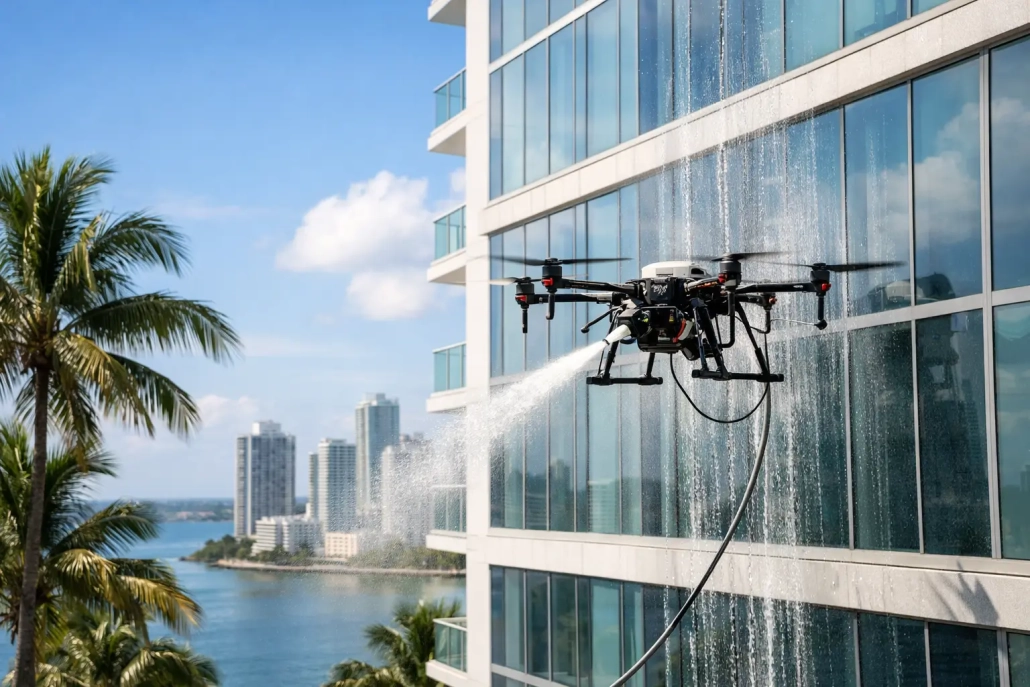
A cleaning drone is not simply a drone with a camera. It is purpose-built equipment operated by trained professionals to apply water and cleaning solutions to exterior surfaces from the air. The system can reach upper stories, façades, rooflines, and other elevated areas that are costly or difficult to service with traditional equipment.
The method is especially useful when a building needs regular exterior maintenance but does not need the heavy force of conventional pressure washing. Low-pressure cleaning, paired with the right eco-friendly solution, can break down organic growth and surface grime while treating the building material with appropriate care. That matters for painted stucco, coated surfaces, delicate trim, and exterior areas where excessive pressure can cause damage.
The visible benefit is straightforward: a cleaner exterior that improves curb appeal. The operational benefit is often even more valuable. With no scaffolding or lifts required for many applications, a property can avoid much of the setup, noise, blocked access, and extended disruption associated with high-access cleaning.
Why South Florida Exteriors Need Consistent Care
South Florida weather is hard on exterior surfaces. Humidity supports algae and mildew growth. Afternoon rain leaves moisture behind. Coastal salt can cling to surfaces, while storms and landscaping add dirt, pollen, and organic debris. On shaded sides of a building, staining can become noticeable long before a full property inspection is scheduled.
Waiting until discoloration becomes severe can make cleaning more difficult and can leave residents, tenants, guests, or prospective buyers with the impression that the property is not being cared for. For HOAs and commercial properties, exterior appearance is part of the day-to-day experience of living, working, or visiting there.
A recurring cleaning schedule is usually more manageable than a major catch-up project. The right timing depends on the property’s exposure, materials, landscaping, height, and proximity to the coast. A beachfront condominium may need a different maintenance rhythm than an inland office building or a two-story home surrounded by mature trees.
Where Drone Cleaning Makes the Most Sense
Exterior drone cleaning is a strong fit for buildings with elevated surfaces that are difficult to access from the ground. High-rise and mid-rise condominiums are obvious examples, but they are not the only ones. Multi-story residences, hotels, office buildings, retail centers, apartment communities, warehouses, and clubhouse facilities can all benefit when upper-level cleaning is part of the scope.
It is particularly useful for vertical walls and exterior features where a lift cannot easily be positioned or where lift access would interfere with parking, traffic flow, pedestrian areas, landscaping, or daily operations. A property manager may be able to schedule a drone cleaning with far fewer access complications than a conventional elevated work plan.
That does not mean a drone is the best tool for every cleaning job. Ground-level sidewalks, driveways, pool decks, and heavily soiled concrete may require conventional pressure washing. Deeply embedded stains, damaged paint, loose stucco, failing sealant, or an active leak are not cleaning issues alone and may need repair before washing. A professional assessment should match the method to the surface rather than forcing every area into one approach.
Safety and Reduced Disruption for Occupied Properties
For occupied condominiums and active commercial sites, exterior cleaning has to work around real life. Residents need access to their homes. Customers need to enter the business. Delivery drivers, maintenance teams, and emergency services need clear routes. Scaffolding and lifts can be necessary in certain situations, but they can also introduce scheduling, safety, and logistics concerns.
Drone cleaning reduces the need for people to work at height on many exterior surfaces. Operators remain on the ground while controlling the cleaning path and monitoring the work. The service area is still managed carefully, with attention to pedestrians, vehicles, nearby windows, landscaping, and building entrances, but the footprint is generally smaller than a large elevated-access setup.
Less equipment on site can also mean less visual disruption. That is a meaningful advantage for properties preparing for showings, inspections, events, seasonal occupancy, or board walkthroughs. Clean exterior surfaces can make a building look refreshed without making the property feel like a construction site.
Low Pressure Is Not Low Results
Some property owners assume that effective exterior cleaning always requires high pressure. That is not the case. High pressure has its place, particularly on durable ground-level concrete and certain hardscape surfaces. On building exteriors, however, more force is not always better.
A low-pressure approach relies on the proper cleaning solution, controlled application, adequate dwell time, and a thorough rinse. Instead of blasting contaminants away, the process treats and lifts organic growth and grime with less risk to sensitive finishes. The result can be a dramatic improvement in color, brightness, and overall appearance without unnecessarily stressing the surface.
Material matters. Painted surfaces, stucco, metal panels, glass, awnings, and exterior trim all respond differently. Before work begins, the cleaning team should consider the surface condition, visible staining, drainage, surrounding plant life, and any manufacturer guidance that applies to the building materials.
What to Ask Before Scheduling Exterior Drone Cleaning
A quality service provider should be able to explain the cleaning plan in plain language. Ask what surfaces will be cleaned, which areas are excluded, and whether low-pressure or conventional pressure washing is recommended for each part of the property. You should also ask how the team protects landscaping, manages runoff, secures the work area, and communicates with residents or tenants before service.
For larger properties, clear scheduling is just as valuable as the cleaning itself. A condominium board may need notice requirements, access coordination, and a phased plan by elevation or building section. A retail or office property may prefer work outside peak customer hours. The best approach is one that achieves visible results without creating unnecessary interruptions.
It is also reasonable to ask about operator training, insurance, and the equipment being used. Drone cleaning is specialized work. A professional provider should treat it as part of a complete property-care plan, not as a novelty added to a standard wash service.
A Better Maintenance Plan Starts With the Building You Have
The Cleaners Drones brings local cleaning experience and aerial access technology together for South Florida properties that need practical exterior care. The goal is not to use a drone just because it is new. The goal is to use the safest, most effective method for the surface, height, and access conditions involved.
If upper-level grime, algae, or weather staining is starting to affect the appearance of your property, take photos of the affected areas and note where the buildup returns most often. That simple information can help shape a cleaning plan that protects your building’s appearance, supports safer access, and keeps maintenance from becoming a larger problem later.


Leave a Reply
Want to join the discussion?Feel free to contribute!