
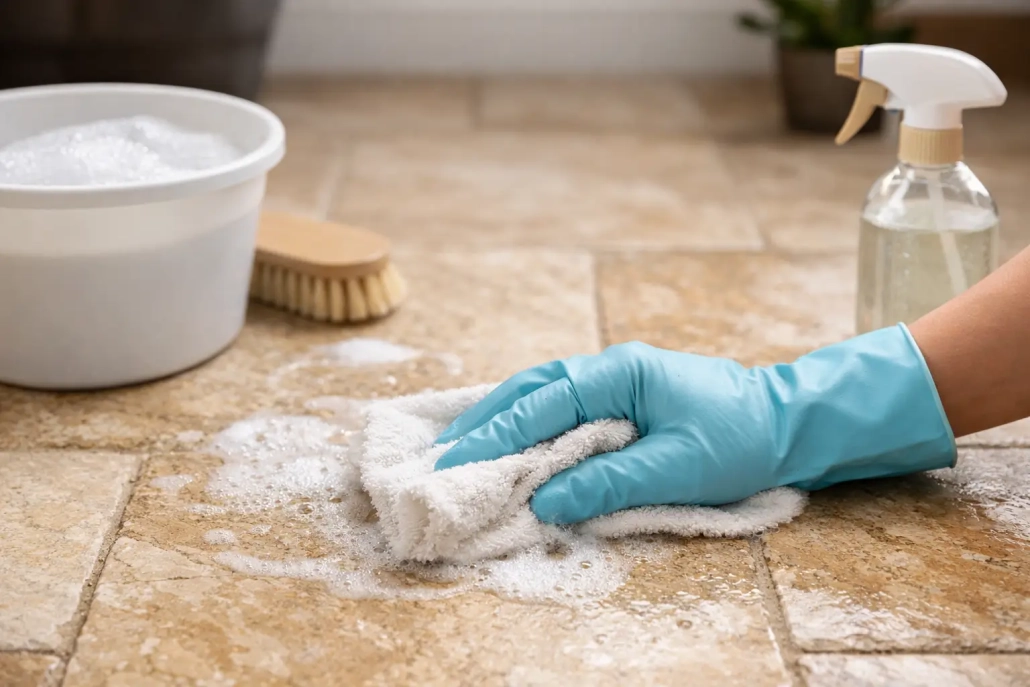
How to Clean Travertine Tile Without Damage
Travertine can make a Palm Beach County home, lobby, or pool area look polished and high-end, but it is not a surface that responds well to harsh cleaning shortcuts. If you are wondering how to clean travertine tile, start with one rule: treat it like natural stone, not ceramic tile. The wrong product can dull its finish, etch the surface, lighten filled areas, or leave permanent-looking marks.
Travertine is a form of limestone with natural pores, veins, and small holes. Those features give it character, but they also make it more absorbent than many other flooring materials. A consistent, gentle cleaning routine protects that investment and keeps the stone looking clean without stripping away its natural color.
What Not to Use on Travertine Tile
Acid is travertine’s biggest enemy. Avoid vinegar, lemon juice, bathroom cleaners with acidic ingredients, rust removers, and most products labeled for soap scum or hard-water deposits unless they specifically state they are safe for natural stone. Acid reacts with the calcium in travertine and causes etching – dull, rough, pale spots that are not the same as ordinary dirt.
Bleach, ammonia, abrasive powders, and stiff scrub brushes are also poor choices. They can damage the stone, weaken some grout, and leave a hazy appearance behind. Steam cleaners deserve caution, too. While they may be appropriate for certain sealed tile installations, repeated high heat and moisture can affect weak grout, loose tiles, or failing sealer. When in doubt, use a stone-safe pH-neutral cleaner and the least aggressive method that will do the job.
How to Clean Travertine Tile Step by Step
The best routine is simple. It works for most interior travertine floors, wall tile, and backsplashes, provided the stone is structurally sound and properly installed.
1. Remove loose sand and debris first
Sweep with a soft broom, use a dry microfiber mop, or vacuum with the hard-floor setting. This matters more in South Florida than many owners realize. Fine sand tracked in from driveways, pool decks, patios, and entryways acts like sandpaper under shoes and can gradually wear down a polished or honed finish.
For busy entryways and common areas, dry-cleaning several times a week is often more effective than frequent wet mopping. Place mats at exterior doors, but avoid rubber-backed mats that can trap moisture against the stone.
2. Mix a gentle cleaning solution
Fill a bucket with warm water and add a pH-neutral natural-stone cleaner according to the label. More cleaner does not mean a better result. Overmixing can leave a film that attracts dust and makes travertine look cloudy.
If you do not have a stone cleaner available, use plain warm water for a light maintenance clean. Do not substitute dish soap as a regular solution. A small amount may seem harmless, but repeated use can create a residue that dulls the stone and makes rinsing harder.
3. Mop with minimal water
Use a well-wrung microfiber mop, not a soaking-wet string mop. Travertine is porous, and excess water can settle into pits, grout lines, and unsealed areas. Clean a manageable section at a time, especially on larger floors, so moisture is not left sitting on the surface.
For wall tile or countertops, apply the cleaner with a soft microfiber cloth. Work gently in overlapping passes rather than pressing hard on one spot.
4. Rinse if the product requires it, then dry
Follow the cleaner’s instructions. Some pH-neutral products are no-rinse formulas, while others need a clean-water pass to remove residue. Either way, finish by drying the surface with a clean microfiber towel or dry mop. This step helps prevent water spots and restores the even, natural look that makes travertine stand out.
Cleaning Travertine in Showers and Bathrooms
Bathroom travertine needs a slightly different approach because soap residue, body oils, mineral deposits, and humidity build up quickly. The goal is to remove the film before it becomes a problem without using an acidic shower cleaner.
Use a stone-safe cleaner regularly, then wipe the walls, bench, and floor dry after use when practical. A squeegee on shower walls can significantly reduce soap scum and hard-water spotting. For textured travertine or grout lines, use a soft nylon brush and light pressure. Rinse thoroughly and dry the area as much as possible.
If you see white, crusty mineral deposits around fixtures or on shower walls, do not reach for vinegar. These deposits may require a specialty stone-safe product or professional restoration. Trying to dissolve them with acid can etch the surrounding tile faster than it removes the buildup.
How to Handle Spills, Stains, and Etching
Blot spills immediately instead of wiping them across the surface. Oil, wine, coffee, juice, cosmetics, and pet accidents can penetrate unsealed or worn travertine. Use a clean white cloth, then clean the area with a pH-neutral stone cleaner and dry it.
A darkened spot may be a stain, but a light dull mark is often etching. This distinction matters. Stains sit below or within the stone and may respond to a poultice or specialized stain treatment. Etching changes the surface itself and usually needs honing or polishing to blend it back in. A household cleaner will not repair it.
For a small unknown spot, test any stone-approved product in a hidden area first. If the stain is large, recurring, oily, or located in a high-visibility area, professional tile and stone restoration is usually the safer call. Aggressive scrubbing can turn one isolated issue into a larger finish problem.
Outdoor Travertine and Pool Deck Care
Travertine patios and pool decks are popular across South Florida because the stone stays comfortable underfoot and complements outdoor living spaces. They also face sunscreen, leaves, irrigation overspray, algae, mildew, and windblown grit.
Start with regular sweeping and rinsing using a garden hose. For routine cleaning, use a pH-neutral stone cleaner and a soft brush, then rinse thoroughly. Keep irrigation aimed away from the surface when possible, since repeated mineral-heavy overspray can leave deposits.
Pressure washing requires judgment. Too much pressure, a narrow tip, or cleaning too close to the surface can damage soft areas, blast out filler, roughen grout, and create uneven color. Low-pressure cleaning with the right solution is often the better method, especially around pool areas, delicate grout, and older installations. Slippery algae growth should be addressed promptly, but the cleaning process should protect both the stone and nearby landscaping.
Protecting Travertine With the Right Maintenance Plan
Most travertine benefits from a quality penetrating sealer. Sealer does not make stone stain-proof, and it does not prevent etching from acidic products. What it does is slow absorption, giving you more time to clean spills before they settle into the pores.
How often travertine needs resealing depends on its finish, location, foot traffic, moisture exposure, and the type of sealer previously used. A shower floor, busy foyer, restaurant entry, or pool deck generally needs more attention than a low-traffic interior wall. If water quickly darkens the stone instead of beading briefly on top, the sealer may be wearing down. That is a useful sign to have the surface evaluated.
Professional service is particularly valuable when travertine has deep soil in its pores, darkened grout, stubborn mineral deposits, etched patches, loose fill, or an uneven finish. The Cleaners Drones helps South Florida property owners restore tile and grout with material-appropriate methods, so the work improves the appearance without creating new damage.
A clean travertine floor should still look like stone: natural variation, soft texture, and a finish that fits the space. Gentle products, fast spill response, and less water will do more for that result than any harsh cleaner ever will.



Leave a Reply
Want to join the discussion?Feel free to contribute!