7 Benefits of Low Pressure Washing for Properties
Salt air, humidity, tropical rain, and intense sun can make a South Florida property look older than it is. Algae streaks on stucco, black buildup on pavers, and mildew on roofs are more than cosmetic problems. One of the biggest benefits of low pressure washing is that it removes this organic growth without relying on the aggressive force that can damage sensitive exterior materials.
For homeowners, HOA boards, property managers, and commercial operators, the right cleaning method protects the property while restoring the clean, cared-for appearance people notice right away. Low-pressure washing is not simply a gentler version of conventional pressure washing. It is a material-specific cleaning process that uses the right solution, dwell time, water volume, and controlled rinsing to do the work safely.
What Low-Pressure Washing Does Differently
High-pressure washing depends primarily on force. On durable concrete in the right conditions, that can be effective. But many exterior surfaces across Palm Beach County are not built to withstand aggressive water pressure. Roof tiles, painted stucco, exterior trim, screens, wood, siding, awnings, and older pavers can be marked, loosened, etched, or stripped when cleaned with too much force.
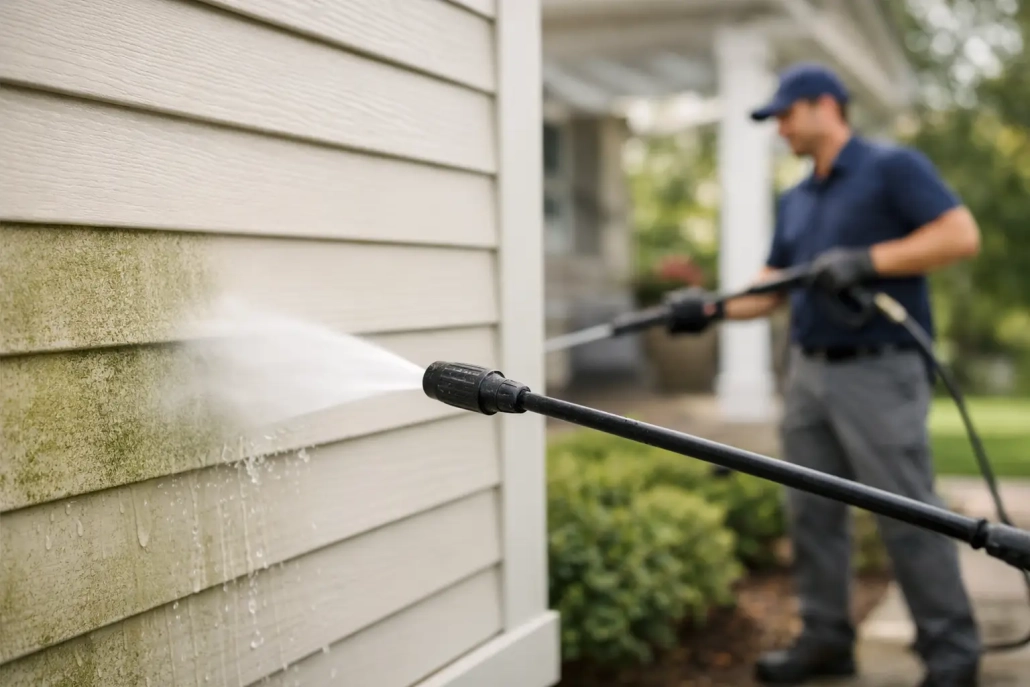
Low-pressure washing, often called soft washing, uses carefully selected cleaning solutions to break down algae, mildew, mold, dirt, pollen, and other surface contamination. The surface is then rinsed at low pressure. Rather than blasting stains away, the process treats the source of the discoloration and lifts it from the material.
The best method always depends on the surface, its condition, and the type of buildup present. A driveway may need a different approach than a clay tile roof or a painted condominium exterior. That assessment is where professional experience matters.
The Benefits of Low Pressure Washing for South Florida Properties
1. It protects delicate exterior surfaces
The most practical benefit is reduced risk of damage. High pressure can chip roof tiles, scar painted surfaces, force water behind siding, remove paver sand, or damage seals and caulking. On older buildings, even a small mistake can create an expensive repair.
Low-pressure methods are designed for surfaces where preservation matters as much as appearance. When the cleaning solution is matched to the material and contamination, crews can remove buildup without turning a cleaning project into a restoration project.
2. It treats algae and mildew instead of only removing the visible layer
Florida’s warm, damp conditions encourage algae, mildew, and mold to return quickly. A force-only wash can make a surface look better for the moment while leaving microscopic growth behind in pores, seams, and textured finishes.
Low-pressure cleaning solutions are allowed to dwell long enough to break down organic contamination before rinsing. This can produce a more even result and may help surfaces stay cleaner longer than a quick, high-pressure rinse alone. Results still vary with shade, irrigation overspray, nearby trees, roof runoff, and the amount of moisture around the property, but treating the growth is a better long-term approach than simply knocking it loose.
3. It helps preserve curb appeal and property value
A clean exterior changes how a property is perceived. For a homeowner, it can make the driveway, walkways, pool deck, roofline, and exterior walls look maintained again. For a condominium community or commercial site, it supports resident confidence, tenant satisfaction, and a professional first impression.
Low-pressure washing is especially valuable when a property has highly visible surfaces that cannot be replaced casually. Restoring a clean finish to stucco, tile, pavers, or exterior cladding can make the building look cared for without the cost and disruption of premature repainting or replacement.
4. It is a safer choice for elevated and hard-to-reach areas
Exterior cleaning becomes more complicated when surfaces are several stories above ground. Traditional access methods may require ladders, lifts, scaffolding, or workers walking on roofs. Each option adds safety considerations, setup time, and disruption around the property.
For multi-story buildings and difficult exterior elevations, The Cleaners Drones can use drone-powered cleaning technology to apply eco-friendly low-pressure methods from a safer working position. This approach can reduce the need for scaffolding and lifts while allowing crews to address exterior areas that are difficult to reach with conventional equipment.
No cleaning method removes every risk, and some properties may still require ground crews or specialized access plans. But reducing unnecessary work at height is a meaningful advantage for HOAs, property managers, and commercial operators responsible for busy sites.
5. It reduces disruption around occupied properties
Large exterior projects can interfere with residents, customers, deliveries, parking, and daily operations. Scaffolding can block walkways. Lift equipment can take up parking spaces. Extended work zones can create noise and inconvenience for days.
Low-pressure washing supports a more controlled process, particularly when paired with aerial access for taller structures. Less heavy access equipment can mean fewer obstacles on-site and a cleaner workflow around entrances, pool areas, patios, and common spaces. For commercial locations, that can help maintain a more professional appearance while the work is underway.
Property managers should still plan for temporary access restrictions, overspray protection, and clear resident communication. A professional crew will identify these needs before work begins rather than treating them as an afterthought.
6. It can be a more responsible option around landscaping
South Florida landscapes often include palms, hedges, flowering plants, turf, water features, and outdoor living areas that deserve protection. The concern is not only water pressure. Cleaning products, runoff, and poor preparation can all affect surrounding plants and surfaces.
A responsible low-pressure washing process includes pre-wetting vegetation, controlling solution application, monitoring runoff, and rinsing thoroughly when the job is complete. Eco-friendly products and proper dilution matter, but so does the technician applying them. “Eco-friendly” should never be treated as a substitute for careful site preparation.
If a property has delicate landscaping, ponds, newly installed plants, or unusual exterior finishes, mention it during the estimate. Those details help determine the right cleaning plan.
7. It delivers a more even clean on textured materials
Stucco, barrel tile, travertine, pavers, and textured concrete tend to hold dirt and biological growth in uneven patterns. Excessive pressure can leave visible wand marks or clean one area more aggressively than another. It may also erode the surface over time.
With low-pressure washing, cleaning agents do more of the work across the full surface. The rinse can then remove loosened buildup more consistently, helping avoid the striped or patchy look that comes from an uneven high-pressure pass. On pavers, the process can also help preserve the joint material that keeps the installation stable.
When High Pressure May Still Be Appropriate
Low-pressure washing is not the answer for every cleaning need. Heavily stained concrete, gum removal, certain commercial loading areas, and some durable masonry surfaces may require targeted high-pressure equipment. Even then, pressure should be adjusted for the material, and the operator should understand how water flow, nozzle selection, distance, and cleaning solutions affect the result.
The point is not that more pressure is always bad. The point is that the cleaning method should fit the surface. A reputable professional does not bring one setting and one solution to every job.
What to Ask Before Scheduling Exterior Cleaning
Before choosing an exterior cleaning provider, ask how they will clean each surface, not just whether they offer pressure washing. A clear answer should cover the expected method, protection for plants and adjacent surfaces, how runoff will be managed, and whether the crew has a plan for high or difficult-to-reach areas.
It is also reasonable to ask about the condition of your surfaces. Failing paint, cracked tiles, loose pavers, deteriorated caulking, and existing leaks should be identified before cleaning begins. Cleaning can reveal issues that buildup was hiding, but it should not be used to ignore needed maintenance.
A clean property should never come at the expense of damaged finishes, disrupted residents, or unnecessary safety risks. When exterior buildup starts taking away from the look of your home, community, or business, choose a low-pressure cleaning plan built around the materials you want to protect.


Leave a Reply
Want to join the discussion?Feel free to contribute!