
How to Sanitize Upholstered Chairs Safely
A dining chair can look clean and still hold the evidence of everyday life: sunscreen after a South Florida beach day, pet dander, food spills, body oils, and humidity-related odors. Knowing how to sanitize upholstered chairs starts with treating the fabric correctly. Too much moisture, the wrong chemical, or aggressive scrubbing can leave water rings, shrink fibers, set a stain, or create conditions for mildew inside the padding.
Sanitizing is not the same as making a chair look better. A proper approach removes soil first, uses a product appropriate for the material, and dries the upholstery thoroughly. The result should be a chair that is cleaner, fresher, and ready to use without risking the fabric or the foam underneath.
Start by Identifying the Upholstery Fabric
Before applying anything, find the manufacturer’s care tag. It is usually under the seat cushion, beneath the chair, or along a skirt or seam. The cleaning code tells you how much moisture the material can handle.
A W code generally means water-based cleaning products are acceptable. S means use a solvent-based upholstery cleaner, not water. WS means either method may be suitable, while X means vacuum only and calls for professional care. If there is no tag, treat the chair cautiously and test any product on a hidden section first.
Fabric type matters as much as the code. Durable synthetic fabrics often tolerate careful water-based cleaning, but cotton, linen, velvet, silk, wool, and older upholstery can react badly to moisture or high heat. Leather and faux leather require separate cleaning methods and should never be saturated like fabric upholstery.
What Sanitizing Actually Means for Upholstered Chairs
Regular vacuuming and spot cleaning remove crumbs, dust, and visible marks. Sanitizing focuses on reducing germs on the surface, while deep upholstery cleaning also addresses embedded soil, oils, allergens, and odor-causing residue in the fibers and cushion material.
For most homes, cleaning the chair thoroughly is the first priority. A disinfectant or sanitizer cannot work well through a layer of grime. If someone in the household has been sick, if the chairs are used in a waiting room, or if there has been a pet or bodily-fluid accident, a fabric-safe sanitizing step may make sense after cleaning.
Be careful with broad claims on household products. Use only a product specifically labeled for upholstered fabric, and follow its stated contact time. Contact time is the length of time the surface must remain wet for the product to work as directed. Spraying and immediately wiping it away may provide fragrance, but not the intended sanitizing result.
How to Sanitize Upholstered Chairs Step by Step
1. Vacuum every surface before using moisture
Use an upholstery attachment to vacuum the seat, back, sides, seams, piping, and crevices. Move cushions when possible. Dry soil behaves like fine sand during cleaning, so removing it first protects the fibers from unnecessary abrasion.
For pet hair, a soft upholstery brush or rubber cleaning tool can loosen hair before vacuuming. Do not use a stiff brush on delicate weaves, velvet, or loosely woven fabric.
2. Pre-treat visible spots carefully
Address food, makeup, oils, or drink spills with an upholstery-safe spot cleaner that matches the chair’s care code. Apply the product to a clean white cloth, not directly onto the stain, unless the manufacturer directs otherwise. Blot from the outside edge toward the center.
Avoid rubbing. Scrubbing can spread the stain and distort the pile of the fabric. It can also push moisture deeper into the cushion, where drying takes much longer in humid Palm Beach County conditions.
3. Clean the upholstery with controlled moisture
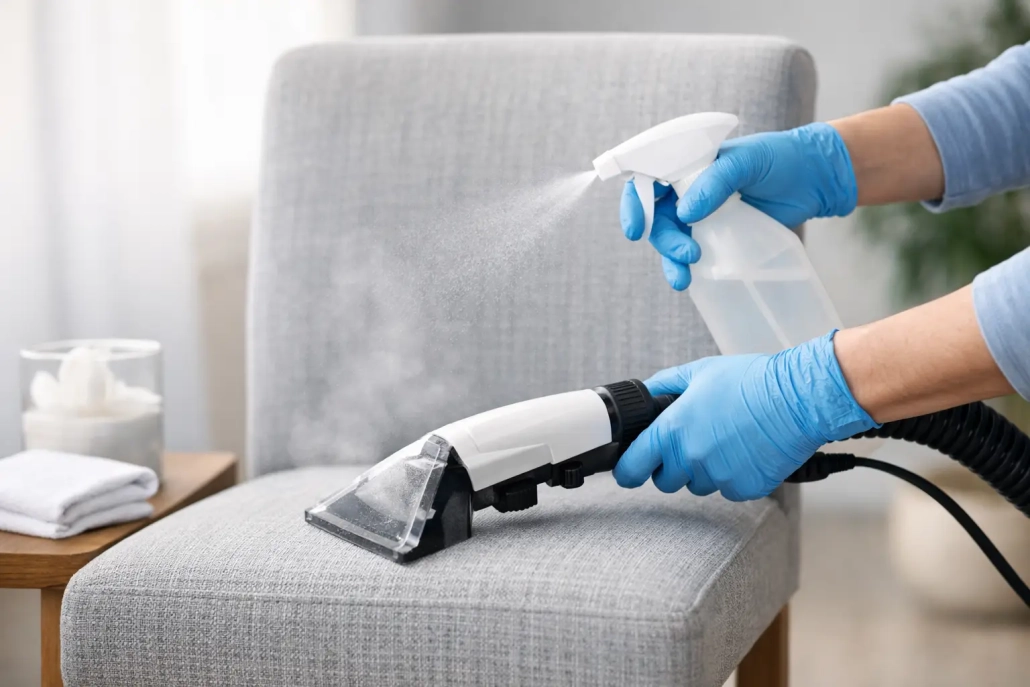
For water-safe fabric, use a lightly damp microfiber cloth or an upholstery machine with minimal moisture extraction. Work in small sections and avoid soaking the padding. The goal is to lift soil, not saturate the chair.
If you use a home upholstery machine, do not make repeated wet passes in the same area. One controlled cleaning pass followed by multiple dry extraction passes is the safer approach. A chair that feels wet beneath the surface can develop a lingering odor even when the top fabric appears dry.
For solvent-only materials, use the approved solvent product sparingly in a well-ventilated area. Keep the product away from flames, heat sources, and children. When a fabric’s code is unclear, skip the guesswork rather than mixing cleaners or trying a homemade solution.
4. Apply a fabric-safe sanitizer when it is appropriate
Once the fabric is clean, apply a sanitizer or disinfectant only if it is approved for that upholstery type. Test it in an inconspicuous spot and check for fading, stiffness, color transfer, or a visible ring after it dries.
Mist the fabric evenly rather than drenching it. Follow the label for the required contact time, then allow the chair to air dry completely. Do not cover the chair, replace cushions tightly, or sit on it while it is still damp.
5. Dry the chair fast and completely
Drying is the step many people rush, and it is especially important in South Florida. Run ceiling fans, use air conditioning, open interior airflow where weather allows, and position portable fans nearby. A dehumidifier can help when the room feels damp.
Avoid high heat from a hair dryer, which can damage fibers or set certain stains. Depending on the fabric, cushion thickness, and indoor humidity, drying may take several hours or longer. If the chair still smells musty after it dries, moisture or contamination may remain below the surface.
Cleaning Methods to Avoid
Some popular DIY shortcuts create more work than they solve. Steam can be useful on certain durable fabrics, but it is not universally safe and can cause shrinkage, water marks, or adhesive failure in delicate upholstery. Steam also drives moisture into cushioning if used too heavily.
Bleach is not a fabric sanitizer for upholstered chairs. It can discolor fabric, weaken fibers, and leave irritating residue. Vinegar may help with some mild odors, but it is not a registered disinfectant and can affect dyes or finishes. Mixing cleaning products is never safe, particularly products containing bleach, ammonia, or alcohol.
Heavy fragrance sprays are another temporary fix. They may cover an odor for a few hours without removing the oils, pet residue, or moisture causing it. If the smell returns after the chair dries, the source needs deeper attention.
When Professional Upholstery Cleaning Is the Better Choice
A home method works well for routine maintenance and a fresh, minor spill on a fabric you understand. It is less reliable when the chair has widespread discoloration, strong pet odor, old food or drink stains, mold concerns, smoke residue, or heavily soiled cushions.
Professional upholstery cleaning is also the smart call for valuable dining chairs, antique pieces, delicate natural fibers, and commercial seating with regular guest or employee use. A trained technician can identify the material, choose a compatible method, control moisture, and extract soil that a surface spray cannot reach.
For homes, condos, offices, and common areas across Palm Beach County, The Cleaners Drones can help with professional upholstery cleaning when chairs need more than a quick refresh. The right treatment should improve the visible appearance without leaving the fabric overwet, sticky, or stiff.
Keep Chairs Fresher Between Deep Cleanings
A simple maintenance routine makes sanitizing easier and helps chairs last longer. Vacuum upholstered dining chairs every few weeks, clean spills promptly, and rotate removable cushions when the design allows. Keep chairs out of direct sun where possible, since heat and UV exposure can fade fabric and make stains more noticeable.
If pets use the chairs, place a washable throw over their favorite spot rather than relying on frequent chemical treatments. In busy households and condo common areas, a fabric protector applied after professional cleaning can make future spill cleanup more manageable. It is not a substitute for cleaning, but it can slow absorption and reduce permanent staining.
Clean upholstery should feel dry, smell neutral, and look evenly refreshed, not perfumed or saturated. When you are unsure about the fabric or the source of an odor, protect the chair first: stop adding products, promote airflow, and have the material assessed before a small problem becomes permanent damage.


Leave a Reply
Want to join the discussion?Feel free to contribute!