Flood Drying Timeline: What Happens Each Day
A flood drying timeline is not a countdown you can safely guess at from the surface. A room may look dry within a day, yet moisture can remain behind baseboards, beneath flooring, inside wall cavities, and under cabinetry. In South Florida’s heat and humidity, that hidden moisture can quickly create odor, mold conditions, material damage, and a much larger restoration project.
The right response starts with stopping the water source, documenting visible damage, and getting professional help as soon as it is safe to do so. Whether a pipe burst in a Palm Beach County home, an appliance leaked in a condo, or stormwater entered a commercial space, drying must be measured, not assumed.
The Flood Drying Timeline Starts in the First 24 Hours
The first day is about control. Standing water needs to be extracted, affected materials need to be identified, and the drying area needs to be stabilized. Technicians typically use moisture meters and thermal imaging to find water that has moved beyond the obvious wet spot. This matters because water follows gravity, wicks into porous materials, and can travel under flooring or along wall framing.
Furniture, rugs, and contents may need to be moved or elevated to protect them and allow airflow across the floor. Depending on the source of the water, contaminated materials may require special handling. Clean water from a supply line is different from water that came from a toilet overflow, sewage backup, or outdoor flooding. The category of water affects what can be cleaned, what must be removed, and the safety precautions required.
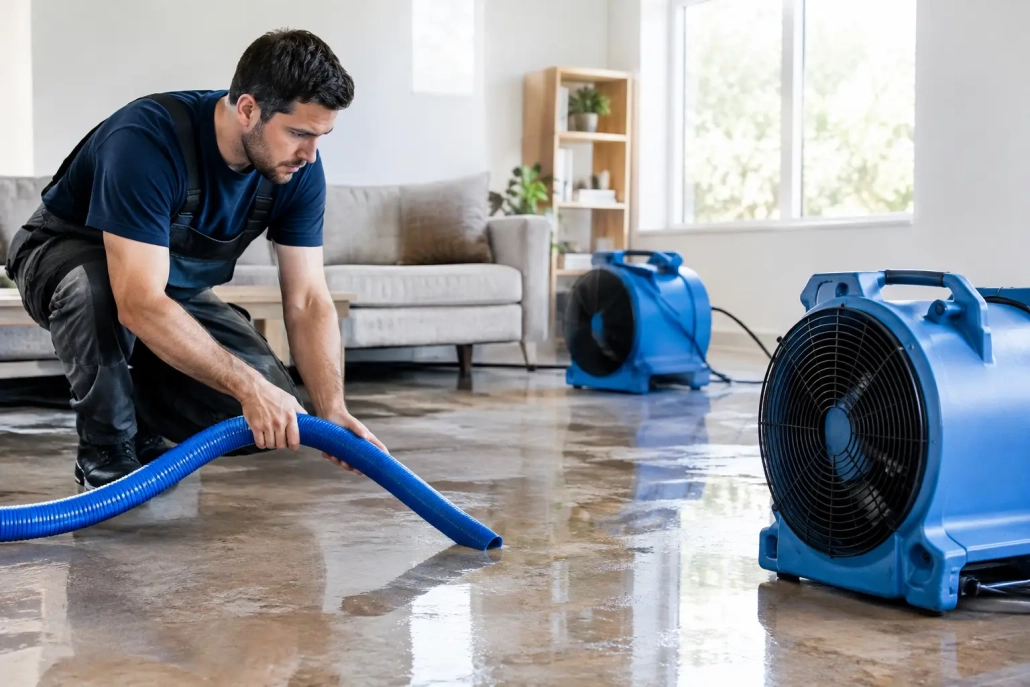
After extraction, professional air movers and dehumidifiers begin the real drying process. Air movers promote evaporation from wet surfaces. Dehumidifiers capture that moisture from the air so it does not settle back into the building. Opening windows is not always helpful in South Florida, where humid outdoor air can slow drying instead of improving it.
Days 2 and 3: Drying Equipment Does the Heavy Lifting
By the second day, a property can look much better. That is encouraging, but it does not mean the job is complete. Flooring edges may still be wet, drywall can retain moisture above the visible water line, and wood framing can dry at a different rate than carpet or tile.
This is when daily monitoring makes the difference between a controlled restoration and a preventable problem. A professional checks temperature, humidity, and moisture readings in materials, then adjusts equipment placement or adds drying capacity where needed. Equipment that runs without monitoring can waste time and electricity while leaving the wettest areas untreated.
Carpet drying depends heavily on how quickly water was removed, the padding beneath it, and the type of water involved. Clean water that is extracted promptly may allow some carpet and padding to be saved. If padding has been saturated for an extended period, or if the water is contaminated, removal is often the safer choice. The goal is not simply to keep materials in place. It is to return the space to a clean, dry, stable condition.
Hardwood and engineered wood floors require particular care. Wood can cup, buckle, or separate when moisture remains underneath. Fast, properly balanced drying can sometimes limit damage, but aggressive heat or poor airflow can create its own problems. Tile may seem unaffected, yet moisture can stay beneath the tile assembly or seep into surrounding drywall and cabinets.
Days 3 Through 5: Verification, Not Visual Guesswork
Many uncomplicated clean-water losses dry in three to five days. That is a common range, not a promise. The actual timeline depends on the amount of water, the materials affected, how long water sat, the indoor humidity level, and whether moisture reached concealed areas.
A small leak on a tile floor may dry relatively quickly after extraction. A supply-line break that reaches carpet, drywall, baseboards, closets, and lower cabinets may need several days of focused drying. A storm-related intrusion or contaminated water event can take longer because affected materials may need to be removed before the structure can dry correctly.
At this stage, technicians compare current moisture readings with dry standards from unaffected areas of the property. Drywall, framing, subfloors, and other materials should be verified as dry before repairs begin. Reinstalling baseboards, replacing flooring, or painting too soon can trap moisture and conceal damage until odor, staining, or microbial growth becomes visible later.
For condo owners and property managers, access and communication can affect the schedule as much as equipment. A leak from an upper unit may impact multiple residences, common hallways, or electrical areas. Coordinating entry, documenting affected spaces, and addressing the source at the building level helps avoid repeated damage and unnecessary disruption for residents.
Why Some Flood Drying Jobs Take Longer
A longer drying period is not automatically a sign of poor service. It can mean the team found moisture where it needed to be found. The alternative is declaring a property dry based only on a dry-looking floor, then discovering damaged cabinets, swollen baseboards, or mold conditions weeks later.
Four factors commonly extend a flood drying timeline:
- Hidden moisture: Water behind walls, under floors, or inside cabinetry takes longer to access and dry.
- Material type: Dense wood, insulation, drywall, carpet padding, and layered flooring all hold water differently.
- Water contamination: Category 2 or Category 3 water often requires removal of unsalvageable porous materials for health and safety.
- South Florida humidity: High moisture in the outside air can slow natural evaporation and makes professional dehumidification especially valuable.
There is also a practical trade-off. Removing a small section of wet drywall or baseboard can feel disruptive, but it may provide access to dry the wall cavity and prevent a more extensive repair later. The best approach protects both the structure and the people who use it every day.
What Property Owners Should Do While Drying Is Underway
Once drying equipment is installed, give it room to work. Keep doors and windows positioned as instructed, avoid turning equipment off because it is noisy, and do not move air movers or dehumidifiers without checking with the restoration team. Drying systems are set based on the size of the affected area and the materials being dried.
Take photos of the initial damage, keep records of conversations and repairs, and notify the appropriate property manager or insurer when applicable. If the loss involves a condominium or commercial building, clear communication can speed access approvals and help identify whether water has migrated into adjacent units or shared building systems.
Watch for changes that should be reported immediately: new stains, bubbling paint, a musty odor, warped flooring, or water appearing in another room. These signs do not always mean the drying process has failed, but they may reveal moisture that was not visible during the initial assessment.
Do not assume household fans, a wet vacuum, or a portable dehumidifier can handle a significant flood. Those tools can help with a minor spill, but they do not replace high-capacity extraction, controlled drying, and moisture verification after a water loss. The risk is greatest when the visible water is gone and the hidden moisture is still working through the building.
When Repairs Can Begin
Repairs should begin after drying documentation confirms affected materials have reached acceptable moisture levels. Then the work can move from restoration to rebuilding: replacing removed drywall or insulation, reinstalling baseboards, repairing flooring, refinishing wood, and returning the room to normal use.
For a straightforward water event, this transition may happen within a few days. For widespread losses, damaged materials, or contaminated water, the complete process can extend beyond the drying phase. That distinction matters. Drying may take three to five days, while repairs and insurance coordination can take longer depending on the scope of work and material availability.
The Cleaners Drones helps South Florida property owners respond with professional water extraction, drying equipment, moisture monitoring, and clear next steps. When water enters your property, fast action is valuable, but verified drying is what protects the space after the emergency feels over. If you are facing a leak or flood, treat the first dry-looking day as the start of confirmation, not the finish line.


Leave a Reply
Want to join the discussion?Feel free to contribute!