How Aerial Washing Protects Facades Safely
A clean facade does more than improve curb appeal. In Palm Beach County, exterior surfaces face constant humidity, windblown salt, algae, mold, airborne dirt, and storm-season debris. Left in place, that buildup can hold moisture against finishes, stain porous materials, and make a well-managed property look neglected. How aerial washing protects facades comes down to using the right cleaning method, at the right pressure, with precise access to every level of the building.
For condominium boards, property managers, commercial operators, and homeowners with multi-story residences, drone-powered washing offers a practical alternative to lifts, scaffolding, and crews working from elevated platforms. It is designed to clean difficult exterior areas while reducing disruption around the property.
Why South Florida Facades Need Consistent Cleaning
South Florida buildings work hard year-round. Heat and humidity create ideal conditions for algae, mildew, and organic growth, especially on shaded elevations and areas near landscaping. Salt in the air can settle on coastal and inland properties alike, while rain carries dirt down walls and leaves streaks below windows, balconies, and rooflines.
These contaminants are not all equally harmful, and the risk depends on the facade material. A painted stucco wall may develop dark biological staining. Pavers, concrete, and masonry can collect grime in pores and joints. Metal panels can show salt residue and oxidation-related discoloration. Glass, trim, soffits, and balcony surfaces can lose their clean, finished appearance quickly.
Routine cleaning does not replace repairs or protective coatings, but it can help preserve a facade by removing the buildup that traps moisture and obscures early warning signs. When surfaces are clean, managers can spot cracks, failed sealant, drainage issues, loose paint, or damaged sections before those problems become larger and more expensive.
How Aerial Washing Protects Facades Without Excess Pressure
Aerial washing protects a building first by improving access. Instead of relying on a worker to reach every section from a ladder, lift, or scaffold, a professionally operated cleaning drone can deliver a controlled wash to high walls, upper floors, exterior cladding, and other difficult locations.
That access matters because missed areas are often where staining becomes most visible. Upper elevations, recessed walls, exterior corners, and facade sections above landscaping can remain dirty for years simply because traditional access is costly or inconvenient. Aerial equipment allows the cleaning process to be more consistent from ground level to roofline.
The second protection comes from low-pressure cleaning. High pressure has a place on durable ground-level surfaces, but it can be the wrong choice for many facade materials. Excessive force may damage paint, drive water behind compromised finishes, disturb loose stucco, scar softer masonry, or force water into window and door openings.
A low-pressure, material-appropriate solution does the cleaning work through dwell time and controlled application rather than brute force. The solution loosens organic growth and surface contamination, followed by a measured rinse. This approach is often called soft washing, although the exact process should be adjusted for the material, condition, and manufacturer guidance for the building exterior.
The goal is not simply to make the wall look brighter for a few days. It is to remove the source of visible staining while treating the surface with the care it needs.
Cleaner surfaces reveal maintenance needs sooner
A dirty facade can hide more than discoloration. Algae streaks may conceal hairline cracks. Grime around a window can make failing caulk harder to notice. A stained wall can also mask water patterns that point to roof runoff, blocked drainage, or leaking exterior features.
After cleaning, the property team has a clearer view of the building envelope. That does not mean aerial washing is an inspection or repair service, but the visible improvement can make follow-up maintenance decisions far more straightforward. For HOAs and commercial property managers planning capital work, this clearer baseline can be especially useful.
Reduced access equipment can reduce property disruption
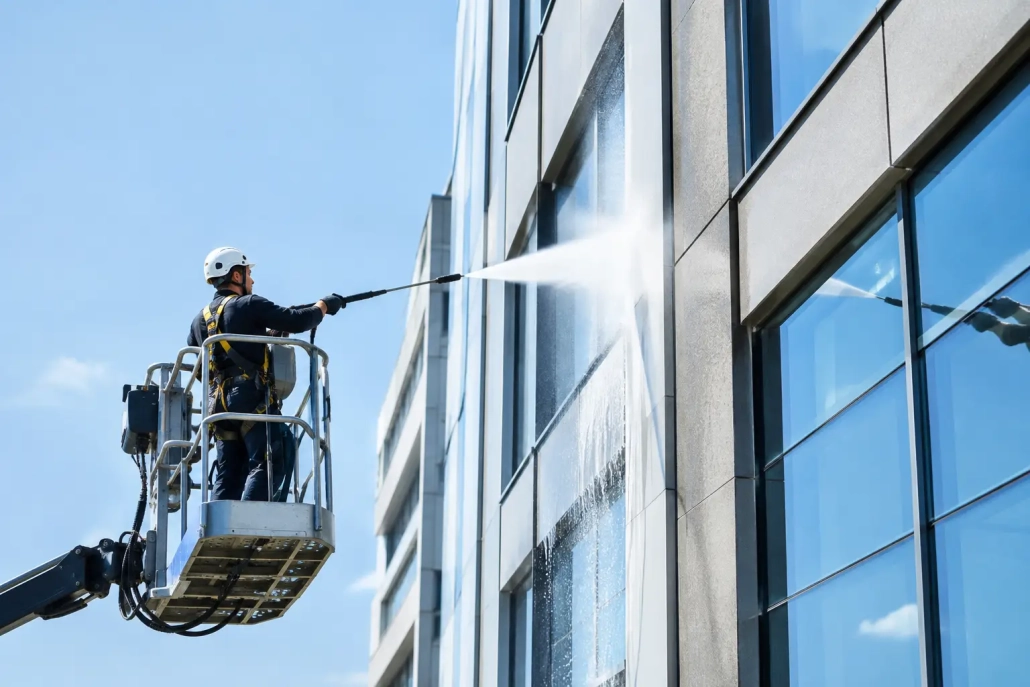
Scaffolding and boom lifts may be necessary for repairs, painting, or hands-on construction work. For exterior cleaning alone, however, they can add cost, staging requirements, blocked parking, restricted walkways, and prolonged work zones.
Drone-powered cleaning reduces the need for that access equipment in many situations. The team still establishes a controlled work area, protects nearby landscaping and exterior features, and manages pedestrian safety. But the property may avoid the visual clutter and operational interruption associated with large-scale scaffolding.
For a condo community, that can mean fewer parking spaces taken out of service. For a retail, office, or hospitality property, it can help preserve a more professional appearance while work is underway. The exact benefit depends on building height, layout, surrounding access, and local site conditions.
The Process Matters as Much as the Technology
A drone is not a substitute for cleaning knowledge. A facade cleaning plan should begin with an assessment of the surface, the type of staining, access conditions, nearby landscaping, and drainage paths. The right approach for painted stucco is not necessarily the right approach for exposed concrete, metal, glass, stone, or composite cladding.
Professional aerial washing also requires attention to chemistry. Cleaning solutions should be selected and diluted for the specific job, then applied carefully to avoid unnecessary impact on plants, adjacent surfaces, and occupants. Pre-wetting and rinsing surrounding vegetation, controlling runoff, and protecting sensitive areas are part of responsible exterior cleaning.
Weather is another practical consideration. High winds, lightning, heavy rain, and unsafe flying conditions can delay aerial work. A reliable contractor does not force a schedule when conditions could affect safety, cleaning quality, or control of the equipment. This is one of the trade-offs of aerial cleaning, but it is a sensible one.
When Aerial Washing Is the Right Fit
Aerial washing is especially valuable when a property has high or hard-to-reach facade areas and wants to avoid the expense and disruption of scaffolding. It can be a strong fit for high-rise buildings, mid-rise condominiums, apartment communities, hotels, offices, warehouses, schools, shopping centers, and multi-story homes.
It is not the answer to every exterior issue. If a facade has major cracks, loose material, failing coatings, active leaks, or structural concerns, those conditions should be evaluated and repaired before or alongside cleaning. Likewise, delicate historic surfaces and certain specialty finishes may require a more conservative method, a test area, or direct hands-on treatment.
The best result comes from matching the cleaning method to the property rather than treating every building the same way.
A Practical Maintenance Schedule for South Florida Properties
Most South Florida properties benefit from regular exterior cleaning, but the interval depends on exposure. Coastal buildings, heavily shaded communities, properties near busy roads, and facades surrounded by dense landscaping may need attention more often than a sheltered building with open airflow.
Many managers schedule cleaning annually or semiannually to stay ahead of visible growth. Waiting until a facade is deeply stained can make the job more involved and can create a poor first impression for residents, guests, tenants, and prospective buyers. A planned schedule also makes budgeting easier and helps avoid rushed cleaning before an inspection, board meeting, sale, or major event.
The Cleaners Drones uses drone-powered, low-pressure exterior cleaning to help South Florida properties maintain the high, difficult-to-reach areas that conventional methods often make costly to service. The priority is a visible clean without turning the property into a long-term work zone.
A facade should not have to look weathered simply because it is difficult to reach. With material-appropriate cleaning, safe aerial access, and a consistent maintenance plan, property owners can keep exterior surfaces cleaner while making it easier to catch the small issues worth addressing early.


Leave a Reply
Want to join the discussion?Feel free to contribute!