Drone Pressure Washing for High-Rise Buildings
A streaked upper facade can make an otherwise well-managed property look neglected from the street. For condominiums, commercial buildings, HOAs, and multi-story homes, drone pressure washing provides a practical way to clean difficult exterior areas without turning the property into a weeks-long lift or scaffolding project.
The name can be misleading. The best aerial exterior cleaning is not about blasting every surface with high pressure. It is about using the right low-pressure application, cleaning solution, and rinse method for the building material. That distinction protects paint, stucco, seals, windows, and other exterior finishes while removing the organic growth and grime that South Florida weather leaves behind.
Why Exterior Surfaces Get Dirty So Fast in South Florida
Warm temperatures, humidity, frequent rain, salt in coastal air, and wind-driven debris create ideal conditions for algae, mildew, mold, and atmospheric buildup. On a high-rise or multi-story building, those stains do not stay at ground level. They collect on upper walls, balconies, overhangs, parapets, roofs, and other surfaces that are difficult and expensive to reach.
The problem is more than appearance. Organic growth can hold moisture against a surface, contribute to staining, and make walkways or lower areas slippery when runoff reaches the ground. For property managers and HOA boards, delayed cleaning can also lead to resident complaints and a property that looks less cared for than the surrounding community.
Traditional access methods can solve the reach problem, but they often create another one. Lifts need staging space. Scaffolding can block entrances, parking, sidewalks, and views for extended periods. Rope access has a place on certain projects, but it requires specialized planning and can still affect operations below.
How Drone Pressure Washing Works
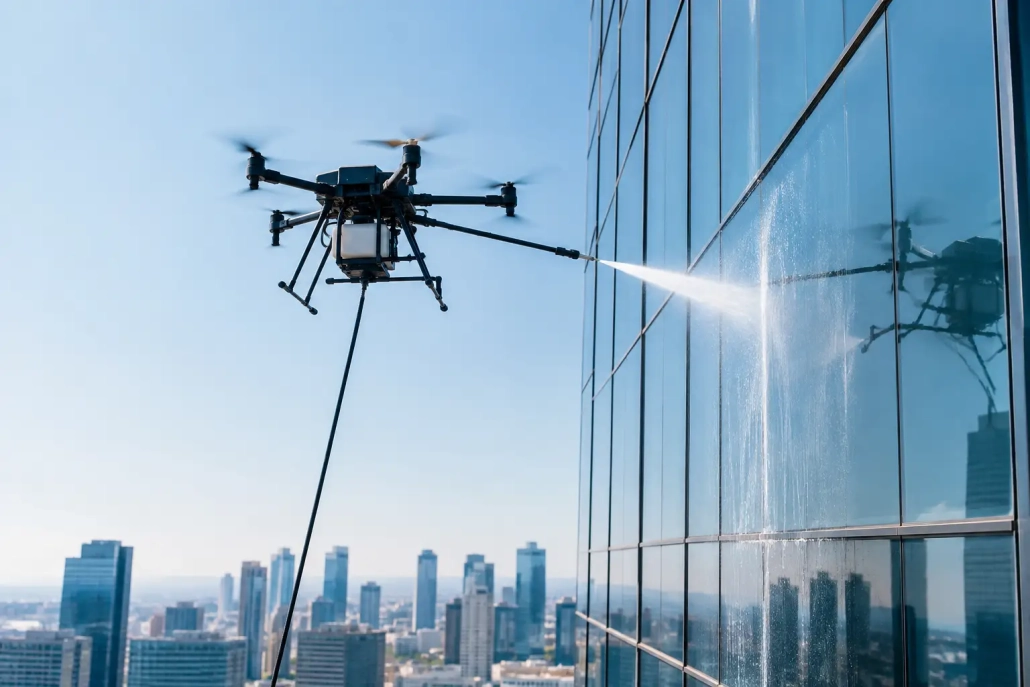
A cleaning drone is operated by trained professionals from a controlled position on the ground. The aircraft carries a hose system that applies water and appropriate cleaning treatment to high exterior surfaces. Rather than placing a technician on a ladder, lift, or suspended platform for every section, the drone gives the crew controlled access from a distance.
For many building exteriors, low-pressure cleaning is the safer choice. The cleaning solution does much of the work by treating algae and discoloration before a controlled rinse removes the residue. This is often called soft washing, and it is especially useful for painted stucco, many roof systems, vinyl, soffits, and delicate exterior finishes.
The process generally follows four practical stages:
- The team evaluates the surface material, level of buildup, access points, drainage, landscaping, and nearby vehicles or pedestrian areas.
- The work zone is prepared, with protection and communication measures tailored to the property.
- The drone applies cleaning treatment and a controlled rinse to the approved exterior areas.
- The crew checks the finished surfaces and the ground-level area for runoff, remaining stains, and final cleanup.
Each property needs its own plan. A concrete parking structure, a stucco condominium tower, and a multi-story residence do not respond to the same cleaning pressure, solution strength, or dwell time. Professional assessment is what turns aerial access into dependable cleaning results.
The Main Benefits for Building Owners and Managers
The most immediate benefit is access. Drone cleaning can reach upper-level surfaces that are costly or impractical to service from the ground. But the value goes beyond height.
Less Disruption Around the Property
Scaffolding and lifts can take up valuable space in visitor areas, drive lanes, sidewalks, and parking lots. They may require sections of the property to remain closed while work is underway. A drone-based approach can reduce the equipment footprint, allowing the crew to focus on the actual cleaning instead of extensive access setup.
That matters at occupied condominiums, busy retail centers, offices, and hotels, where appearance and normal operations must continue at the same time. Reduced disruption does not mean no preparation is needed. Crews still need to manage pedestrian safety, overspray, runoff, and scheduling. It does mean the project may be easier to coordinate around residents, tenants, and customers.
Safer Access for Hard-to-Reach Areas
Working at height always calls for careful planning. Drone technology can reduce the need for technicians to stand on elevated equipment or work from suspended access systems during the cleaning application. Fewer people working at height can mean less exposure to access-related risk.
Safe work still depends on experienced operators, appropriate site controls, weather awareness, and a clear work zone. Wind conditions, overhead obstructions, power lines, and nearby traffic all affect whether aerial cleaning is suitable on a given day.
A Better Fit for Delicate Exterior Materials
High pressure is not automatically better. On some surfaces, it can strip paint, force water behind siding, damage seals, etch softer materials, or worsen an existing weak point. Low-pressure drone cleaning paired with surface-appropriate treatments gives crews more control over the process.
This is particularly valuable for painted exteriors and buildings with visible weathering. The goal is not simply to make stains disappear for a week. It is to remove buildup without creating a new maintenance issue.
Improved Curb Appeal Without a Major Construction Feel
A cleaner exterior changes how a property is perceived. Residents notice it when they arrive home. Prospective tenants and buyers notice it before they enter. Customers notice it before they decide whether a business looks professional and well maintained.
For property decision-makers, exterior cleaning is often part of a larger maintenance plan. It can be scheduled before an inspection, board event, leasing season, property sale, repainting project, or storm season. A drone approach helps make that work possible when upper elevations are the source of the visible problem.
When a Drone Is the Right Choice
Drone cleaning is well suited to high walls, upper facades, roof edges, towers, courtyards with limited equipment access, and other elevated exterior areas. It can be an efficient option when a lift cannot easily fit on site or when scaffolding would create excessive disruption.
It is not the answer to every cleaning need. Ground-level sidewalks, driveways, pool decks, patios, and heavily soiled concrete may require conventional pressure washing equipment. Some surfaces may need hand-detailing, restoration work, or repairs before cleaning begins. Heavy mineral staining, oxidation, paint failure, and permanent discoloration may not come off with washing alone.
A reputable contractor should be clear about those limits. Promising a brand-new appearance on every aged surface is not honest. The right expectation is visible improvement based on the surface condition, the type of staining, and the material being cleaned.
What to Ask Before Scheduling Aerial Exterior Cleaning
Start with the cleaning method. Ask whether the contractor uses high pressure, low pressure, or a combination based on the surface. Ask how landscaping, windows, vehicles, and outdoor furnishings will be protected. You should also understand how the crew will manage pedestrian access, runoff, weather delays, and communication with residents or tenants.
Experience matters as much as equipment. A drone is a valuable access tool, but it does not replace knowledge of exterior materials, cleaning chemistry, and property protection. The provider should inspect the site, explain the approach in plain language, and give you a realistic picture of the expected result.
For larger communities or commercial sites, it also helps to plan the work around the property calendar. Coordinating cleaning by elevation, building section, or low-traffic time can make the project easier for everyone involved.
A Cleaner Exterior Starts With the Right Access Plan
High exterior surfaces should not have to stay stained simply because they are hard to reach. For Palm Beach County properties, drone pressure washing offers a modern, practical option that can reduce access challenges while delivering the visible cleaning results owners, boards, and managers expect.
Before scheduling, walk the property with a professional and identify the surfaces that need attention, the access constraints that matter, and the outcome you want residents or customers to see. The Cleaners Drones can help turn that plan into a cleaner building without making your property feel like a construction zone.


Leave a Reply
Want to join the discussion?Feel free to contribute!