Building Wash Frequency for South Florida Properties
Salt haze can settle on a coastal condo long before it looks dirty. A shaded stucco wall can begin growing algae after a wet stretch, while a sunny storefront may hold its appearance for months. That is why building wash frequency should not be set by a generic calendar alone. In Palm Beach County and throughout South Florida, exterior cleaning needs are driven by exposure, building materials, drainage, landscaping, and how much appearance matters to residents, tenants, customers, or guests.
A clean exterior does more than create curb appeal. It helps prevent organic buildup from becoming embedded in porous surfaces, keeps walkways safer, and makes it easier to spot maintenance concerns before they become larger repairs. The right schedule protects the property without over-cleaning delicate surfaces or creating unnecessary disruption.
How Often Should a Building Be Washed?
For many South Florida properties, a professional exterior wash every 6 to 12 months is a practical starting point. Buildings near the ocean, heavily shaded properties, busy commercial sites, and communities with frequent irrigation overspray often need service more often, commonly every 3 to 6 months for the most exposed areas.
The goal is not to wash simply because a date arrived on the calendar. It is to clean before algae, mildew, salt residue, dirt, and pollution leave lasting discoloration or make surfaces harder to restore. A property manager may choose quarterly cleaning for common walkways and entrances while scheduling a full building wash once or twice a year. A homeowner may only need an annual exterior cleaning, with targeted service after storm season or when green growth appears.
A practical South Florida schedule
A light-to-moderate exposure property may benefit from an annual full wash, usually timed before peak entertaining season, an inspection, or the rainy months. A high-exposure property should consider a semiannual plan. This often includes a pre-rainy-season cleaning and another after months of humidity, storms, and wind-blown debris.
For high-rises, condominium communities, and commercial buildings, the schedule may be divided by area. Entrances, parking areas, pool decks, breezeways, awnings, and lower elevations usually show soil first. These spaces can be maintained more frequently than upper exterior walls, reducing visible buildup without requiring a complete building wash at every visit.
What Changes Building Wash Frequency?
South Florida’s climate creates conditions that make exterior cleaning a regular property-care need. Heat, humidity, afternoon rain, and coastal air work together to feed algae and mildew, especially where a building stays damp or shaded.
Location and salt exposure matter first. Properties closer to the coast may collect salt film that dulls glass, metal, paint, railings, and exterior finishes. Salt residue is not always obvious from the ground, but regular removal helps preserve a cleaner appearance and supports long-term surface care.
Shade and moisture also make a major difference. North-facing walls, areas beneath trees, enclosed courtyards, and surfaces near poor drainage tend to stay wet longer. Those conditions encourage dark staining, green algae, and mildew growth. If one side of the property repeatedly gets dirty before the rest, it may need a separate cleaning interval.
Building material determines both timing and method. Stucco, painted surfaces, vinyl, tile roofs, pavers, concrete, metal, and wood do not respond the same way to cleaning pressure or solutions. Porous materials can hold organic growth below the surface, while painted or aged finishes may require a lower-pressure approach. The best frequency is one that keeps buildup manageable while respecting the material.
Property activity can accelerate visible soil. Retail centers, restaurants, medical offices, schools, multifamily communities, and buildings near high-traffic roads experience more dust, tire residue, spills, and hand-contact marks. For these properties, a consistently clean entrance is part of the customer or resident experience.
Signs It Is Time to Schedule a Wash
Waiting until a building looks severely stained is rarely the most cost-effective approach. Early cleaning is generally easier, safer for surfaces, and less disruptive than trying to remove months or years of buildup.
Look for green, black, or brown streaks on stucco, siding, concrete, fences, and retaining walls. Notice whether walkways feel slick after rain, particularly around pool areas, entrances, and shaded sidewalks. Check for irrigation marks on walls, rust-colored staining around fixtures, leaves collecting in exterior corners, and a dull film on railings or façade details.
For community associations and commercial properties, resident or tenant feedback is another useful signal. A building may be structurally sound, but a dirty exterior can make the whole property feel neglected. Regular cleaning supports the standard that residents expect and gives visitors a better first impression before they step inside.
Why More Pressure Is Not Always Better
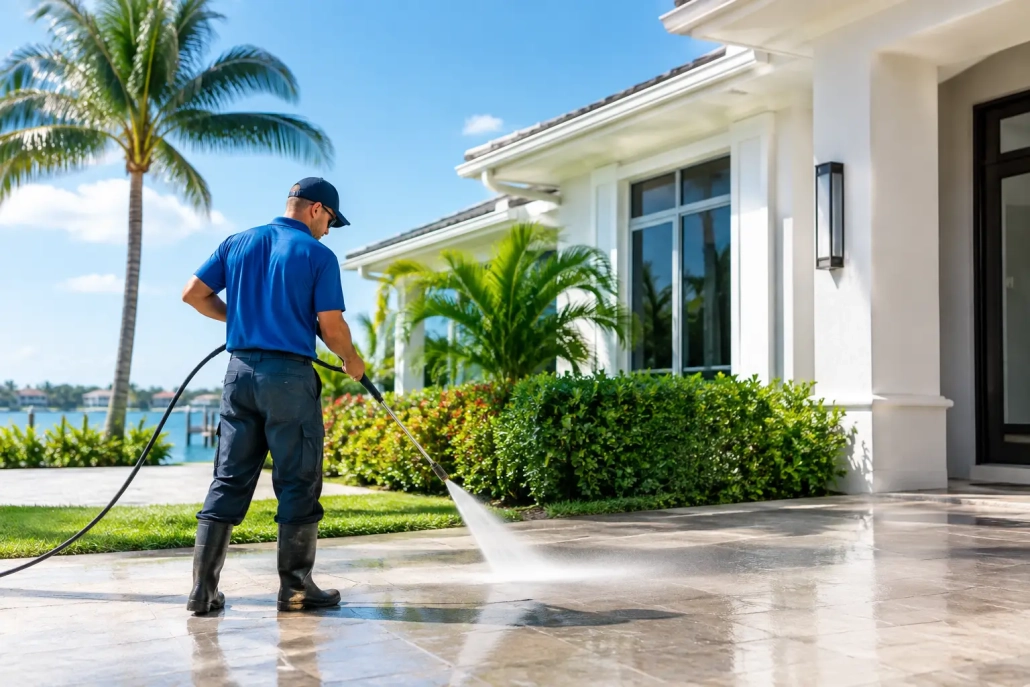
Exterior cleaning is not one-size-fits-all pressure washing. High pressure can be effective on durable concrete in the right hands, but it can also damage paint, force water behind siding, scar softer surfaces, disturb caulking, or weaken aging finishes. A clean result should never come at the expense of the building envelope.
Low-pressure washing, often called soft washing, is a better fit for many exterior walls and elevated surfaces. It uses an appropriate cleaning solution and controlled water flow to treat organic growth without blasting the surface. This approach is especially valuable for stucco, painted façades, trim, roof-adjacent areas, and buildings with detailed architectural finishes.
The cleaning method should be based on a site assessment, not an assumption. An experienced crew will look at the surface condition, drainage, landscaping, height, access limitations, and the type of staining present before recommending service.
High-Rise and Multi-Story Washing Needs a Different Plan
A multi-story building has additional scheduling concerns. Traditional exterior cleaning can require lifts, scaffolding, blocked parking, lengthy setup, and restricted access around the property. Those challenges sometimes lead boards and managers to postpone washing longer than they should.
Drone-powered exterior cleaning changes that equation for qualifying buildings. It allows professional crews to reach elevated façades using controlled, low-pressure methods without relying on scaffolding or lifts for many applications. That can reduce ground-level disruption, limit work zones, and make proactive maintenance more practical for condominiums, HOAs, commercial properties, and multi-story residences.
The right interval still depends on the building’s exposure and surface condition, but improved access makes it easier to create a realistic maintenance plan. Instead of waiting until the exterior is visibly neglected, property decision-makers can schedule cleaning around occupancy, events, inspections, and seasonal weather patterns.
Build a Cleaning Plan Around Your Property
The most effective exterior maintenance plans are specific. A coastal condominium may need more frequent façade rinsing and common-area cleaning. A suburban HOA may focus on entry monuments, sidewalks, clubhouse surfaces, and perimeter walls. A commercial operator may prioritize storefronts, loading areas, walkways, and customer-facing entrances.
Start by documenting where buildup appears first and how quickly it returns. Take note after heavy rains, landscaping changes, irrigation repairs, and storm season. If the same staining keeps returning in one spot, the answer may be more than a shorter cleaning cycle. Drainage, sprinkler direction, tree coverage, or ventilation may need attention as well.
It also helps to coordinate exterior washing with other property maintenance. Cleaning before painting, sealing, inspections, roof work, or major events gives the property a better foundation for the next task. For associations, a predictable schedule also makes budgeting simpler and helps residents understand when work will occur.
Keep the Exterior Clean Before It Becomes a Bigger Job
A building does not need to look neglected before it deserves attention. The best cleaning schedule is the one that matches your property’s real conditions, protects its surfaces, and keeps residents, tenants, and visitors confident in what they see.
If your exterior is showing early algae growth, salt film, staining, or hard-to-reach buildup, The Cleaners Drones can assess the property and recommend a practical cleaning interval with safer access and reduced disruption. A timely wash now can keep a small maintenance concern from becoming the next major visual problem.


Leave a Reply
Want to join the discussion?Feel free to contribute!