Concrete Cleaning for South Florida Properties
A driveway can look fine after a quick rinse, then dry with dark tire marks, algae shadows, and blotchy stains still in place. That is the difference between spraying concrete and professional concrete cleaning. In Palm Beach County, heat, humidity, irrigation overspray, salt air, and frequent rain give grime plenty of opportunities to settle into porous surfaces.
For homeowners, a clean driveway and walkway improve curb appeal right away. For HOA boards, condo managers, and commercial property operators, cleaner concrete supports a better first impression while helping common areas look maintained and safer to use. The right method depends on what is on the surface, how old the concrete is, and where it sits on the property.
Why South Florida Concrete Gets Dirty So Fast
Concrete is durable, but it is not smooth at a microscopic level. Its pores hold moisture, soil, oils, organic growth, and mineral deposits. In South Florida, that creates a familiar pattern: green or black buildup in shaded spots, orange staining near sprinklers, and dark traffic lanes where vehicles regularly pass.
Algae and mildew are especially common on sidewalks, pool decks, patios, and entryways. They affect more than appearance. When moisture returns, organic growth can make walking surfaces slick. On a busy condominium property or storefront, that is a maintenance issue worth addressing before complaints or slip hazards build up.
Driveways also collect automotive fluids, tire residue, leaf tannins, fertilizer stains, and dirt tracked in from the street. A surface may need different treatment in different areas. Applying one aggressive method across every stain can leave behind uneven results or damage nearby landscaping, paint, sealers, and delicate finishes.
Concrete Cleaning Starts With the Stain
The best cleaning process begins with identifying the problem, not simply reaching for the highest pressure setting. Pressure can remove surface soil effectively, but high pressure alone does not always break down oils, kill organic growth, or remove mineral-based stains.
Organic growth and black mildew
Green algae, black mildew, and surface biofilm respond best to a properly diluted cleaning solution followed by controlled rinsing. The goal is to treat the growth at the source so it does not reappear immediately after the surface dries. Shaded walkways, north-facing areas, and spots near dense landscaping often need the most attention.
Oil, tire marks, and vehicle stains
Oil requires a degreasing approach. Fresh spills are generally easier to improve than stains that have been sitting through months of heat and rain. Deep oil can penetrate below the visible surface, so even a professional cleaning may lighten rather than completely erase an older stain. Honest expectations matter here, especially on unsealed concrete.
Tire marks can also be stubborn. They are often a combination of rubber transfer, heat, and embedded grime. With the correct detergent, dwell time, and equipment, most marks can be significantly reduced without leaving the driveway striped or etched.
Rust, irrigation, and mineral deposits
Orange stains near sprinkler heads are usually caused by iron in the water, not ordinary dirt. Rust removers and mineral treatments must be selected carefully because the wrong chemistry can discolor concrete, harm adjacent stone, or affect plants. This is one reason a generic pressure-washing approach is not always the right answer.
White powdery residue, known as efflorescence, is another issue that needs a specific response. It occurs when moisture moves through masonry materials and leaves salts behind as it evaporates. Cleaning can improve the appearance, but recurring efflorescence may point to an underlying moisture condition that should be addressed.
When Pressure Washing Is the Right Choice
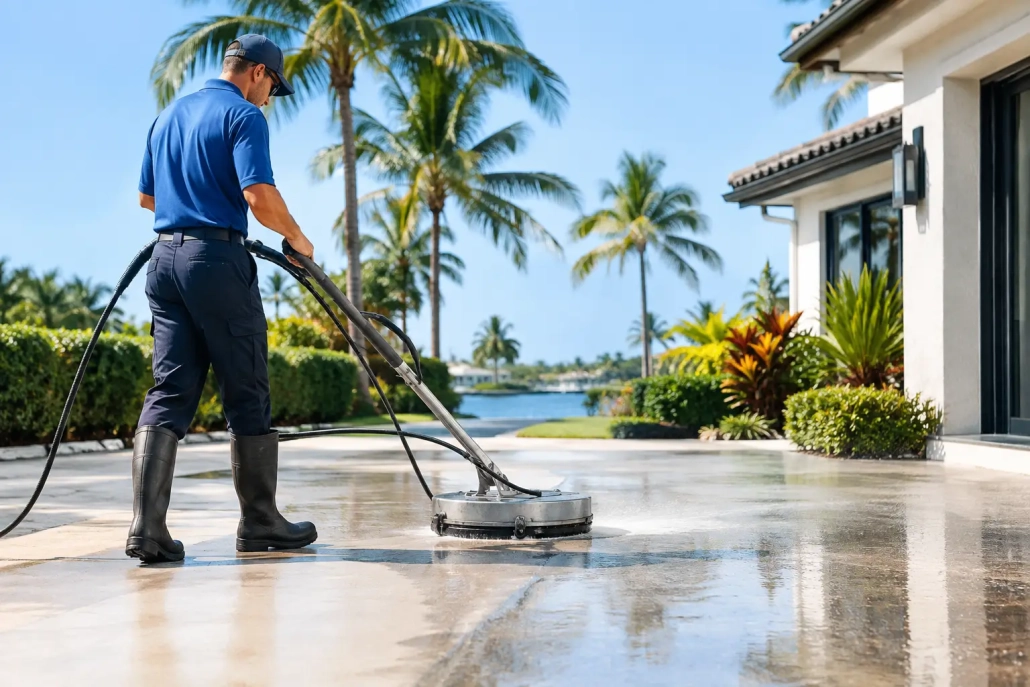
Pressure washing is highly effective for durable, exterior concrete with embedded dirt, algae, and general weathering. Driveways, sidewalks, curbs, patios, parking areas, dumpster pads, and many pool-deck surfaces can benefit from professional equipment that delivers consistent coverage.
Consistency is key. A trained technician uses the right pressure, nozzle, water flow, and surface-cleaning equipment to avoid the familiar zebra-striping effect. Those streaks happen when a wand is held too close, moved unevenly, or used without a methodical cleaning pattern.
Still, more pressure is not automatically better. Very high pressure can etch concrete, expose aggregate, damage aging surfaces, and leave visible lines that cannot be cleaned away. It can also force water into cracks or undermine loose material along joints. Older concrete, decorative finishes, stamped concrete, pavers, painted surfaces, and sealed areas all deserve a more careful evaluation.
Low-Pressure Cleaning Has a Place, Too
Not every concrete-adjacent surface should be pressure washed. Building façades, painted stucco, exterior walls, soffits, balconies, and elevated common areas may require a low-pressure cleaning method paired with appropriate solutions. This protects the surface while removing organic buildup and weather-related discoloration.
For multi-story properties, access can be the largest challenge. Lifts, scaffolding, and rope work can create work zones, block parking, and disrupt residents or tenants. The Cleaners Drones uses drone-powered, low-pressure exterior cleaning for hard-to-reach building surfaces, helping property managers address elevated areas with less equipment on the ground and less interruption to daily operations.
That does not mean a drone replaces every ground-level cleaning method. Driveways and sidewalks still benefit from the hands-on control of professional surface-cleaning equipment. The advantage is having a practical option for exterior areas that are difficult, costly, or risky to reach by traditional means.
What Property Owners Can Do Before Service
A little preparation helps the cleaning process move faster and protects the items around the work area. Move vehicles, furniture, planters, and portable decorations away from the concrete when possible. Keep doors and windows closed, and let the cleaning team know about areas with poor drainage, loose concrete, fragile paint, electrical outlets, or known leaks.
For commercial sites and HOAs, scheduling matters as much as technique. Entryways, garage approaches, pool paths, and high-traffic sidewalks may be best cleaned during lower-traffic hours. Clear communication about wet areas, temporary access changes, and drying time helps keep residents, customers, and staff comfortable.
Landscape protection should also be part of the plan. Responsible cleaning includes pre-wetting sensitive vegetation when needed, using solutions appropriately, controlling runoff, and rinsing surrounding areas. Eco-friendly methods are not about cutting corners on results. They are about choosing a process that cleans effectively while respecting the property around it.
How Often Should Concrete Be Cleaned?
There is no single schedule that fits every property. Many South Florida homeowners benefit from annual concrete cleaning, while heavily shaded areas, pool decks, busy driveways, and commercial walkways may need attention more often. If algae returns quickly, it is worth looking at the conditions feeding it: irrigation patterns, shade, drainage, nearby vegetation, and surface sealing.
A maintenance schedule can be more cost-effective than waiting until stains become severe. Regular service keeps buildup from becoming deeply embedded and helps a property maintain a clean, cared-for appearance throughout the year. For HOAs and commercial properties, planned cleaning can also reduce the need for rushed service before inspections, events, or resident turnover.
Clean Concrete Should Look Even, Not Overworked
A good result is not just brighter concrete. It is an evenly cleaned surface without etched patches, pressure stripes, chemical residue, or damage around the edges. Some permanent discoloration, old repairs, cracks, and deeply set stains may remain visible, but a professional should explain that before work begins rather than overpromise a brand-new look.
If your driveway, patio, sidewalks, or common areas are showing the effects of another South Florida season, the right cleaning approach can make the property look cared for again. A quick evaluation of the surface, stains, access, and surrounding materials is the first step toward results you can see and service you can trust.


Leave a Reply
Want to join the discussion?Feel free to contribute!