A Hurricane Water Cleanup Example for Homeowners
When hurricane water reaches the baseboards, the cleanup clock starts before the rain has fully stopped. This hurricane water cleanup example follows a South Florida homeowner through the first 72 hours after wind-driven rain enters through a damaged window and soaks a living room, hallway, and adjacent bedroom. The goal is not simply to make the floor look dry. It is to remove moisture from the structure, protect your household, and prevent a small intrusion from becoming a mold or flooring replacement project.
Every storm loss is different. Water from a clean supply line is handled differently from water that traveled through roof debris, exterior walls, landscaping, or floodwater. When there is any chance that water is contaminated, professional restoration is the safer choice.
A Hurricane Water Cleanup Example: The First 24 Hours
At 7:00 a.m., the homeowner returns after the storm passes and finds standing water across laminate flooring. A window was cracked by debris overnight. The carpet in the bedroom feels wet near the doorway, and the drywall in the hallway has darkened several inches above the floor.
The first decision is safety. Before entering a wet area, confirm that electricity is off if water is near outlets, power strips, appliances, or extension cords. Do not walk through water where electrical hazards may be present. Wear closed-toe shoes, gloves, and, when handling visibly dirty water or wet debris, appropriate respiratory protection.
Document Before Removing Anything
Once the area is safe to enter, take wide and close photos of each room. Photograph damaged windows, wet flooring, walls, furniture, rugs, and personal property. Include water lines on drywall and exterior areas where water appears to have entered. A short video can also show the extent of the loss better than individual photos.
This documentation helps with insurance conversations, but it also gives the restoration team a reliable starting point. Do not wait for an adjuster before beginning reasonable emergency measures. Leaving water in place to preserve evidence can increase the damage significantly. Save receipts for emergency supplies, temporary repairs, and restoration work.
Stop the Source and Remove Standing Water
In this example, the broken window is covered with a secure temporary barrier after conditions allow. If the water is coming from a roof leak, plumbing issue, or open door, address the source first. Cleaning cannot keep up with active intrusion.
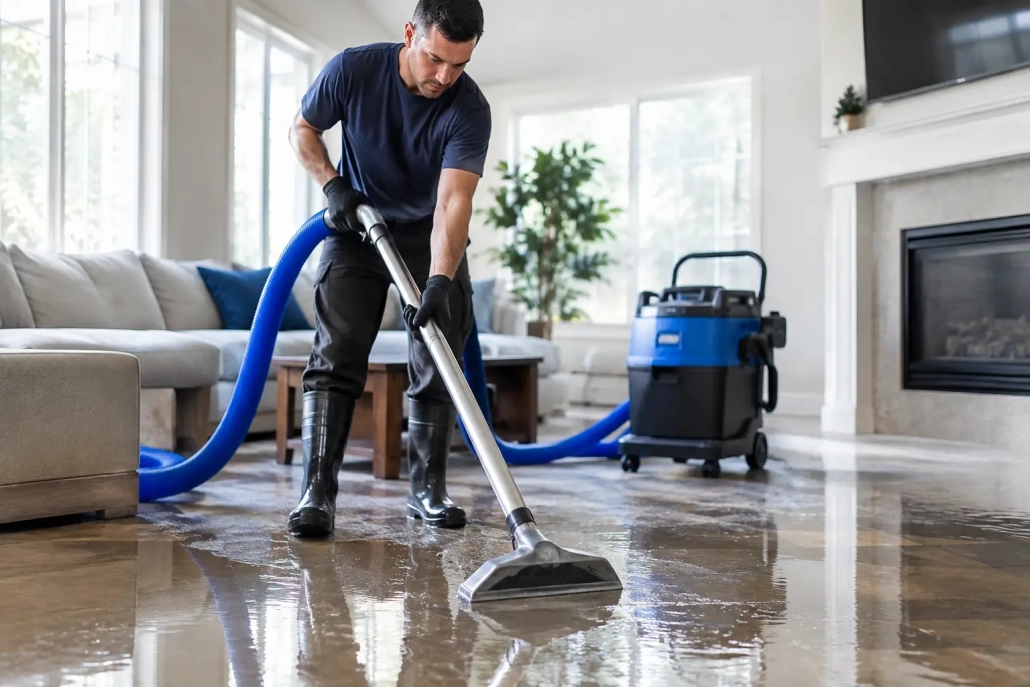
Standing water should be extracted with professional-grade equipment whenever possible. Towels, mops, and a household wet vacuum can help with a small, clean-water spill, but they are rarely enough after a hurricane. They leave moisture in carpet backing, pad, seams, wall edges, and subflooring. These hidden wet areas are where odor, swelling, and mold growth often begin.
Move undamaged, dry belongings away from the affected area. Raise furniture legs with blocks or place aluminum foil beneath them as a short-term measure if the item can be saved. Do not drag heavy furniture across wet flooring, and do not stack wet belongings in a garage or spare room. They need airflow, separation, and a decision about cleaning or disposal.
What a Professional Moisture Inspection Finds
By the afternoon, the visible water in this home is gone. That is progress, not the finish line. A restoration technician uses moisture meters and thermal imaging to identify damp carpet pad, wet drywall at the base of the hallway wall, and elevated moisture beneath the laminate floor.
A proper inspection helps avoid two expensive mistakes: removing materials that can be dried or keeping materials that will trap moisture and fail later. The right answer depends on the material, how long it was wet, and the water source.
Carpet exposed to clean water for a short period may sometimes be extracted, lifted, dried, and cleaned. If the water came from outdoors, sewage backup, or floodwater, carpet and pad often require removal because contamination can remain even after surface cleaning. Area rugs, especially wool, silk, or antique rugs, need material-specific handling rather than aggressive drying or pressure washing.
Laminate flooring is less forgiving. Water can enter through seams, swell the core, and cause edges to lift. Solid wood flooring may be dried and monitored in some cases, while engineered wood can delaminate depending on the product and exposure. Tile may look unaffected, but water can still reach grout lines, wall cavities, or the subfloor below.
Drywall needs the same practical assessment. A narrow clean-water intrusion may be dried with controlled airflow and dehumidification. Saturated drywall, insulation, or material exposed to potentially contaminated water may need selective removal. Cutting out damaged materials is not a failure of the cleanup. It can be the cleanest route to drying the structure correctly.
Days Two and Three: Drying Is the Real Cleanup
On day two, the homeowner may feel tempted to open every window and point household fans at the floor. South Florida humidity changes that calculation. Outdoor air can carry substantial moisture, particularly after a storm, and open windows may slow drying rather than help it.
Professional drying uses air movers, commercial dehumidifiers, and regular moisture readings to create controlled conditions. Air movers evaporate moisture from surfaces. Dehumidifiers remove that moisture from the air. The equipment must be positioned strategically, not simply scattered around the room, and readings should be checked daily to confirm that materials are actually drying.
In this hurricane water cleanup example, the affected bedroom carpet is removed because storm water entered from outside. The hallway baseboards and a small section of drywall are removed to expose wet insulation and allow the wall cavity to dry. The living room laminate is found to be swollen at several seams, so the homeowner can make an informed decision about replacement rather than reinstalling damaged material that may buckle later.
This is also when odor control matters. A perfume-like deodorizer may mask a smell for a day, but it does not remove moisture or contamination. The source has to be cleaned, dried, and, when necessary, removed. Fogging or antimicrobial treatments may be part of a professional plan, but they are not substitutes for extraction and structural drying.
When DIY Cleanup Is Not Enough
A homeowner can often handle a minor, clean-water leak caught immediately. Hurricane losses deserve more caution because the water source is frequently uncertain. Call a qualified water damage restoration team promptly when water has touched electrical areas, entered walls or flooring, covered a large area, sat longer than a few hours, or came from outdoors, a roof opening, a drain backup, or flood conditions.
Professional help is also worth considering when the property is a condominium, commercial suite, or multi-unit building. Water can travel between floors and behind shared walls, creating damage that is not visible from the original unit. Fast documentation and clear communication with management can protect residents, tenants, and the building itself.
For high-rise and multi-story properties, exterior inspection is part of understanding how water entered. Damaged façade areas, clogged drainage paths, and debris around upper-level windows may be difficult or unsafe to access from the ground. Drone-powered exterior cleaning and inspection support can reduce the need for scaffolding or lifts in appropriate situations, while keeping the work zone less disruptive. It does not replace a licensed engineer or roofing professional when structural storm damage is suspected.
Avoid These Common Post-Storm Mistakes
The biggest mistake is waiting for materials to dry on their own. In Palm Beach County, warm temperatures and heavy humidity can keep building materials damp long enough for mold to develop. Another common error is running HVAC before the system and affected ducts have been evaluated. If the system has been exposed to water or pulls humid air across wet materials, it can spread odors and moisture concerns.
Do not use bleach as a catch-all answer for porous materials. It may discolor surfaces and does not reliably solve moisture inside drywall, carpet padding, wood, or insulation. Avoid placing wet contents in sealed plastic bags unless they are headed directly to a controlled cleaning process. Trapped moisture can accelerate staining and odor.
Finally, do not assume a room is dry because it feels comfortable. Drying decisions should be based on moisture readings and the condition of the materials, not just appearance.
Prepare Before the Next Storm
Once the property is dry and repairs are complete, take a few practical steps before hurricane season returns. Keep digital photos of each room and major belongings, know where your electrical panel and water shutoff are located, and store emergency contact information where you can access it without power. Inspect windows, door seals, roof penetrations, drainage areas, and exterior surfaces before storm season rather than after water appears indoors.
If hurricane water reaches your home or building, fast action protects more than finishes. It protects the parts of the property you cannot see, the people who use the space, and the time it takes to return to normal. The Cleaners Drones can help South Florida property owners assess water damage, begin controlled drying, and move forward with a clear plan when every hour matters.


Leave a Reply
Want to join the discussion?Feel free to contribute!