Aerial Facade Cleaning Review for South Florida
A boom lift parked at the entrance, blocked parking spaces, and weeks of work around residents are familiar concerns for many South Florida properties. This aerial facade cleaning review looks at whether drone-powered exterior cleaning is a practical alternative for condos, HOAs, commercial properties, and multi-story homes that need a cleaner exterior without a major access operation.
Drone cleaning is not simply a new way to spray a building. When it is planned correctly, it is a low-pressure cleaning method designed to reach elevated exterior surfaces while keeping workers off suspended platforms, scaffolding, and lifts. The result can be a noticeable improvement in curb appeal with fewer interruptions to residents, tenants, customers, and day-to-day property operations.
What an Aerial Facade Cleaning Review Should Cover
The best reviews of aerial facade cleaning do more than show before-and-after photos. They explain what surface was cleaned, what type of staining was present, how the crew protected the property, and whether the method suited the building material.
South Florida exteriors face a demanding mix of moisture, heat, windblown debris, salt air near the coast, algae, mildew, and pollution. On stucco, painted masonry, siding, metal panels, and many glass-adjacent facade areas, this buildup can make a well-maintained property look neglected long before there is a structural problem.
A professional aerial cleaning assessment should identify whether the discoloration is organic growth, dirt, oxidation, rust staining, irrigation overspray, or another issue. Each calls for a different approach. Algae and mildew may respond well to an eco-conscious cleaning solution and controlled low-pressure rinse. Oxidation, failing paint, damaged sealant, or deep mineral staining may need specialized restoration work beyond a standard exterior wash.
That distinction matters. A good contractor does not promise that every stain will disappear after one visit. Instead, they explain the expected visual improvement, test the cleaning process where appropriate, and use the lowest effective pressure for the surface.
How Drone Facade Cleaning Works
A cleaning drone carries a controlled spray system to the building elevation while trained technicians operate the equipment from the ground. The crew follows a planned cleaning pattern, applying solution and rinsing away buildup in sections. Ground personnel manage hoses, protect landscaping and entry areas, and watch for runoff or conditions that require adjustments.
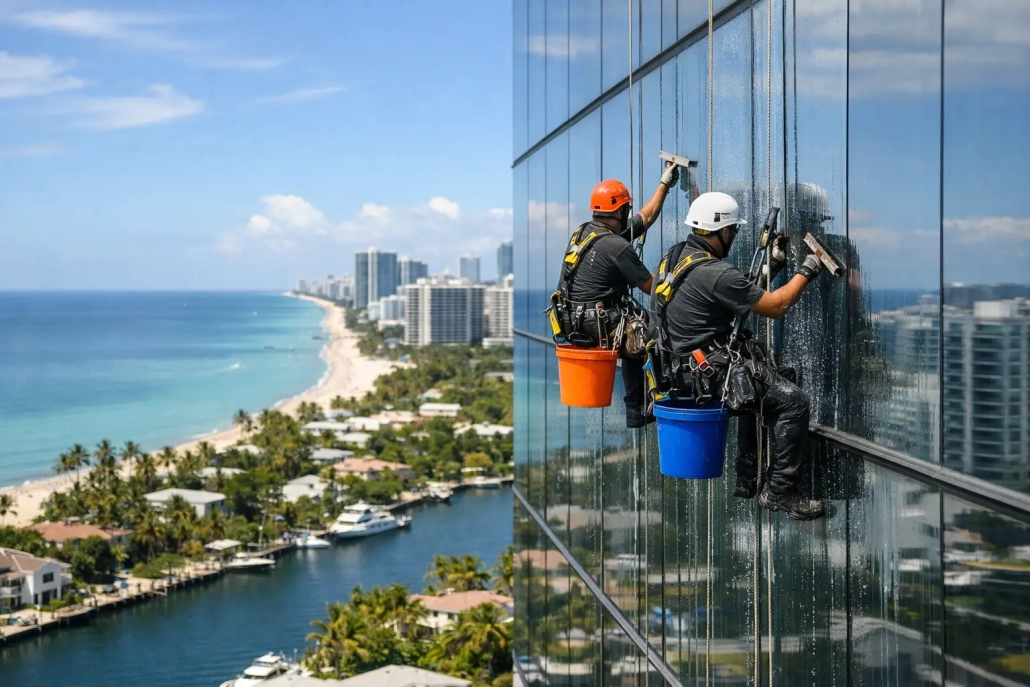
The main benefit is access. Traditional high-rise or multi-story cleaning often requires a lift, rope-access team, suspended platform, or scaffolding. Those methods still have a place, especially when a building needs hands-on repair, window sealing, painting, or close inspection of physical damage. But for routine washing of hard-to-reach exterior surfaces, drone access can reduce much of the equipment and setup involved.
Low-pressure application is another meaningful advantage. Many property owners hear “pressure washing” and picture an aggressive stream that can scar stucco, force water behind siding, or disturb aging paint. Aerial facade cleaning should be tailored to the material and condition of the exterior. The goal is to treat the buildup and rinse it away, not blast the surface.
For properties with active entrances, landscaped common areas, pool decks, or limited parking, less ground equipment can also mean a cleaner jobsite. Access routes can remain more open, and residents are less likely to spend days working around large machinery.
Where Aerial Cleaning Delivers the Most Value
Drone cleaning is especially useful where height, access, and disruption are the biggest challenges. A mid-rise condominium with narrow drive lanes, for example, may have limited space for lifts. An HOA may want to clean upper elevations without closing shared parking areas. A commercial operator may need exterior maintenance completed while keeping customer access available.
It can be a strong fit for:
- Condominium and apartment building facades
- HOA common buildings, entry features, and multi-story residences
- Office buildings, retail centers, hotels, and mixed-use properties
- Upper-story stucco, masonry, siding, and exterior wall surfaces
- Properties where scaffolding or lift placement would create major disruptions
The financial value depends on the property. A low, open building may be easy to clean with conventional ground-based equipment, so a drone may not offer a significant advantage. On taller buildings or sites with difficult access, avoiding lift rentals, prolonged setup, blocked areas, and complex staging can change the equation.
Aerial cleaning is also valuable from a planning standpoint. Property managers and boards can schedule visible exterior maintenance with less impact on residents. That makes it easier to protect the appearance of the community before staining becomes severe and more difficult to remove.
Safety and Site Control Matter as Much as Technology
The drone is only one part of a safe facade cleaning project. The company behind it must have a clear process for site evaluation, weather monitoring, controlled work areas, trained operators, and surface-specific cleaning methods.
Wind and rain can affect aerial operations, so timing matters in South Florida. A responsible crew will postpone or adjust work when conditions do not support controlled cleaning. This is not a drawback unique to drones. Lifts, scaffolding, rope access, and exterior coating projects all depend on weather. The difference is that aerial crews can often mobilize with less equipment once a suitable weather window is available.
Property protection also deserves attention. Before cleaning begins, crews should identify sensitive landscaping, electrical fixtures, outdoor furniture, entryways, vehicles, and pedestrian areas. They should establish a work zone and communicate with onsite management about access, parking, and resident notices.
For buildings with visible cracks, loose cladding, damaged caulking, open joints, or peeling coatings, cleaning should not be used to hide a maintenance issue. Those conditions may require repair first. In fact, a facade wash can help reveal areas that need attention by removing the grime that has been covering them.
The Trade-Offs Property Owners Should Know
Aerial facade cleaning is effective, but it is not the answer to every exterior problem. It cannot replace hands-on work where a technician must scrape, repair, seal, repaint, or physically inspect a surface at close range. Heavily oxidized metal, stubborn rust streaks, deteriorated coatings, and construction residue may require additional services.
There are also operational considerations. The work area needs to be managed, exterior windows and doors should be secured, and residents may need advance notice. While drone cleaning reduces disruption compared with many access systems, it does not mean no preparation is required.
The most useful question is not, “Can a drone clean this building?” It is, “Is drone cleaning the safest and most efficient way to get the result this building needs?” The answer depends on elevation, surface material, staining, property layout, weather, and the scope of the maintenance plan.
Questions to Ask Before Scheduling
Before choosing an aerial cleaning provider, ask how they determine the right pressure and solution for your facade. Ask whether they inspect the building for pre-existing damage, how they protect landscaping and common areas, and what weather conditions could affect the schedule.
It is also reasonable to ask what results are realistic for your specific staining. A provider should be clear about the difference between organic buildup that can be cleaned and permanent discoloration caused by oxidation, paint failure, or surface damage.
For HOA boards and property managers, request a clear scope of work that identifies the elevations to be cleaned, site-access needs, resident communication expectations, and any areas that may require separate restoration. This creates fewer surprises once the project starts.
A Practical Choice for South Florida Properties
For the right building, drone-powered cleaning turns an exterior maintenance problem into a manageable service visit. The Cleaners Drones combines aerial access with the careful, material-aware approach property owners expect from a professional cleaning company. That means focusing on the visible transformation while respecting the people, landscaping, vehicles, and operations below.
A clean facade does more than improve a first impression. It helps a property look actively cared for, supports resident and tenant confidence, and gives owners a clearer view of the exterior condition. If upper-level staining is growing while access equipment feels like the bigger headache, a professional aerial evaluation is a sensible place to start.


Leave a Reply
Want to join the discussion?Feel free to contribute!