Industrial Cleaning Drone for Safer Building Care
A stained facade, algae-streaked balconies, or darkened upper-level walls can make an otherwise well-managed property look neglected fast. An industrial cleaning drone gives South Florida owners, HOA boards, and property managers a practical way to clean those difficult exterior surfaces without turning the property into a long-term work zone.
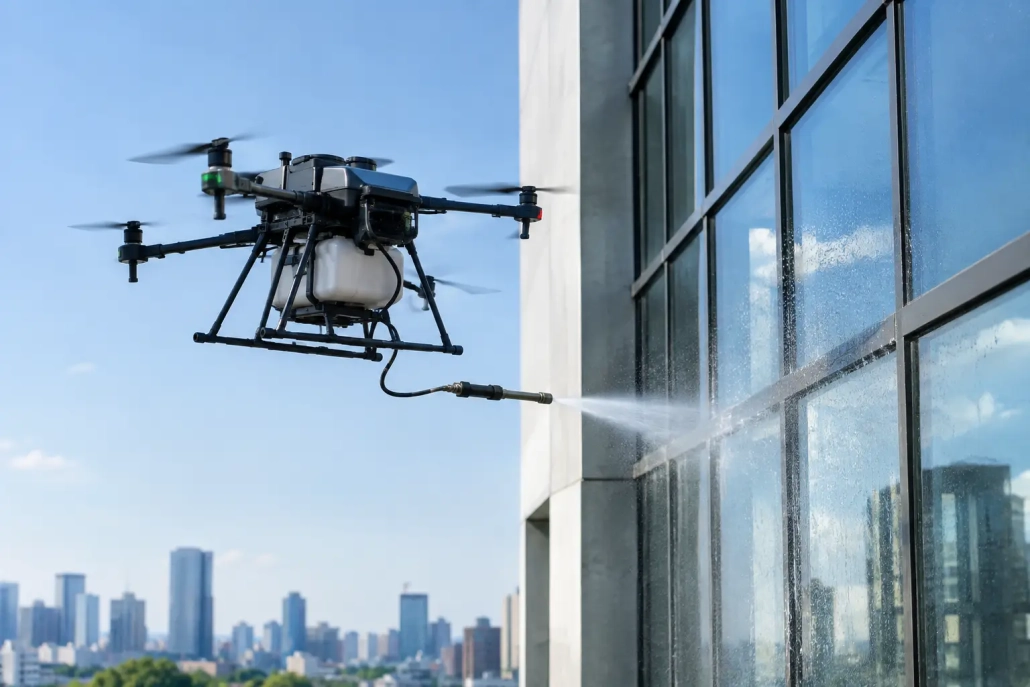
For multi-story buildings, the old approach often means lifts, scaffolding, rope-access crews, blocked parking, and weeks of coordination. Drone-powered cleaning changes the access method. A trained operator directs a purpose-built cleaning drone from the ground while it applies a controlled, low-pressure cleaning solution to elevated exterior surfaces. The goal is simple: remove organic growth and surface buildup while protecting the building, the people around it, and the daily rhythm of the property.
What an industrial cleaning drone actually does
An industrial cleaning drone is not a consumer camera drone with a spray bottle attached. It is specialized equipment designed to carry a cleaning line, apply solution at height, and reach exterior areas that are costly or complicated for conventional crews to access.
For many South Florida properties, the main cleaning challenge is biological growth. Humidity, salt air, afternoon rain, and year-round warmth create ideal conditions for algae, mildew, and grime to collect on stucco, concrete, painted surfaces, exterior walls, roofs, and architectural details. The buildup is especially noticeable on shaded sides of buildings and around upper balconies where routine pressure washing cannot safely reach.
The drone applies a low-pressure treatment that works with the surface rather than relying on force alone. That distinction matters. High pressure can damage paint, force water into openings, disturb aging caulk, or leave visible marks on certain exterior materials. A proper cleaning plan considers the surface, its condition, the type of buildup, and nearby landscaping before work begins.
Why safer access matters to property managers
The biggest advantage of aerial cleaning is not that it looks futuristic. It is that it can reduce exposure to common access risks. When crews do not need to work from scaffolding, suspended platforms, or extended lifts for every elevated area, there are fewer moving parts to manage on site.
That can be meaningful for occupied condominiums, medical offices, retail centers, hotels, and multifamily communities. Residents can keep using entrances. Customers may have fewer detours. Parking areas are less likely to be closed for extended periods. And property teams spend less time coordinating equipment placement, access routes, and temporary safety zones.
Reduced disruption does not mean reduced preparation. A professional crew still needs to inspect the area, identify sensitive surfaces, protect surrounding landscaping where necessary, establish a controlled work zone, and monitor wind conditions. The technology improves access, but experienced judgment remains part of every safe job.
Fewer obstacles, clearer scheduling
Traditional exterior cleaning can become a logistics project before the cleaning even begins. Lift rentals, permits, delivery windows, staging locations, and resident notices can add time and expense. On a dense Palm Beach County property, simply finding room for equipment may be difficult.
An industrial cleaning drone can reduce those requirements on suitable jobs. It operates from the ground and can move efficiently between hard-to-reach areas. This does not eliminate the need for planning, particularly around pedestrians, vehicles, and active businesses. It does, however, create a cleaner path to completing exterior maintenance with less interruption.
Where drone cleaning is a strong fit
Drone cleaning is most useful when height and access are the main barriers. It can be an effective option for condominium exteriors, mid-rise commercial buildings, multi-story residences, apartment communities, parking structures, exterior walls, roofs, and tall architectural features.
It is particularly valuable when the property needs visible improvement but cannot afford prolonged equipment staging. A homeowner with a high two- or three-story exterior may benefit from drone access, while a large HOA may use it to address upper-level walls or difficult building elevations without bringing in extensive scaffolding.
The right method still depends on the job. Ground-level walkways, driveways, patios, and lower walls may be faster to clean with conventional equipment. Detailed hand work may be the better choice around delicate finishes, narrow enclosed areas, or surfaces requiring close inspection. A reputable provider should recommend the approach that protects the property, not push drone service where it does not make sense.
Low pressure is a better choice for many exterior surfaces
Property owners often ask whether cleaning will harm paint, stucco, windows, or landscaping. The honest answer is that any exterior cleaning method must be matched to the material and condition of the property. There is no one setting or solution that fits every building.
Low-pressure cleaning is often preferred for surfaces affected by algae and mildew because the solution does the primary cleaning work. Instead of blasting buildup away at high force, the treatment is applied carefully and allowed to break down organic staining. The surface can then be rinsed as needed using an appropriate method.
This approach can be especially helpful on painted stucco, soft wash-compatible exterior finishes, and areas where aggressive pressure would create unnecessary risk. Older paint, damaged siding, loose caulk, oxidized surfaces, and existing cracks should be identified before cleaning begins. Good results start with an honest assessment, not a promise that every stain will disappear without considering the underlying surface condition.
Eco-conscious cleaning without cutting corners
South Florida properties are surrounded by landscaping, waterways, pets, and people. Cleaning products and runoff need to be handled responsibly. A professional exterior cleaning process should use appropriate solutions, controlled application, and property-specific precautions to help protect plants and surrounding areas.
Eco-friendly does not mean weak. It means selecting effective products and using them correctly. The right treatment can remove the green and black buildup that changes a building’s appearance while avoiding unnecessary pressure and waste. Pre-wetting vegetation, controlling overspray, and following proper cleanup procedures are part of a careful service, not optional extras.
What to expect before work starts
A quality drone-cleaning project begins on the ground. Before scheduling, the provider should look at the building height, exterior material, visible staining, access points, wind exposure, nearby power lines, pedestrian traffic, landscaping, and any areas of existing damage. For commercial and HOA properties, the team should also discuss preferred work times, resident notices, parking needs, and operational concerns.
During service, trained operators manage the flight path and cleaning application while maintaining a defined safety area. The work can often progress faster than traditional elevated access methods, but weather still matters. Wind, lightning, and heavy rain can affect timing, and a responsible team will reschedule rather than compromise safety or results.
After cleaning, some treated organic stains may continue to lighten as the solution finishes working. Severely embedded discoloration, rust, paint failure, or staining caused by building materials may require a separate solution. Clear expectations are part of professional service. Cleaning can restore a major amount of curb appeal, but it cannot repair failed coatings or hide permanent surface damage.
Choosing the right provider for aerial exterior cleaning
Drone equipment alone is not the service. Ask how the company evaluates surfaces, manages safety, protects landscaping, and handles weather-related decisions. You should also want a provider that understands exterior cleaning chemistry and traditional cleaning methods, not just flight controls.
The Cleaners Drones combines local cleaning experience with drone-powered access for properties that need a safer, less disruptive way to maintain difficult exterior surfaces. For a Palm Beach Gardens condominium, a West Palm Beach commercial property, or a multi-story home in Jupiter, the right plan should be based on the building itself, its condition, and what residents or customers need while the work is underway.
Before the next inspection, board meeting, or busy season, walk the property and look up. The stains that seem out of reach may not require a complicated construction-style setup. A professional assessment can show whether drone cleaning is the practical next step toward a cleaner exterior and a better first impression.


Leave a Reply
Want to join the discussion?Feel free to contribute!