Drone Exterior Cleaning for South Florida Buildings
A stained building exterior can make a well-managed property look neglected fast. In South Florida, humidity, salt air, rain, mildew, algae, and airborne debris can build up on facades, balconies, roofs, and hard-to-reach upper stories. Drone exterior cleaning gives property owners and managers a practical way to address that buildup without turning the property into a construction zone.
For condominiums, HOAs, commercial properties, and multi-story homes, the biggest challenge is often not knowing that cleaning is needed. It is getting to the affected areas safely, affordably, and with minimal disruption. Traditional access methods can require scaffolding, boom lifts, lane closures, lengthy setup, and crews working at height for days. A professional cleaning drone changes the access equation while keeping the focus where it belongs: a cleaner property and a process residents, tenants, and visitors can live with.
Why Exterior Buildup Gets Worse in South Florida
Exterior dirt is not always just dirt. On shaded walls, soffits, roofs, and areas near landscaping, organic growth can take hold quickly. Algae and mildew thrive where moisture lingers. Coastal properties may also collect salt residue that dulls exterior finishes and glass. Pollen, dust, insect debris, and runoff can leave uneven stains that become more noticeable as they spread.
Waiting too long can make a simple maintenance service more difficult. Staining may become embedded in porous surfaces, and neglected buildup can affect the appearance of paint, stucco, concrete, pavers, and exterior trim. Regular cleaning protects curb appeal, but it also helps boards and property managers stay ahead of complaints, inspection concerns, and costly-looking deterioration.
The right approach depends on the surface. A durable concrete wall does not receive the same treatment as painted stucco, delicate exterior finishes, window systems, solar panels, or a roof. Cleaning pressure, solution selection, dwell time, rinse method, and access plan all need to match the property.
What Drone Exterior Cleaning Does Differently
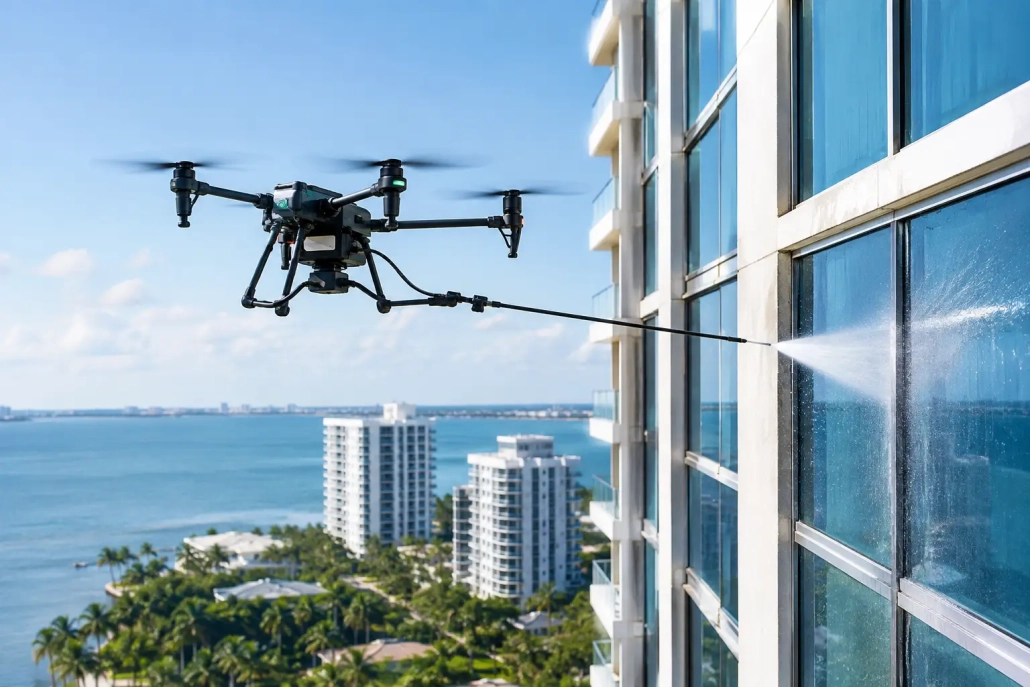
Drone exterior cleaning uses specialized aerial equipment to apply cleaning solutions and rinse exterior areas that are difficult to reach from the ground. Rather than relying on scaffolding or lifts for every upper-level surface, a trained operator can position the cleaning system precisely where it is needed.
The advantage is not simply that a drone can fly. The value comes from combining aerial access with a controlled, low-pressure cleaning method. For many properties, that means less equipment staged around entrances and parking areas, fewer blocked walkways, and less of the visual disruption associated with large access rigs.
This is especially useful for building facades, upper-story walls, exterior glass areas, balconies, roofs, and architectural features that are expensive or inconvenient to reach. It can also help property teams plan work around resident schedules and business operations instead of accepting an extended period of disruption.
A drone is not a substitute for professional judgment. Before work begins, the cleaning team should assess the material, extent of staining, access conditions, nearby landscaping, pedestrian areas, wind conditions, and drainage. The drone is the access tool. The cleaning plan is what protects the property and produces a visible result.
Safer Access Without the Usual Jobsite Footprint
Working at height has always been one of the most demanding parts of exterior cleaning. Lifts and scaffolding can be effective, but they bring added setup, operating space, traffic concerns, and exposure for crews working on elevated platforms. On occupied properties, those challenges can affect residents, guests, employees, deliveries, and daily operations.
With drone-based access, the cleaning crew can reduce the need for heavy equipment around the building. That does not mean the job happens without safety controls. A responsible team still establishes a work zone, monitors weather, protects people below, manages hoses and equipment, and follows a site-specific plan. The difference is that the operation can often be more contained and less intrusive.
For HOA boards and commercial property managers, this matters because exterior maintenance is never just about the wall being cleaned. It is also about parking availability, resident communication, tenant access, noise, liability, and the overall appearance of the property while work is underway.
Low Pressure Is Often the Better Cleaning Choice
More pressure is not always better. In fact, excessive pressure can damage vulnerable surfaces, force water behind exterior materials, strip paint, disturb caulking, or leave visible marks on softer finishes. The goal is to remove contamination without creating a new repair issue.
Low-pressure exterior cleaning generally relies on the right solution and enough contact time to loosen algae, mildew, and grime before a controlled rinse. This approach is often referred to as soft washing, although the exact method should be tailored to the surface and condition of the property.
For example, a heavily stained stucco facade may need a different treatment from a concrete parking structure or metal-clad commercial building. A quality provider does not use one setting and one chemical mix for every job. They identify the material, test where appropriate, protect adjacent areas, and adjust the process to get the surface clean responsibly.
Eco-friendly practices matter here as well. Professional exterior cleaning should account for landscaping, storm drains, pools, pets, and occupied outdoor spaces. Products and application methods should be selected with the site in mind, not simply with speed in mind.
Where Drone Cleaning Makes the Most Sense
Drone cleaning is a strong fit when exterior surfaces are elevated, difficult to access, or costly to reach with conventional equipment. It is particularly valuable for properties with multiple stories, tight access areas, landscaped perimeters, limited staging space, or active daily traffic.
Condominium communities can use drone service to refresh visible facade staining, upper balconies, and hard-to-reach exterior sections without placing large equipment throughout the grounds. Commercial operators can reduce interruptions near storefronts, entrances, loading areas, and customer parking. Owners of multi-story homes can address rooflines, tall walls, and upper-level finishes that are unsafe or impractical to clean from a ladder.
Still, drone cleaning is not the best choice for every square foot of a property. Ground-level sidewalks, driveways, patios, pavers, pool decks, and lower walls may be better handled with traditional professional pressure washing or soft washing equipment. Interior services such as carpet, upholstery, tile, and grout cleaning require an entirely different approach. The best maintenance plan uses the right tool for each area instead of forcing one method onto the whole property.
What to Expect From a Professional Service Visit
A good exterior cleaning project begins before the drone takes off. The provider should review the building layout, identify the surfaces to be cleaned, note access restrictions, and discuss timing with the decision-maker. For larger communities, that may include coordinating resident notices, parking adjustments, or a work schedule that limits interference with peak activity.
On service day, the team prepares the work area and protects nearby features as needed. Cleaning solutions are applied according to the surface condition, then rinsed with controlled pressure. Operators should continually watch for changing wind, surrounding activity, and areas that may require additional attention.
After cleaning, a walkthrough or visual review helps confirm that the result meets the agreed scope. Some deeply set stains, oxidation, paint failure, rust, or permanent discoloration may not disappear with cleaning alone. A trustworthy company explains that distinction upfront rather than promising that every mark is removable.
Questions to Ask Before Hiring a Drone Cleaning Provider
The technology is impressive, but the provider matters more than the equipment. Ask how the team determines the correct cleaning method for your exterior materials. Confirm that they have experience with occupied properties, safety procedures for aerial operations, and insurance appropriate for the work.
It is also smart to ask what is included in the quoted scope. Are upper walls, balconies, overhangs, and rinse-down areas included? How will landscaping and surrounding surfaces be protected? What happens if weather delays the work? Clear answers prevent avoidable surprises.
For properties in Palm Beach Gardens, Jupiter, West Palm Beach, Wellington, and throughout Palm Beach County, local experience is valuable. A team familiar with South Florida conditions understands how quickly algae returns, how coastal exposure changes cleaning needs, and why scheduling around rain and wind matters.
The Cleaners Drones brings established cleaning experience together with drone-based exterior access, helping property owners handle both everyday upkeep and the surfaces that conventional crews struggle to reach.
A Cleaner Exterior Starts With a Smarter Plan
The best time to address exterior staining is before it becomes the feature everyone notices from the street. Whether your property needs a one-time refresh or a recurring maintenance plan, start with an assessment of the material, the buildup, and the access challenge. A well-planned drone exterior cleaning service can restore the clean, cared-for appearance your property deserves while keeping disruption low and safety at the center of the work.


Leave a Reply
Want to join the discussion?Feel free to contribute!