Thermal Drying Versus Dehumidifiers Compared
A refrigerator supply line can leak for hours before anyone sees water at the edge of a kitchen floor. By then, moisture may have moved beneath cabinets, into baseboards, and through nearby drywall. In thermal drying versus dehumidifiers, the right answer is rarely one machine or the other. Effective water damage restoration uses controlled heat, moisture removal, airflow, and moisture testing to dry the structure without creating new problems.
For homeowners, condo managers, and commercial property operators, the real question is not which method sounds faster. It is which approach will safely return the affected materials to an acceptable moisture level, protect finishes, and reduce the chance of hidden mold growth or lingering odors.
Thermal Drying Versus Dehumidifiers: Different Jobs
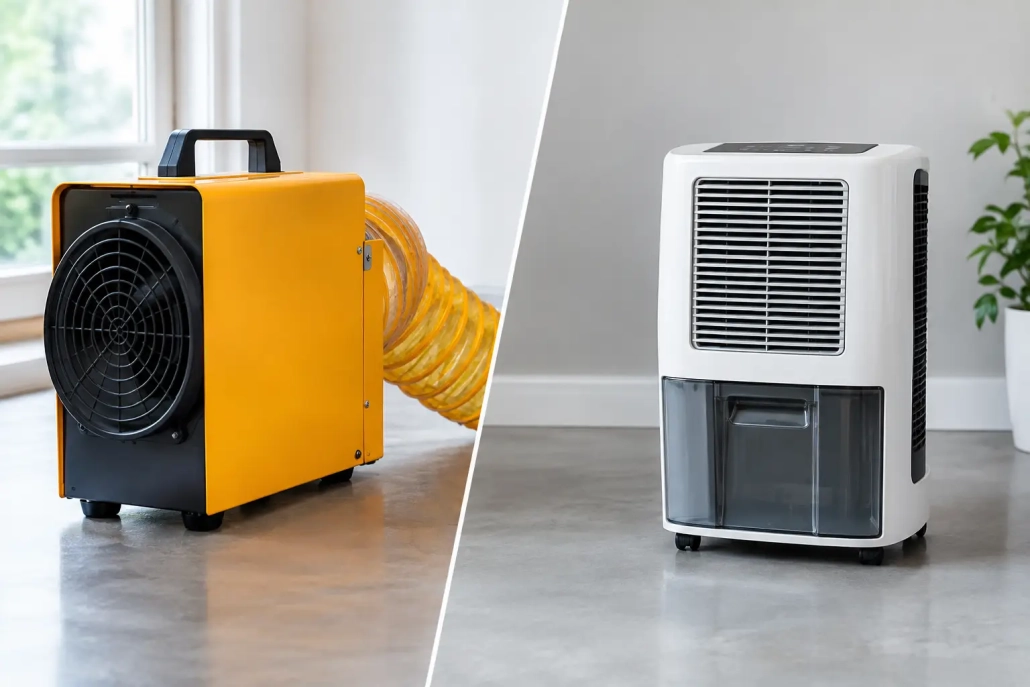
Thermal drying uses carefully managed heat to raise the temperature of wet materials and the surrounding air. Warmer materials release moisture more readily. That can make a major difference when water is trapped in dense building materials, beneath flooring, or inside wall assemblies.
Dehumidifiers do a separate but equally necessary job. They pull water vapor from the air, lowering humidity and creating the conditions that allow moisture to continue evaporating from wet carpet, drywall, framing, and contents. If the air is already saturated, evaporation slows dramatically, even when fans are running.
Think of heat as helping moisture leave the material and dehumidification as giving that moisture somewhere to go. Air movers connect the process by moving dry air across wet surfaces. A professional drying setup often needs all three, adjusted as the property changes from day to day.
Using heat without sufficient dehumidification can raise indoor humidity and shift moisture to cooler surfaces. Running dehumidifiers without enough air movement or temperature control can also leave a drying project slow and uneven. The equipment must work as a system.
When Thermal Drying Makes Sense
Controlled heat is especially useful when a loss involves materials that hold moisture tightly. Wet hardwood flooring, thick structural lumber, concrete, dense subfloors, and certain wall systems can benefit from thermal energy because it increases the vapor pressure inside the material. Put simply, it encourages embedded water to move outward where it can be removed.
Thermal drying can also help in cool, heavily air-conditioned spaces. South Florida buildings often run cold indoors while outdoor humidity remains high. A cool interior may feel comfortable, but low surface temperatures can slow evaporation. Strategic heating, combined with proper moisture removal, can improve the drying environment.
That said, more heat is not automatically better. Excessive or poorly placed heat can damage wood finishes, warp flooring, affect adhesives, crack materials, or create conditions that drive moisture deeper into areas that are not being monitored. Heat-sensitive belongings, electronics, artwork, and some furniture require special protection or removal.
Thermal drying should be measured, not guessed. Technicians use temperature and humidity readings, moisture meters, and material-specific drying targets to decide whether heat will help. This is not the same as placing a few space heaters in a wet room and hoping for the best.
When Dehumidifiers Are the Priority
Dehumidification is essential in nearly every indoor water damage situation because wet materials release moisture into the air as they dry. Without an effective way to capture that vapor, humidity climbs and drying slows down.
Refrigerant dehumidifiers are commonly used in warm conditions, while desiccant systems can perform well in lower temperatures or in projects that need very dry air. The right equipment depends on the size of the affected area, the materials involved, the outdoor conditions, and whether the space can be properly contained.
For a small clean-water loss on tile with limited moisture transfer, a dehumidifier and directed airflow may be enough after extraction. For a larger leak that has reached drywall, cabinets, and flooring, larger dehumidification capacity is usually required. The key is not simply putting a unit in the room. It is matching moisture-removal capacity to the amount of water still evaporating.
In humid coastal conditions, open windows can work against the process. Outside air may carry more moisture than the air in the affected room. Keeping doors and windows closed, using containment where appropriate, and monitoring the drying chamber helps equipment perform as intended.
Why Extraction Comes Before Both Methods
Neither thermal drying nor dehumidifiers should be the first response to standing water. Extraction comes first. Removing liquid water with professional extraction equipment is far faster and more efficient than trying to evaporate it.
Carpet, padding, rugs, and upholstery may need different decisions based on the source of the water, the length of exposure, and the material. Clean water from a recent supply-line leak may allow certain materials to be cleaned and dried. Water from a drain backup, toilet overflow involving waste, or outside flooding brings contamination concerns that can require removal rather than drying.
Once excess water is removed, technicians assess how far moisture traveled. Water does not stay neatly inside the visible wet spot. It can wick up drywall, move below baseboards, enter cabinet toe-kicks, and travel under flooring. Moisture mapping identifies the true drying area before equipment is placed.
Material Type Changes the Drying Plan
A drying plan for carpet over concrete is not the same as a plan for engineered wood over a wood subfloor. Carpet may dry successfully with extraction, lifting or floating techniques when appropriate, airflow, and dehumidification. Wet padding can be more difficult to restore and is often evaluated separately.
Wood flooring needs particular care. Drying it too slowly can invite staining, cupping, or mold growth, while drying it too aggressively can lead to cracking, splitting, or other stress damage. Controlled temperature, balanced humidity, and frequent moisture readings are more valuable than a one-size-fits-all equipment setup.
Drywall also requires judgment. If water exposure is limited and the wall cavity can be dried safely, targeted airflow and dehumidification may preserve the material. If drywall has absorbed contaminated water, lost structural integrity, or has moisture trapped behind insulation, selective removal may be the cleaner and safer option.
Concrete and masonry can appear dry long before they have released enough moisture for new flooring, coatings, or finishes. A restoration team should verify moisture conditions before repairs begin. Covering a damp slab too soon can lead to adhesive failure and expensive rework.
What Professional Monitoring Adds
The difference between equipment placement and professional drying is verification. A dependable restoration process begins with moisture readings and documents conditions throughout the project. Readings from unaffected materials provide a comparison point, while daily checks show whether the drying system is actually moving moisture out.
Technicians monitor temperature, relative humidity, and sometimes the specific humidity or vapor pressure in the drying area. Those numbers reveal whether changes are needed. Equipment may be added, repositioned, reduced, or removed as materials approach their dry standard.
This approach also limits disruption. Equipment should be placed to protect walkways and allow reasonable use of unaffected areas whenever possible. For condominium buildings, occupied homes, and active commercial spaces, containment and clear communication matter just as much as drying speed.
Choosing the Right Response After a Leak
If water has entered a property, start by stopping the source if it is safe to do so. Move valuables away from the area, avoid electrical hazards, and do not run household fans across sewage-contaminated water. Then arrange a prompt assessment.
A qualified restoration team will determine the water category, identify affected materials, extract water, and set drying equipment based on real conditions. In Palm Beach County, where high humidity can make a minor leak harder to dry than expected, early action protects more of the property and reduces the chance that a simple repair becomes a larger restoration project.
The Cleaners Drones approaches water damage work with the same attention to visible results and practical property protection used across its cleaning services. The goal is not to fill a room with equipment. It is to create the right drying conditions, verify progress, and help the space move confidently toward repair.
When you are deciding between thermal drying and dehumidifiers, do not treat it as a choice between competing solutions. Treat it as a question of moisture control. The right combination, used early and monitored carefully, can protect the materials you want to keep and give your property a cleaner path back to normal.


Leave a Reply
Want to join the discussion?Feel free to contribute!