Drone Window Cleaning for South Florida Buildings
A building can look clean from the parking lot and still have exterior glass dulled by salt spray, rain residue, pollen, algae, and airborne grime. In Palm Beach County, that buildup does not take long to return. Drone window cleaning gives property owners and managers a practical way to address hard-to-reach exterior glass without turning the property into a scaffolding project.
For high-rise condos, mid-rise offices, hotels, HOA communities, and multi-story homes, access is often the biggest obstacle to a consistent cleaning schedule. Traditional methods can require lifts, lengthy setup, blocked parking areas, and crews working around residents or customers. A professionally planned drone service changes the access equation while keeping the focus where it belongs: a cleaner building, safer work conditions, and less disruption on site.
Why exterior windows get dirty so quickly in South Florida
South Florida buildings face a different mix of contaminants than properties farther inland. Humidity encourages organic growth on surrounding surfaces. Afternoon rain leaves behind mineral residue. Coastal air can carry fine salt particles that settle on glass, frames, railings, and exterior walls. Pollen, dust, insects, and traffic-related grime add another layer over time.
Glass may not look severely dirty at first. Instead, it gradually loses clarity and reflectivity, which can make an otherwise well-maintained property appear neglected. On condominiums and commercial buildings, inconsistent cleaning can also create a patchwork appearance where lower floors receive attention but upper elevations do not.
Routine exterior cleaning is not only about curb appeal. Keeping buildup from sitting on frames, seals, and adjacent surfaces supports a better long-term maintenance plan. The right service frequency depends on the building’s proximity to the coast, its exposure to wind and trees, the type of glass, and how quickly residue becomes visible.
How drone window cleaning works
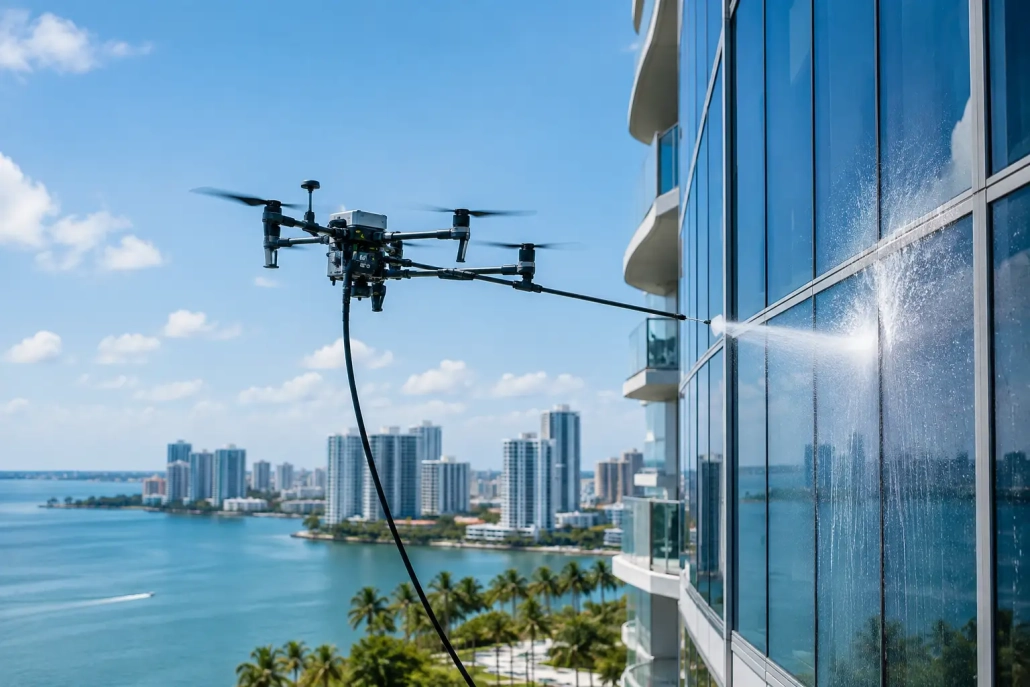
Drone window cleaning uses aerial equipment to reach upper-level exterior glass and other elevated surfaces that are difficult or expensive to access with conventional equipment. The drone is operated from the ground by trained professionals and applies a controlled, low-pressure cleaning approach designed for the surface and the condition being treated.
The process begins before the drone leaves the ground. A qualified provider reviews the building layout, glass condition, surrounding pedestrian areas, landscaping, parking access, wind exposure, and any property-specific restrictions. This planning matters. A good result is not simply about getting water onto a high window. It is about selecting the appropriate solution, pressure level, flight path, and work zone controls for that property.
During service, the crew establishes a clear work area and monitors conditions throughout the job. Residents, employees, guests, and vehicles should be considered in the cleaning plan, especially at occupied condo communities and active commercial sites. Because there is no need to build scaffolding or repeatedly reposition a lift, the work can often move efficiently across large exterior elevations.
The biggest benefits for property managers and HOAs
The value of drone cleaning is most obvious when a building has difficult access. Upper-floor windows, atriums, exterior glass near landscaping, and elevations above tight parking layouts can all create challenges for lift-based cleaning. A drone can approach many of those areas without the same footprint on the ground.
Safety is a central advantage. Reducing the need for workers to operate from heights on scaffolding, ladders, or suspended equipment can lower exposure to common access-related risks. It also helps reduce the amount of heavy equipment moving through a property, which is especially valuable around resident walkways, pool areas, storefronts, and landscaped common spaces.
Disruption is another major consideration. Lift equipment may require parking closures, ground protection, route planning, and extended setup. Scaffolding can remain in place for days or longer depending on the scope. Drone-based service does not eliminate the need for careful safety controls, but it can substantially reduce the visual and operational disruption associated with exterior cleaning.
For decision-makers, the practical benefits are clear:
- Less dependence on scaffolding, boom lifts, and large access equipment
- Reduced impact on parking, entrances, walkways, and daily property activity
- Safer access planning for elevated exterior surfaces
- Efficient coverage for multi-story buildings and hard-to-reach glass
- Low-pressure, eco-friendly cleaning methods suited to many exterior surfaces
What drone cleaning can and cannot solve
Drone technology is a strong solution for access, but it is not a substitute for a proper surface assessment. Exterior dirt, salt film, pollen, algae, and general atmospheric grime can often be addressed effectively with a low-pressure cleaning process. However, permanent staining, glass etching, failed seals, scratches, and damage inside insulated glass units are different issues entirely.
Hard-water spotting and mineral deposits may also require special attention. If a surface has been exposed to repeated sprinkler overspray or years of neglected runoff, cleaning alone may improve the appearance without fully restoring the original clarity. A professional provider should set realistic expectations after reviewing the condition rather than promising a perfect result before seeing the glass.
It also depends on the window system. Some specialty glass, coatings, aging seals, and facade materials require manufacturer-specific care. The best approach is always the one that matches the material, not the one that uses the strongest chemical or highest pressure. Low pressure is especially important around exterior building components where aggressive methods can create avoidable risk.
When should a building schedule service?
There is no single schedule that fits every property. A beachfront condominium may need exterior attention more often than an inland office building with protected elevations. Buildings surrounded by mature landscaping can collect pollen, leaves, and organic debris faster. Properties near busy roads may see more dust and exhaust film.
Many managers find that planned maintenance is easier to budget and easier on residents than waiting until windows look noticeably dirty. Scheduling before peak occupancy periods, seasonal events, inspections, or major association meetings can also help the property present its best face when it matters most.
For a multi-story residence, it can be useful to coordinate exterior window cleaning with pressure washing, facade cleaning, walkway care, or other exterior maintenance. Combining services does not mean treating every surface the same way. It means building a coordinated plan so that clean windows are not surrounded by dirty frames, stained walkways, or weathered exterior walls.
Questions to ask before choosing a provider
Before approving any exterior cleaning service, ask how the provider evaluates glass and facade materials, manages pedestrian and vehicle safety, and handles changing weather conditions. You should also ask whether the proposed method is low pressure, what cleaning solutions are being used, and how the crew protects nearby landscaping and property features.
Experience with occupied properties matters. A cleaning plan for a vacant construction site is very different from one for a condominium with residents coming and going, a medical office with scheduled appointments, or a retail center with customer traffic. Communication before and during the work should be part of the service, not an afterthought.
The Cleaners Drones brings local cleaning experience together with aerial access technology for properties that need a smarter way to maintain difficult exterior surfaces. The goal is visible improvement without making the building’s daily routine harder than it needs to be.
A cleaner exterior without the usual access headache
Well-maintained exterior glass helps a property look cared for from every angle, not just at ground level. More importantly, the right cleaning method respects the realities of the site: residents need access, businesses need to stay open, and managers need dependable work without unnecessary equipment or delays.
If upper-level glass is becoming harder to maintain, a site-specific drone cleaning assessment can provide a clearer path forward. The best next step is not guessing how much access equipment the job will require. It is choosing a cleaning plan that protects the property, limits disruption, and delivers a difference people can see.


Leave a Reply
Want to join the discussion?Feel free to contribute!