Steam Cleaning Versus Encapsulation for Carpets
A carpet can look clean on the surface while still holding the oily residue, fine sand, pet contamination, and tracked-in moisture that make it wear out faster. When choosing steam cleaning versus encapsulation, the better option depends on what is in the carpet, how heavily it is used, and how soon people need to walk on it again. For Palm Beach County homes, condos, offices, and common areas, the right method delivers more than a brighter appearance – it helps protect the flooring investment.
Steam Cleaning Versus Encapsulation: The Core Difference
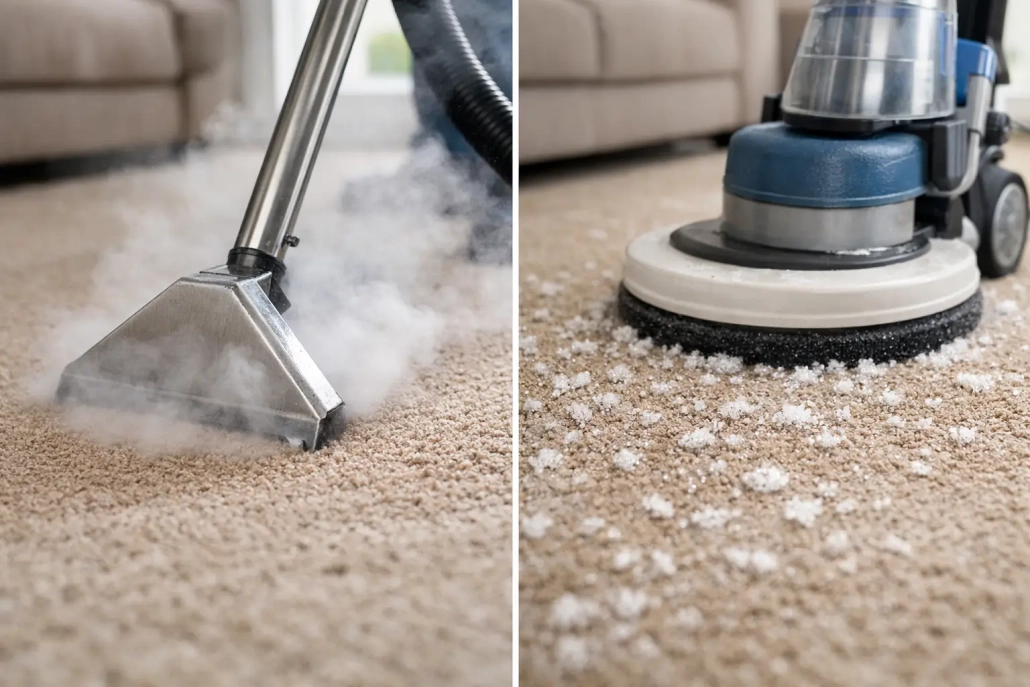
Steam cleaning is the name most people use for hot water extraction. A professional applies a cleaning solution, agitates the fibers as needed, then flushes the carpet with hot water and extracts the water, loosened soil, and cleaning residue with powerful vacuum equipment. It is a deep-cleaning process designed to remove material from the carpet rather than simply improve its appearance.
Encapsulation cleaning uses a low-moisture solution that surrounds and crystallizes dirt, oils, and residue as the carpet dries. A machine works the solution through the carpet pile. Once dry, the encapsulated soil can be removed through vacuuming, often during the same visit or in the regular maintenance vacuuming that follows.
Neither process is automatically better in every situation. Hot water extraction is generally the stronger choice for restorative cleaning, heavy soil, stains, and contaminated carpet. Encapsulation is often the practical choice for routine maintenance, commercial carpet, and spaces where fast dry times matter.
A quick correction about “steam” cleaning
Professional carpet cleaning machines do not usually blast household-style steam into the carpet. The term remains popular, but the process is typically hot water extraction. That distinction matters because the goal is controlled flushing and strong recovery, not soaking the carpet or filling the space with steam.
A trained technician adjusts water temperature, solution type, agitation, and extraction based on the carpet fiber, backing, condition, and soil level. This is especially important in South Florida, where high humidity can extend drying time if carpet is over-wet or poorly extracted.
When Steam Cleaning Is the Better Choice
Hot water extraction reaches deeper into carpet fibers and is usually the right recommendation when a carpet has not been professionally cleaned for a long time. It works well for busy family rooms, bedrooms with pet accidents, rental turnovers, and carpets that feel sticky or matted even after vacuuming.
The process is particularly effective when the problem is more than dry, loose dirt. Oils from shoes and bare feet, food residue, pet dander, beverage spills, and previous cleaning-product buildup can bond to fibers. A properly performed extraction service flushes out much of that material instead of leaving it behind.
Steam cleaning may be the best fit when you notice four common warning signs:
- Traffic lanes look darker than the surrounding carpet.
- The carpet has lingering odors or a tacky feel.
- Spots return after do-it-yourself cleaning.
- Fibers are flattened, dull, or noticeably discolored.
It is also a strong option before listing a home, after a tenant moves out, or before moving furniture into a newly purchased property. The visible difference can be substantial when the carpet has been carrying months or years of soil.
The trade-off is drying time. With good extraction and indoor airflow, many carpets dry within several hours, though conditions vary. Dense pile, heavy soil, limited air conditioning, rainy weather, and South Florida humidity can all make the process take longer. Fans, open airflow, and keeping the thermostat at a comfortable setting help the carpet dry more efficiently.
When Encapsulation Is the Smarter Choice
Encapsulation is designed for maintenance cleaning. Because it uses significantly less moisture than extraction, carpet often dries in about one to two hours. That can make a real difference in an office, retail space, condominium hallway, clubhouse, or other area that cannot be closed for most of the day.
For property managers and HOA boards, low-moisture cleaning can reduce disruption. There are fewer wet-floor concerns, less downtime for residents and staff, and a faster return to normal operations. It can be a practical way to keep common-area carpet looking consistently cared for between deeper cleanings.
Encapsulation also works well on commercial carpet tiles and low-pile synthetic carpet that receives frequent vacuuming. These materials often benefit from a scheduled maintenance program that removes dry soil regularly and addresses buildup before it turns into permanent-looking traffic lanes.
Its limitation is equally clear: encapsulation is not a substitute for a deep flush when the carpet is heavily soiled or contaminated. It may improve appearance, but it is not the preferred method for significant pet urine, heavy grease, flood-related concerns, deeply embedded grime, or substantial residue from past cleaning attempts. Those situations call for inspection and often hot water extraction or a more specialized treatment.
Dry Time Is Important, but It Is Not the Only Decision
Fast drying is valuable, especially in occupied commercial spaces and humid climates. Still, selecting a cleaning method only because it dries quickly can lead to disappointing results. A carpet with deep soil may look better after encapsulation but continue to hold material that causes odors, rapid resoiling, or fiber damage.
On the other hand, scheduling hot water extraction for every routine commercial cleaning may create unnecessary downtime. A better plan is often to use encapsulation for regular appearance management, then schedule periodic extraction to reset the carpet and remove the buildup that maintenance cleaning cannot fully address.
Think of it as maintaining a property instead of reacting to it. Frequent vacuuming, prompt spot treatment, and low-moisture maintenance help preserve the carpet between deeper professional cleanings. Periodic extraction addresses the soil that gradually works its way below the visible surface.
What South Florida Properties Should Consider
South Florida carpet faces a specific mix of challenges: humidity, sand, rainwater, pool traffic, pets, and constant use in seasonal or multi-family properties. Fine sand acts like an abrasive inside carpet fibers. It can cut and dull the pile over time, particularly near entrances, patios, elevators, and high-traffic hallways.
Humidity adds another concern. Carpet should never remain damp for an extended period. Quality equipment, thorough extraction, appropriate cleaning chemistry, and proper airflow are the difference between a controlled professional service and a carpet that feels wet long after the crew has left.
Material matters too. Synthetic carpet generally handles both methods well when cleaned correctly. Natural fibers, delicate rugs, wool, and specialty backings require a more careful evaluation. The cleaning approach should be matched to the actual material, not chosen from a one-size-fits-all menu.
For area rugs, the best solution may not be either method performed in place. Some rugs need specialized washing, controlled drying, color testing, or treatment away from the home to protect their fibers and backing.
How a Professional Chooses the Right Method
The most dependable service starts with an inspection. A technician should look at fiber type, wear patterns, visible staining, odor concerns, previous cleaning history, and the amount of time available for drying. A clean-looking carpet in a low-traffic guest room needs a different approach than a heavily used office corridor or a living room shared by children and pets.
The Cleaners Drones approaches carpet care with that practical mindset. The goal is not to push one process for every property. It is to recommend the method that produces a visible improvement while respecting the carpet, the building schedule, and the people using the space.
If the carpet needs deep flushing, hot water extraction is usually the right call. If the priority is keeping a busy area presentable with minimal downtime, encapsulation may be the more efficient choice. In many properties, the best results come from using both methods at different points in the maintenance cycle.
Before booking, consider the condition of the carpet rather than just the calendar. A quick conversation about stains, pet issues, traffic patterns, fiber type, and drying needs can prevent the wrong method from being used. The right cleaning plan should leave the carpet looking better, feeling fresher, and ready for the life happening on it.


Leave a Reply
Want to join the discussion?Feel free to contribute!