Drone Building Washing for Safer, Cleaner Exteriors
A stained exterior can make a well-managed property look neglected long before anyone steps inside. In Palm Beach County, salt air, humidity, wind-driven rain, algae, mildew, and everyday airborne debris can build up quickly on stucco, glass, painted surfaces, balconies, and upper-level walls. Drone building washing gives property owners and managers a practical way to clean those hard-to-reach areas without turning the property into a long-term construction zone.
For high-rise condominiums, HOA communities, commercial properties, and multi-story homes, the challenge is rarely deciding whether the exterior needs cleaning. The challenge is access. Traditional washing may require lifts, scaffolding, ropes, restricted parking areas, and extended work around residents or tenants. Drone-powered cleaning changes the access equation by bringing controlled, low-pressure cleaning directly to elevated surfaces from the air.
Why South Florida Buildings Get Dirty So Fast
South Florida weather is tough on exterior finishes. Moisture creates the ideal environment for algae and mildew growth, especially on shaded elevations and areas with limited airflow. Ocean-adjacent and coastal properties also collect salt residue that can leave surfaces dull and contribute to premature wear when it is left in place.
A building’s location and construction matter. White or light-colored stucco makes organic staining highly visible. Textured finishes hold more dirt than smooth surfaces. Buildings near busy roads can collect exhaust residue and dust, while properties surrounded by mature landscaping often experience more pollen, leaf debris, and moisture-related staining.
Regular exterior cleaning is about more than curb appeal. Removing buildup before it becomes heavily established helps preserve the appearance of painted surfaces, siding, concrete, and trim. For condominium boards and commercial operators, a cleaner building also supports resident satisfaction, tenant confidence, and a stronger first impression for visitors.
How Drone Building Washing Works
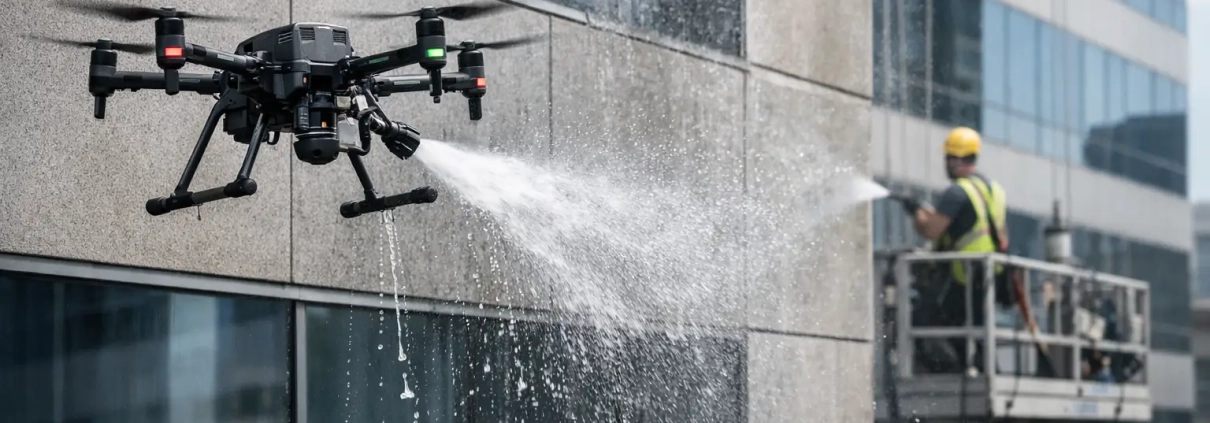
Drone building washing uses specialized aerial equipment to apply a cleaning solution and rinse elevated exterior surfaces with controlled, low pressure. The drone operator can reach upper floors and difficult angles without sending a technician onto scaffolding or positioning a lift across driveways, sidewalks, and landscaping.
The process starts with a property assessment. A professional team identifies the exterior materials, the type of staining present, the building height, nearby landscaping, pedestrian areas, access points, and any locations that need extra care. This matters because a cleaning method that works well for durable stucco may not be appropriate for every painted surface, window system, or delicate architectural feature.
Once the plan is in place, the crew prepares the work area and protects nearby surfaces as needed. The drone applies an eco-friendly cleaning solution designed to break down algae, mildew, grime, and environmental residue. Rather than relying on aggressive pressure to force contaminants off the building, low-pressure washing lets the solution do much of the work. The surface is then rinsed carefully to reveal a cleaner, more even exterior.
This approach is especially valuable for broad wall sections, upper-story facades, exterior towers, and areas where equipment access is limited. It is not a replacement for every exterior-cleaning method. Ground-level patios, sidewalks, driveways, heavily soiled concrete, and certain detail areas may still call for conventional pressure washing or hand cleaning. The right service plan often combines methods based on the surface and the result needed.
Safer Access With Less Disruption
The biggest advantage of aerial cleaning is not simply that it looks advanced. It is that it reduces the access-related complications that often make exterior projects slow and disruptive.
Scaffolding can block walkways, limit entrances, take up parking spaces, and remain in place for days or weeks. Boom lifts need room to operate and may be difficult to position around landscaping, pool decks, narrow drives, or occupied properties. Rope access can be effective in some situations, but it requires specialized planning and creates additional work at height.
With drone cleaning, the work can often move more efficiently across elevated areas while keeping the crew on the ground. That means fewer obstacles around the property and less impact on normal operations. For a retail center, that can mean less interruption for customers. For a condo community, it can mean fewer blocked parking spaces and less inconvenience for residents. For a homeowner with a multi-story exterior, it can mean cleaning upper walls without bringing large equipment onto the property.
Safety is still a serious part of the job. A drone should be operated by trained professionals who understand property conditions, controlled work zones, wind considerations, surface limitations, and how to protect people and surrounding areas. Technology helps, but it does not eliminate the need for experienced planning and careful execution.
Low Pressure Protects More Than Appearance
Many people hear “washing” and assume more pressure means better cleaning. That is not always true. High pressure can damage certain finishes, force water into vulnerable openings, strip paint, disturb caulking, or leave visible marks on softer materials. On exterior walls, the goal is to remove staining without creating a new maintenance problem.
Low-pressure cleaning is particularly useful for organic growth and general atmospheric grime because it pairs the correct cleaning solution with gentle rinsing. The solution has time to address the buildup, which reduces the need to blast the surface. It is a more controlled approach for many building exteriors, especially when the work involves painted stucco, siding, trim, and upper-level surfaces.
There are trade-offs. Deep oxidation, failing paint, cracked stucco, loose sealant, and existing water intrusion will not be repaired by washing. In fact, cleaning can reveal defects that dirt had been hiding. That is useful information for a property manager or owner, but it also means expectations should be clear before work begins. Professional cleaning restores the appearance of sound surfaces. It is not a substitute for needed repairs or repainting.
When Is the Right Time to Schedule Exterior Cleaning?
For many South Florida properties, exterior washing works best as planned maintenance rather than an emergency response to visible staining. A building that is cleaned before algae becomes heavy is usually easier to maintain and presents better year-round.
The ideal frequency depends on location, shade, exposure, landscaping, and the property’s appearance standards. A coastal condominium with bright stucco may need more regular attention than an inland building with darker finishes. A commercial property that relies on walk-in traffic may choose service before seasonal events, lease tours, or busy periods. HOA boards may schedule cleaning around community calendars to minimize inconvenience.
Weather also matters. Operators monitor wind and rain conditions, since aerial work requires a controlled environment. A reputable provider will not force a job to continue when conditions are unsuitable. Rescheduling for safe conditions is better than rushing a project and compromising results.
What Property Managers Should Ask Before Hiring
Aerial cleaning should be treated as a professional exterior-maintenance service, not a novelty. Before selecting a provider, ask how they assess surface materials and what cleaning method they recommend for the specific building. Confirm that they use low-pressure techniques when appropriate, explain how they manage work zones, and can describe how they protect landscaping, windows, vehicles, and pedestrian areas.
It is also smart to discuss the full scope of the property. A clean facade can make dirty sidewalks, stained entry pavers, or neglected common-area surfaces stand out more clearly. Coordinating exterior wall cleaning with pressure washing, window-area detailing, or other maintenance services can create a more complete result while reducing the number of separate visits.
The Cleaners Drones brings this approach to Palm Beach County and the broader South Florida market, combining established cleaning experience with specialized aerial access for properties that are difficult to reach by traditional methods.
A Better Way to Keep Elevated Exteriors Looking Cared For
A cleaner building is visible proof that a property is being looked after. Whether you manage a condominium, oversee an HOA, operate a commercial site, or own a multi-story home, the best cleaning plan is one that respects the surface, protects the people around it, and limits disruption to daily life.
When upper walls begin to show algae, salt residue, or weather staining, waiting usually makes the job harder. A professional assessment can identify the right timing and method, helping your property look cared for without the cost and inconvenience of unnecessary scaffolding or lifts.
Drone Washing Versus Boom Lifts for Tall Buildings
A dirty exterior can make a well-managed property look neglected fast. In South Florida, salt air, humidity, algae, mildew, and windblown debris build up on walls, windows, balconies, roofs, and other elevated surfaces. When it is time to clean, the choice often comes down to drone washing versus boom lifts. Both can reach high areas, but they create very different work zones, costs, and experiences for residents, tenants, customers, and staff.
For a condominium board, property manager, or commercial building operator, the right method is not simply the one that reaches the highest point. It is the one that cleans the required surfaces safely, protects the property, and keeps daily operations moving with as little interruption as possible.
Drone Washing Versus Boom Lifts: The Core Difference
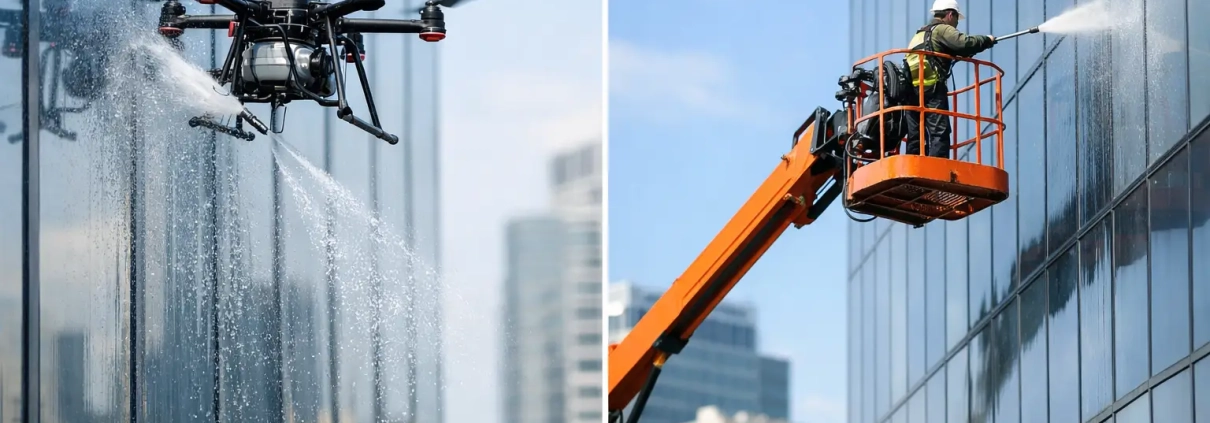
A boom lift carries a cleaning technician in an elevated platform. The operator drives or positions the machine, raises the boom, and works from the basket with hoses, cleaning equipment, and personal fall-protection equipment. This is a familiar approach for exterior maintenance, but it requires enough ground space for the equipment and a carefully managed exclusion zone below.
Drone washing uses a purpose-built aerial system to deliver low-pressure water and cleaning solution to elevated exterior surfaces. A trained ground crew operates the drone while controlling the cleaning path from below. The method is designed to remove organic buildup and surface grime without placing a technician in a raised basket or installing scaffolding along the building.
Neither approach is automatically right for every job. The best choice depends on the building layout, the material being cleaned, the height and condition of the surface, available access, and whether the work requires close hands-on repair or detailed manual treatment.
Safety Starts With How Workers Reach the Surface
Working at height always deserves serious planning. With boom lifts, workers are elevated above the ground and must manage platform positioning, overhead obstructions, wind conditions, traffic, pedestrians, and the risk of contact with the building. A properly operated lift can be safe, but the work involves heavy machinery, trained operators, inspection requirements, and a larger active job site.
Drone cleaning removes the need to place a technician at the cleaning height for many exterior washing tasks. That can reduce exposure to fall hazards and eliminate the risk of a lift basket contacting balconies, glass, landscaping, parked vehicles, or façade features. It is especially useful where the building has limited clearance, soft ground, narrow drive lanes, or landscaping that would be difficult to work around with heavy equipment.
That does not mean drone washing eliminates the need for site controls. A professional crew still establishes a safe ground area, monitors weather, protects nearby people and property, and follows a defined flight and cleaning plan. The difference is that the elevated access point is an aerial cleaning system rather than a worker standing in a platform.
Wind, Weather, and Building Conditions Still Matter
South Florida weather can change quickly. Wind, rain, lightning, and surface saturation affect both drone work and boom-lift work. A responsible provider will pause or reschedule when conditions do not support safe, quality cleaning.
The condition of the building also matters. Loose stucco, damaged seals, failing paint, cracked windows, and deteriorated caulking are maintenance issues, not problems to wash away. A careful pre-job assessment helps identify areas that need repair before any exterior cleaning begins.
Less Disruption Can Be a Major Advantage
Boom lifts require room to enter, stage, move, and operate. On a busy property, that can mean reserved parking spaces, blocked drive lanes, temporary traffic controls, noise from equipment, and restricted access around the work area. For a retail center, medical office, school, condominium, or active apartment community, those disruptions may affect customer access and resident routines.
Drone washing can often be performed with a smaller ground footprint. There is no large lift traveling across the property, no scaffolding around the façade, and fewer reasons to close off broad sections of parking or walkways. This can be particularly valuable for properties with tight parking, decorative pavers, fragile landscaping, pool decks, or limited service access behind the building.
Smaller work zones do not mean no work zones. Cleaning runoff, hose routing, and pedestrian safety still require planning. The practical advantage is that the controlled area is often easier to manage than the space needed for a large aerial lift.
Cost Is About More Than the Daily Equipment Rate
A boom lift may appear straightforward: rent or mobilize the machine, provide trained operators, and clean the building. But the total project cost can grow when a property needs multiple lift positions, extended equipment time, special access approvals, traffic management, surface protection, or after-hours scheduling to avoid disrupting tenants.
Drone cleaning may reduce some of those access-related costs because it does not require lift rental, repeated repositioning, or extensive site staging. The work can also move efficiently across high and difficult-to-reach elevations when the building and cleaning scope are a good fit.
Still, a lower-cost option is not always the best value. A surface that needs scraping, hand detailing, sealant repairs, or close physical inspection may require a technician in a lift or another access method. The most useful quote explains what is being cleaned, what method is proposed, which areas may need special treatment, and what the property can expect during service.
Cleaning Results Depend on the Surface and the Soil
For exterior washing, pressure alone is not the measure of a good result. Too much pressure can damage painted finishes, stucco, soft wood, seals, screens, and other building materials. South Florida properties often benefit from a low-pressure cleaning approach that uses the right cleaning solution and dwell time to treat algae, mildew, and grime without forcing water where it does not belong.
Drone washing is well suited to broad vertical surfaces and elevated exterior areas affected by organic growth and airborne dirt. It can help restore a cleaner, more consistent appearance across façades, upper walls, roofs, and hard-to-access sections where a lift would be inconvenient or impractical.
Boom lifts remain useful when a technician needs to work inches from the surface for a detailed task. Examples include hand-cleaning delicate architectural elements, accessing recessed areas, replacing fixtures, inspecting damage, or completing repair work alongside washing. The access method should follow the scope of work, not the other way around.
When a Boom Lift May Be the Better Choice
There are situations where a lift remains the practical solution. A property may need close-up manual work on a small, isolated area. The cleaning scope may include repairs that require tools and a technician at height. Some building configurations, enclosed courtyards, overhangs, or narrow spaces can also limit safe drone flight paths.
A lift can also be effective where there is wide, stable access around the structure and where the disruption of equipment staging is manageable. For a low-rise commercial property with an open service lane, the traditional method may be entirely appropriate.
The key is honest evaluation. A provider should not force drone cleaning onto a property that needs hands-on elevated work, and a property should not assume a boom lift is required simply because the building is tall.
Questions Property Decision-Makers Should Ask
Before scheduling exterior cleaning, ask how the crew will access each elevation, where equipment and hoses will be staged, and how residents or customers will be protected. Ask whether the process uses low pressure on sensitive surfaces, how runoff will be managed, and whether the provider will identify pre-existing damage before work begins.
It is also smart to ask how much parking, landscaping, or driveway access will be affected. For HOA boards and property managers, those operational details can matter as much as the final appearance. A good plan should include clear timing, site communication, and realistic expectations about weather-related adjustments.
A Better Fit for Many South Florida Properties
Drone washing is changing what exterior cleaning can look like for high-rise buildings, condominiums, hotels, commercial properties, and multi-story homes. It offers a modern access solution that can reduce reliance on scaffolding and heavy lifts while supporting a safer, less disruptive cleaning process.
At the same time, smart property maintenance is never one-size-fits-all. The Cleaners Drones evaluates the surface, access conditions, cleaning goals, and property activity before recommending a method. The goal is visible improvement without creating unnecessary risk or disruption for the people who live, work, and visit there.
A clean exterior protects curb appeal and reinforces confidence in how a property is cared for. Start with a site-specific assessment, choose the access method that fits the actual work, and give your building the attention it deserves.
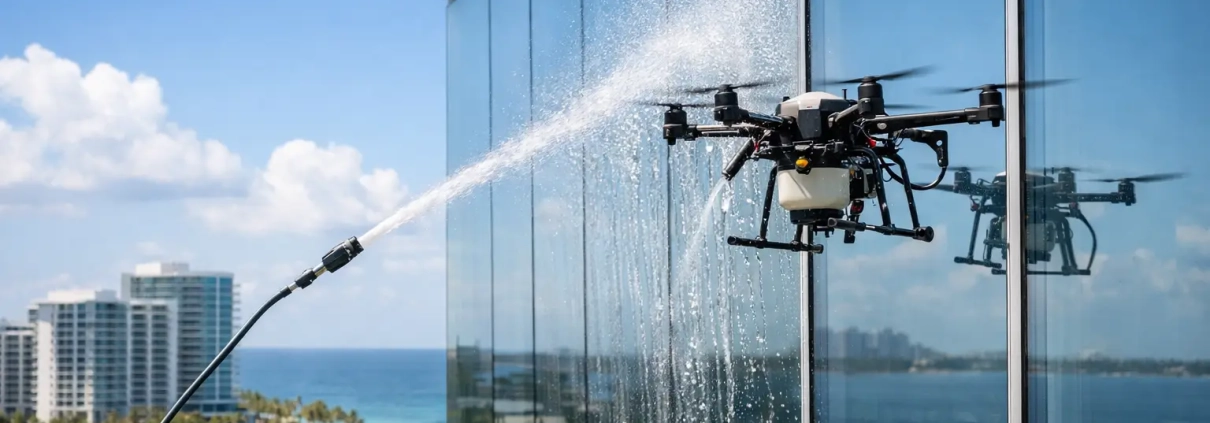
Drone Window Washing for South Florida Buildings
A streaked upper floor can make an otherwise well-managed property look neglected from the street. For Palm Beach County condos, commercial buildings, and multi-story homes, the challenge is rarely recognizing dirty glass. It is finding a practical way to clean it without closing off access areas, scheduling lifts, or putting crews in difficult positions. Drone window washing gives property owners and managers another option for reaching exterior glass safely and efficiently.
Unlike a small consumer drone with a camera, professional exterior-cleaning drones are purpose-built working systems. They deliver controlled, low-pressure cleaning solutions and water to elevated surfaces while an experienced operator manages the flight path from the ground. The goal is straightforward: remove airborne salt, dust, mildew, pollen, and surface grime that dulls windows, frames, and nearby exterior finishes.
Why exterior glass gets dirty so quickly in South Florida
South Florida buildings deal with a combination of conditions that ordinary maintenance schedules do not always account for. Humidity encourages organic growth around frames and ledges. Afternoon storms leave mineral residue. Coastal properties may collect salt spray, while traffic corridors add fine dust and exhaust film.
Glass can still look cloudy even after rain because rain does not rinse contaminants evenly or remove the film that has already bonded to the surface. Window frames, seals, and trim can also hold dirt that draws attention away from otherwise clean glass. Regular exterior cleaning protects the polished, cared-for appearance residents, guests, and tenants expect.
For a property manager, that appearance affects more than curb appeal. Clean windows improve daylight, make common areas feel better maintained, and support the overall presentation of the building during tours, inspections, and resident visits. For homeowners, it is often about finally being able to enjoy the view without stains and buildup at hard-to-reach elevations.
How drone window washing works
The right approach begins with an assessment of the building, the glass condition, surrounding access, and weather. Not every window needs the same treatment, and no responsible contractor should use the same pressure or cleaning chemistry on every exterior surface.
A professional crew establishes a safe ground area, identifies obstacles such as balconies, trees, power lines, and pedestrian paths, then plans the cleaning sequence. The drone is operated close enough to apply a controlled low-pressure rinse and cleaning solution where needed. The system can reach upper-story windows and exterior surfaces without relying on scaffolding or a boom lift in many situations.
For routine buildup, low-pressure cleaning can remove the dirt, organic residue, and environmental film that make exterior glass look dull. The process is especially useful for broad areas of upper-level glass, window surrounds, façades, and difficult-to-access exterior details.
Results depend on the condition of the glass. Fresh surface grime responds differently than etched hard-water deposits, oxidized frames, damaged seals, or construction residue. A qualified cleaning company should explain what cleaning can improve and what may require specialty restoration or a different method.
It is not a one-size-fits-all replacement for hand detailing
Drone cleaning is a powerful access solution, but it is not a shortcut for every job. Some windows may need hand-detailing for interior glass, stubborn spots, deep track cleaning, or precision work around delicate architectural features. Ground-floor glass and easily accessible areas may be more efficiently cleaned using traditional methods.
That is not a drawback. It is how good property maintenance works. The best plan may combine drone-based exterior cleaning for upper elevations with conventional cleaning for entrances, storefronts, interior-facing glass, and areas requiring close manual attention. The result is a more complete service without paying for lifts or scaffolding where they are not necessary.
What property decision-makers gain
Traditional high-access window cleaning often brings a long list of operational concerns: lift positioning, parking restrictions, blocked drive lanes, noise, lengthy setup, and work zones that affect residents or customers. Drone window washing can reduce many of those burdens.
The biggest benefit is safer access. Cleaning from the ground reduces the need to place workers on ladders, suspended platforms, or elevated equipment for suitable areas of the project. It also reduces the amount of heavy machinery that must be staged around the property.
There is a practical cost benefit as well. A drone does not eliminate labor or planning, but it can reduce the equipment requirements that drive up the cost of accessing multi-story exterior surfaces. For HOAs and commercial operators managing budgets across several buildings, that difference can make routine exterior cleaning more achievable.
The service also helps keep the property functioning while work is underway. Fewer obstructions can mean less disruption to residents entering a condominium, guests arriving at a hotel, patients visiting an office, or customers parking near a retail location. Timing still matters, especially around busy entrances, but the footprint is often much smaller than a lift-based operation.
When a drone is the right choice
Drone cleaning is particularly well suited to buildings with hard-to-reach upper windows, exterior glass above landscaping, tall façades, condominium towers, parking areas with limited equipment access, and multi-story residences. It can also be a smart choice when a property needs a visible refresh before an event, inspection, listing, or seasonal peak.
Weather and site conditions matter. High winds, lightning, heavy rain, restricted airspace, overhead hazards, or close proximity to sensitive areas may require rescheduling or another cleaning method. A professional team should never force a flight simply to stay on a calendar.
Material condition matters too. Older glass, cracked panes, failing sealant, loose trim, and fragile finishes should be identified before cleaning begins. Low-pressure methods are designed to be gentler than aggressive washing, but careful evaluation remains essential. The objective is to clean the surface, not create a maintenance problem.
Questions to ask before scheduling service
Before approving a drone window washing project, ask how the company evaluates surface materials, manages pedestrian safety, handles weather delays, and protects nearby landscaping and finishes. Ask whether the cleaning products are appropriate for the property and whether the crew has experience with the specific building type.
It is also useful to discuss expectations. Are you looking for a routine exterior wash, a brighter appearance before a board meeting, or help with visible salt and mildew buildup? Is the concern limited to glass, or do window frames, stucco, balconies, and adjacent exterior surfaces also need attention? Clear answers help the contractor build a realistic scope rather than treating every building like the last one.
For larger properties, consider setting a maintenance schedule based on exposure rather than waiting until the dirt becomes obvious. Coastal-facing buildings, heavily shaded areas, and high-traffic locations may need more frequent attention than a protected inland property. A consistent schedule can help avoid the heavier buildup that takes more time and effort to remove.
A modern solution with a practical purpose
Technology only matters when it solves a real problem. In this case, the problem is access: windows and exterior surfaces that need care but are expensive, disruptive, or risky to reach by conventional means. The Cleaners Drones uses drone-powered, low-pressure exterior cleaning to help South Florida properties maintain a cleaner appearance with less equipment around the building.
The best results come from matching the method to the property, the material, and the condition of the glass. When upper-level windows are clouded by Florida weather and access is the obstacle, a professionally managed drone service can turn a difficult maintenance task into a manageable part of caring for the property.