Can Drones Clean Solar Panels Safely and Well?
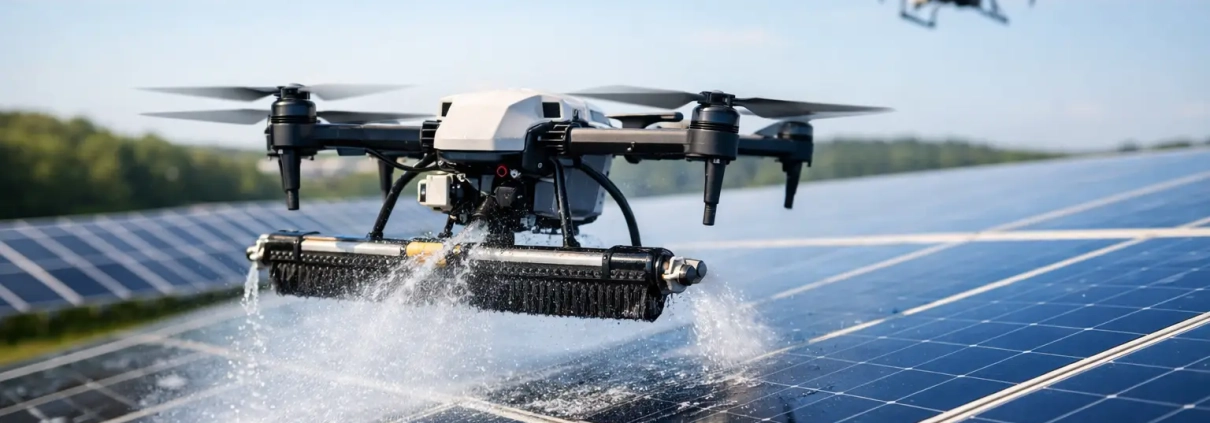
A solar array can look clean from the driveway while pollen, salt mist, dust, bird droppings, and algae film are quietly limiting its performance. So, can drones clean solar panels? In the right setting, yes. A professionally operated cleaning drone can help reach difficult panels with controlled, low-pressure rinsing and far less disruption than traditional access equipment. But it is not a one-size-fits-all answer, and the cleaning method matters as much as the drone itself.
For South Florida homes, condos, and commercial properties, the question is usually not whether panels can get dirty. They do. The real question is how to clean them safely without putting workers on a steep roof, damaging delicate equipment, or creating a large work zone around the property.
Can Drones Clean Solar Panels Without Damage?
Drones can clean solar panels when they are paired with the right equipment, trained operators, appropriate water flow, and a site-specific plan. The drone provides access. It does not eliminate the need for professional judgment.
Solar panels are built to handle weather, but that does not mean they should be treated like a driveway or a concrete wall. High pressure, abrasive pads, harsh chemicals, and careless contact can scratch glass, affect seals, damage frames, or leave residue behind. A proper aerial cleaning approach uses low pressure and an eco-friendly solution or purified-water rinse when appropriate, keeping the process gentle on the panel surface.
The safest drone cleaning systems maintain controlled distance from the panels rather than scraping across them. That is especially useful on multi-story buildings, elevated canopies, large carport arrays, and roofs where ladder work introduces unnecessary risk.
Still, a drone should not be sent up simply because panels are out of reach. Before work begins, a professional needs to assess panel angle, roof pitch, wind conditions, mounting hardware, electrical components, drainage paths, nearby power lines, and safe operating space. Those details determine whether aerial cleaning is the best option or whether another access method is more appropriate.
Why Solar Panels Get Dirty Faster in South Florida
South Florida solar systems deal with more than ordinary dust. Coastal air can carry salt deposits, while frequent rain can leave behind minerals and airborne particles as it dries. Pollen, tree debris, insects, bird droppings, construction dust, and humidity-driven organic growth can also collect along panel edges and lower sections.
Rain does not always clean panels as effectively as people expect. A light shower may move loose dust around, but it can also create streaks and leave residue as the water evaporates. Bird droppings and stuck-on debris are even more stubborn. Because solar cells are connected in groups, a concentrated dirty spot can affect more than the small area it covers.
The impact varies by property. An open residential roof with regular rain exposure may need little more than periodic inspection. Panels near the coast, under trees, beside busy roads, or on a commercial building with airborne debris may need a more consistent maintenance schedule. Production monitoring can help reveal whether soiling is likely affecting output, but visible buildup is not the only sign to watch for.
Where Drone Cleaning Makes the Most Sense
Drone-powered cleaning is most valuable when access is the problem. For a one-story home with a simple roof and easy ground-level access, a conventional low-pressure panel cleaning method may be perfectly practical. The value of a drone increases when reaching the panels would otherwise require lifts, extensive ladder work, scaffolding, roof walking, or a large restricted work area.
This can make a meaningful difference for condominium associations, apartment communities, commercial facilities, parking structures, hotels, warehouses, and multi-story residences. Fewer ground-based access systems can mean less disruption for residents, customers, and daily operations. It can also reduce the time a driveway, sidewalk, or parking area needs to be controlled for work overhead.
Aerial cleaning may also reduce the need for workers to walk directly on certain roof areas. That matters when roof surfaces are steep, fragile, crowded with equipment, or difficult to navigate safely. The goal is not to replace every traditional cleaning method. It is to use the safest, most efficient access solution for the property in front of you.
What a Professional Solar Panel Cleaning Visit Should Include
A quality service begins with inspection, not spraying. The crew should identify the condition of the panels and look for concerns that cleaning alone will not solve, such as cracked glass, loose mounts, damaged wiring, exposed connectors, standing water, or heavy staining that requires a different approach.
The cleaning itself should use low pressure and materials suited to solar glass and frames. The objective is to lift away surface contamination without forcing water into electrical areas or leaving a film that attracts more dirt. In many cases, purified or low-mineral water is preferred because hard-water spotting can reduce the clean, clear finish owners expect.
Afterward, the panels should be visually checked for remaining debris, especially around lower edges, frames, and areas where bird droppings or organic matter had adhered. A professional cleaning company should also be honest about limitations. Cleaning can improve panel exposure to sunlight, but it will not correct an inverter issue, a failed cell, shading from growing trees, or a mechanical problem within the system.
The Trade-Offs of Using Drones on Solar Arrays
Drone cleaning offers clear benefits, but it has operating limits. Wind is one of the biggest factors. South Florida weather can change quickly, and safe aerial work requires suitable conditions. Rain, lightning risk, strong gusts, and limited visibility can delay a job for good reason.
Panel layout also matters. Tight spaces between modules, low-clearance locations, roof obstructions, and nearby utility lines may limit where a drone can operate effectively. Some heavily soiled panels may need targeted manual attention after a drone rinse, particularly if debris has hardened onto the glass or collected beneath the frame.
There is also a difference between cleaning the panels and cleaning the entire solar system area. Leaves packed under panels, nests, clogged roof drains, damaged bird guards, or roof surface growth may require separate maintenance. A good provider will explain what is included, what needs another method, and what should be referred to a solar technician.
How Often Should Solar Panels Be Cleaned?
There is no universal schedule. For many South Florida properties, an inspection every six to 12 months is a sensible starting point, with cleaning based on visible buildup, location, weather exposure, and system performance. Properties near saltwater, construction activity, mature trees, or areas with heavy bird activity may benefit from more frequent service.
Avoid cleaning panels during the hottest part of a bright day when possible. Very hot glass and cold water can create unnecessary thermal stress, while rapid evaporation can leave spots. Early morning, later afternoon, or an overcast period may offer better conditions, assuming the roof and weather are safe.
Property managers and HOA boards can often reduce cost and disruption by scheduling solar panel cleaning alongside other exterior maintenance. When a provider is already addressing hard-to-reach building surfaces, coordinated planning can make access, resident communication, and site preparation easier.
Questions to Ask Before Hiring a Drone Cleaning Provider
Before approving aerial solar cleaning, ask how the company controls water pressure, what products it uses, how it protects electrical components, and whether it evaluates weather and site hazards before flight. You should also ask whether the team has experience with your property type, particularly if the panels are located on a high-rise, parking canopy, or complex roofline.
Insurance, trained operation, and clear communication matter just as much as the equipment. The drone is a tool, not a substitute for professional standards. A provider should be able to explain the work plan in plain language, identify any access limitations, and avoid promising results that a cleaning service cannot guarantee.
For difficult-to-reach exterior surfaces across Palm Beach County, The Cleaners Drones applies the same practical mindset: use the right method, protect the property, and minimize disruption wherever possible.
Clean solar panels are not just about appearance. They are about giving a valuable system the clear exposure it was installed to have. If your array is high, hard to reach, or collecting the effects of South Florida weather, start with a professional assessment and choose the cleaning method that makes safety and long-term care the priority.
How to Dry Floors After a Water Leak Safely
A small leak behind a refrigerator, under a sink, or from an upstairs bathroom can leave a much bigger problem than a visible puddle. If you are searching for how to dry floors after water leak damage, the goal is not simply to make the surface feel dry. Water can move beneath flooring, into baseboards, under cabinets, and through carpet padding long after the standing water is gone.
In South Florida, warm, humid conditions can slow evaporation and give moisture more time to cause warping, staining, odors, and mold growth. Acting quickly protects the floor you can see and the materials underneath it.
Start by Making the Area Safe
Before moving furniture or setting up fans, stop the source of water if it is safe to do so. Shut off the local supply valve for an appliance or fixture, or turn off the home’s main water supply if you cannot isolate the leak. If water is coming from a roof leak, place containers under active drips only if the area is safe and contact a qualified professional to address the source.
Do not walk through water near outlets, power strips, appliances, or electrical panels. Turn off power to the affected area at the breaker only when you can do so without stepping into water. If there is any doubt about electrical safety, stay out of the area and call for help.
The type of water matters, too. Clean water from a broken supply line is generally less hazardous than water from a toilet overflow, backed-up drain, washing machine discharge, or outdoor flooding. Water that may contain sewage, chemicals, or flood contaminants should not be handled as a routine cleanup. Keep people and pets away, avoid using household fans that could spread contaminants, and arrange professional water damage service.
Remove Standing Water First
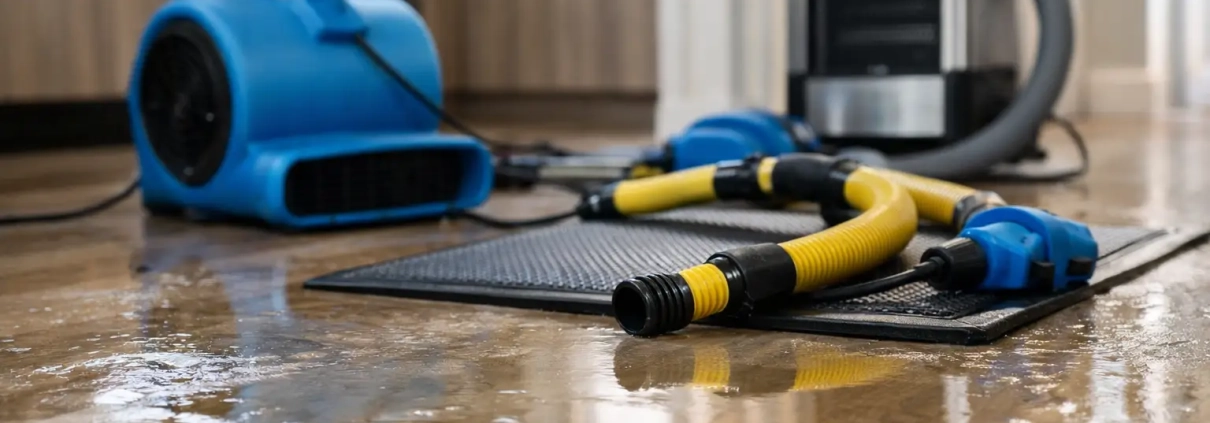
Drying cannot begin in earnest while water is still pooled on the floor. For a minor clean-water leak on a hard surface, use towels, mops, or a wet/dry vacuum to remove as much water as possible. A wet/dry vacuum is particularly useful along baseboards, around toilet bases, and in the seams where flooring meets walls.
Work from the outside of the wet area toward the center so you are collecting water rather than spreading it. Change soaked towels often. Leaving saturated towels on a floor may keep moisture trapped against the material.
For carpet, extraction is more effective than blotting alone. A shop vacuum can remove some surface moisture, but it may not pull enough water from the carpet backing and padding after a substantial leak. If the carpet squishes when stepped on, water is likely beneath the surface. Lift a corner only if you can do so without damaging the installation, then check the pad and subfloor below.
Move lightweight furniture, rugs, baskets, and other items away from the wet area. Put foil, plastic blocks, or protective tabs under furniture legs that cannot be moved immediately. Wet wood furniture can stain flooring, while metal legs may rust and transfer discoloration to carpet or tile.
How to Dry Floors After a Water Leak by Material
Every floor dries differently. The wrong approach can turn a manageable water issue into permanent damage.
Tile, Vinyl, and Sealed Concrete
Tile and vinyl may look unaffected after you wipe them down, but water can still reach the subfloor through grout lines, loose tiles, damaged caulk, seams, or flooring edges. Dry the surface thoroughly, then inspect walls, baseboards, cabinets, and nearby rooms for dampness.
Run air conditioning and a dehumidifier to lower indoor humidity. Place fans so they move air across the floor rather than directly into a wall or under cabinets. If tile feels loose, grout is cracked, or water entered from below, professional moisture testing is a smart next step. Dry-looking grout does not confirm that the floor assembly underneath is dry.
Hardwood and Engineered Wood
Wood flooring needs fast, controlled drying. Standing water can cause cupping, crowning, buckling, gaps, dark staining, and finish damage. Wipe up water immediately, remove rugs, and use a wet/dry vacuum around seams and edges if available.
Then use dehumidification and steady air movement. Do not blast hardwood with high heat, such as space heaters or hair dryers. Rapid, uneven heating can dry the top of the boards faster than the underside and worsen distortion. Keep the air-conditioned space stable and dry instead.
If boards are lifting, edges are curling, or water has been present for more than a few hours, call a restoration professional. Some wood floors can be saved with prompt structural drying and later refinishing. Others may need repair or replacement, especially if water reached the subfloor or remained trapped beneath planks.
Laminate Flooring
Laminate is one of the least forgiving flooring materials after a leak. Its core can absorb water and swell at seams, even when the surface is wiped dry quickly. Remove standing water, dry the edges, and inspect for raised joints, bubbling, soft spots, or separated planks.
Do not assume a fan alone will solve the issue if water has gone underneath. Once laminate has swollen, drying may stop further damage but usually will not restore its original shape. Prompt inspection can help determine whether only a small section is affected or whether moisture has traveled farther than expected.
Carpet and Area Rugs
A wet carpet can be salvageable after a small clean-water leak if drying begins immediately. Extract water, lift furniture, increase air circulation, and use a dehumidifier. Carpet padding is often the deciding factor. It holds a large amount of water and may need replacement after a significant leak, even if the carpet itself can be cleaned and dried.
Area rugs should be removed from the wet floor as soon as possible. Natural fibers, wool, silk, and rugs with delicate dyes need specialized care. Do not leave a wet rug folded or rolled, since color bleeding and mildew can develop quickly.
Use Air Movement and Dehumidification Together
Fans alone move moisture from the floor into the air. In a humid Palm Beach County home, that moisture may remain indoors and settle elsewhere unless it is removed. Dehumidifiers pull water vapor from the air, while air conditioning helps maintain a lower-humidity environment.
Set up fans to circulate air across wet surfaces and toward open areas. Avoid aiming a fan directly at one spot for hours, particularly on hardwood. Check and empty portable dehumidifier reservoirs often, or use a unit with a drain hose when appropriate.
Open windows only if outdoor air is drier than indoor air. In South Florida, that is often not the case, especially after rain. Running the AC with windows closed is usually a better drying strategy during humid weather.
Check What You Cannot See
The most common mistake after a leak is stopping once the floor feels dry underfoot. Water may have migrated under baseboards, into drywall, beneath cabinets, or below flooring. A musty odor, discoloration, soft drywall, loose trim, warped boards, recurring humidity, or a persistent damp spot are all warning signs.
Professional restoration teams use moisture meters and thermal imaging to identify hidden moisture without guessing. This is especially valuable in condos, multi-story homes, and commercial properties, where water may travel between units or through ceiling and wall cavities.
Documentation also matters if the leak is significant. Take photos and videos before cleanup, save receipts for emergency services, and record the source and time the leak was discovered. Your insurer may request this information, particularly when flooring, cabinetry, drywall, or personal property has been affected.
When to Call a Water Damage Professional
A few towels and a fan may be enough for a small spill caught immediately on an intact tile floor. Call for professional help when water has soaked carpet or padding, reached wood or laminate flooring, entered walls or cabinets, involved contaminated water, or remained unnoticed for an unknown amount of time.
You should also call when a room has a strong odor, visible mold is present, flooring has begun to buckle, or the leak affects a condominium, HOA, office, or rental property. Fast extraction and measured drying can reduce downtime, limit demolition, and protect the appearance of the property.
The Cleaners Drones provides local water damage restoration support for Palm Beach County properties, with practical attention to the materials involved and the moisture that may be hidden below the surface.
After the floor is dry, do not rush to put everything back in place. Give the area time to stabilize, keep monitoring for odors or changes in the flooring, and make sure the original leak has been repaired. A dry-looking floor is encouraging, but a verified dry floor is what helps protect your home or property for the long term.
Cleaning Robotics for Safer Property Care
A dirty upper facade is not just a cosmetic problem when it takes scaffolding, lift rentals, blocked parking, and weeks of disruption to address it. For South Florida property owners and managers, cleaning robotics offers a more practical way to reach difficult exterior surfaces while keeping people, residents, and daily operations safer.
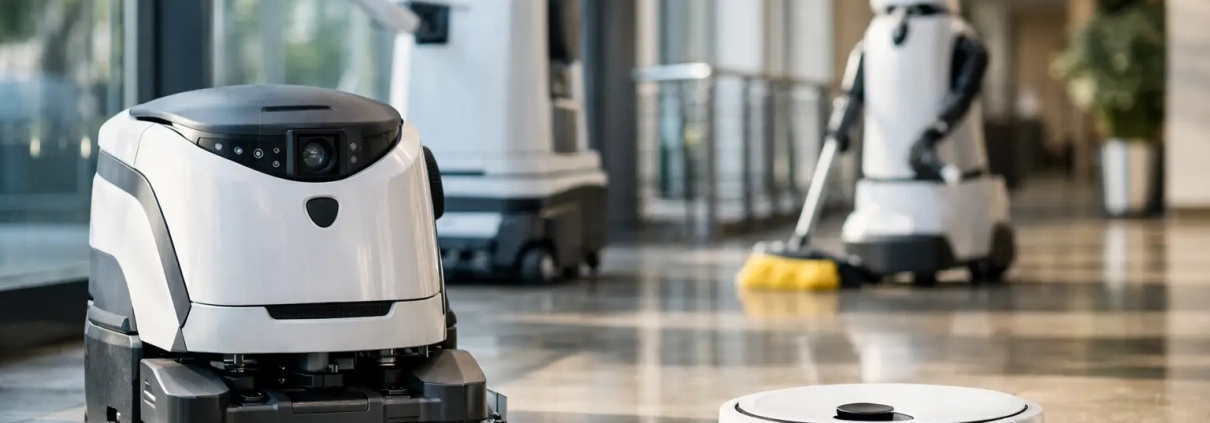
The term covers more than one kind of machine. Robotic floor scrubbers can maintain large indoor spaces, while aerial cleaning drones are designed to help trained crews clean elevated building exteriors. The right solution depends on the property, the material being cleaned, the level of buildup, and the access challenge. Technology is valuable when it improves the work, not when it replaces the judgment needed to protect a property.
Why Cleaning Robotics Matters in South Florida
Palm Beach County properties face conditions that make routine exterior cleaning a necessity. Humidity, salt air, wind-blown debris, mold, mildew, algae, pollen, and heavy rain can leave roofs, walls, balconies, windows, pool decks, and walkways looking neglected faster than many owners expect.
On a one-story home, a skilled ground crew may be able to handle most surfaces with the appropriate equipment. On a condominium, hotel, commercial building, or multi-story residence, access changes the equation. Traditional methods may require boom lifts, suspended platforms, scaffolding, large work zones, and substantial setup time. Those methods still have a place for certain repairs and specialized projects, but they are not always the most efficient choice for exterior cleaning.
Drone-based cleaning gives professional teams another option. Instead of placing workers at height for every section of a building, a trained operator can guide an aerial system to targeted areas while the cleaning crew manages the process from the ground. This can reduce the need for bulky access equipment and help keep entrances, parking areas, and common spaces more available.
How Aerial Cleaning Drones Work
A cleaning drone is not a consumer camera drone with a spray bottle attached. Professional aerial cleaning requires purpose-built equipment, experienced operation, carefully managed hoses and cleaning solutions, and a site plan that accounts for people, vehicles, landscaping, wind, and the building itself.
The drone carries or directs a low-pressure cleaning application to the surface. For many exterior materials, low pressure is the safer starting point because it allows the cleaning solution to do the work rather than relying on force alone. This matters on painted stucco, siding, exterior panels, certain roof surfaces, and other finishes that can be damaged by overly aggressive pressure washing.
The process should begin with an assessment. A qualified crew looks at the surface material, staining or organic growth, water access, drainage, nearby pedestrian areas, and sensitive features such as landscaping, windows, solar panels, vents, and outdoor furnishings. The cleaning method is then matched to the property rather than treating every dirty surface the same way.
After the work area is prepared, the operator performs controlled passes over the planned sections. Ground staff monitor hose position, runoff, exclusion zones, and the condition of the surface. The goal is visible improvement without creating unnecessary disturbance for residents, tenants, customers, or neighboring properties.
The Real Benefits Are Safety and Access
The most meaningful advantage of cleaning robotics is not novelty. It is a better approach to difficult access.
For HOA boards and property managers, reducing work at height can lower the exposure that comes with placing technicians on ladders, lifts, or suspended equipment. It can also minimize the footprint of the project. A lift may need staging space, route access, and parking restrictions. Scaffolding can stay in place for extended periods. Drone cleaning can often work with a smaller ground-level setup, although every property has its own operational requirements.
Less disruption also matters to the people who live and work on-site. Residents do not want a cleaning project to block their entrance, close a pool deck, or take over visitor parking longer than necessary. Commercial operators need to protect customer access and keep their property presentable during business hours. A well-planned aerial cleaning service can help reduce those interruptions while still addressing high, exposed surfaces.
There is a visual benefit, too. Mold streaks, algae growth, and traffic film can make a well-maintained building appear older than it is. Regular exterior cleaning supports curb appeal, protects the impression a property makes on prospective buyers or tenants, and helps managers stay ahead of buildup before it becomes a larger restoration issue.
Where Cleaning Robotics Fits Best
Aerial cleaning is especially useful when a surface is elevated, broad, or awkward to reach from the ground. Multi-story condominiums, apartment buildings, office properties, hotels, warehouses, schools, and large residential homes are common examples. It can also be a strong fit for exterior walls, upper-story facades, hard-to-reach overhangs, roof-adjacent areas, and other locations where access equipment would add significant cost or inconvenience.
That does not mean a drone is the answer to every cleaning job. Ground-level driveways, patios, sidewalks, tile, grout, carpets, upholstery, and interior floors often require hands-on cleaning methods and specialized tools. Deep stains, damaged coatings, loose building materials, and areas needing repair should be evaluated before any cleaning begins. A drone can improve access, but it cannot correct a failing surface or replace needed maintenance.
Wind and weather also affect scheduling. South Florida rain patterns and afternoon storms can change conditions quickly, and safe drone operation depends on suitable weather. A professional provider should be direct about those limits instead of promising a one-size-fits-all timeline.
What Property Managers Should Ask Before Scheduling
The best cleaning plan starts with clear questions. Ask what cleaning method is appropriate for your exterior material and whether low-pressure treatment is recommended. Confirm how the provider will protect landscaping, vehicles, pedestrians, pool areas, and nearby windows. Discuss where water will be sourced, how runoff will be managed, and whether residents need advance notice.
It is also reasonable to ask about operator experience, insurance, site controls, and the expected condition of the surface after cleaning. Organic buildup may clear quickly, while deeply embedded staining, oxidation, or permanent discoloration can require a different approach. Honest expectations matter. A professional cleaning company should explain what can be cleaned, what may need restoration, and what maintenance schedule makes sense for the property.
For larger communities and commercial sites, planning is often as important as the cleaning itself. The work may need to be divided by building section, scheduled around resident activity, or coordinated with security and facility teams. Clear communication helps prevent surprises and keeps the project moving efficiently.
Technology Still Needs Skilled Cleaning Professionals
A drone is only one part of the service. The results depend on the crew’s understanding of cleaning chemistry, pressure selection, surface conditions, and property protection. Using the wrong solution, too much pressure, or poor runoff control can turn a simple cleaning job into an expensive problem.
That is why the strongest approach combines advanced access technology with established cleaning experience. The Cleaners Drones brings drone-powered exterior cleaning together with practical services for interiors, floors, hard surfaces, and restoration needs. A property does not have to work with separate providers just because its cleaning challenges are at different heights.
For homeowners, the value is a cleaner exterior without turning the property into a construction zone. For HOAs, condominium boards, and commercial managers, it is a way to maintain building appearance while putting safety, access, and operational continuity first.
If an upper facade, exterior wall, or difficult-access surface has been put off because the equipment requirements felt excessive, it may be time to evaluate a drone-powered cleaning plan. The right inspection can turn a complicated access problem into a manageable maintenance project with visible results.