Low Pressure Versus Power Washing Explained
A black-streaked roof, algae-covered stucco, or slippery paver walkway can make a well-kept South Florida property look neglected fast. But low pressure versus power washing is not simply a question of which method cleans harder. The right choice depends on the surface, the type of buildup, the condition of the material, and how much risk the property can tolerate.
For homeowners, HOAs, condo boards, and commercial property managers in Palm Beach County, this decision affects more than curb appeal. It can affect roof life, paint condition, resident safety, landscaping, and the cost of future repairs. A professional cleaning plan should remove organic growth and grime without creating avoidable damage.
What Is the Difference Between Low Pressure and Power Washing?
Low-pressure washing uses a controlled stream of water, typically paired with a cleaning solution, to break down algae, mildew, mold, dirt, salt residue, and other organic buildup. The cleaning chemistry does much of the work, while the rinse removes contaminants gently. This process is often called soft washing.
Power washing is commonly used to describe high-pressure cleaning. Technically, power washing can also refer to heated high-pressure water, while pressure washing usually uses unheated water. In everyday conversation, however, property owners often use the terms interchangeably. What matters most is the force reaching the surface and whether that force is appropriate for the material.
High pressure can be highly effective on durable, hard surfaces. It can also scar, strip, loosen, or force water into surfaces that were never designed to handle it. Low pressure is usually the safer choice for delicate or elevated exterior areas, especially when algae and mildew are the main problems.
Low Pressure Versus Power Washing by Surface
The best method is rarely based on how dirty something looks from the street. A surface may need a gentle treatment because it is porous, painted, aging, sealed, or vulnerable to water intrusion.
Roofs Need a Gentle Approach
South Florida roofs are exposed to humidity, rain, airborne debris, and intense sun. Those conditions create ideal growth environments for algae and mildew, particularly on tile roofs. Blasting a roof with high pressure may remove visible staining quickly, but it can crack or dislodge tiles, wear down protective coatings, disturb granules on asphalt shingles, and push water beneath roofing materials.
Low-pressure roof cleaning treats the biological growth first, then rinses with controlled pressure. The result is a cleaner roof without using force that can shorten its service life. Proper application, runoff control, and landscape protection are essential parts of the process.
Stucco, Siding, and Painted Exteriors
Stucco is common throughout Palm Beach County, and it needs careful handling. High pressure can etch the finish, worsen existing cracks, remove paint, or drive moisture into weak areas. The same concern applies to many painted surfaces, vinyl siding, wood trim, and decorative exterior finishes.
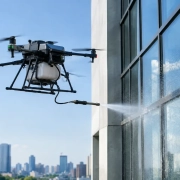
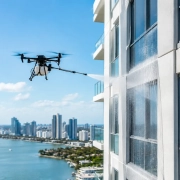
Low-pressure washing is generally the smarter choice for these materials. It removes the green or black organic staining that builds up during wet weather while protecting the finish underneath. When a building exterior needs cleaning at height, drone-powered low-pressure cleaning can provide access without scaffolding, lifts, or a large ground-level work zone.
Pavers, Concrete, and Driveways Can Handle More Force
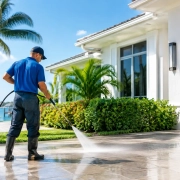
Concrete driveways, sidewalks, curbs, and many unsealed pavers are more durable than roofs or stucco. High-pressure cleaning can remove ground-in dirt, tire marks, mud, and surface grime efficiently. It is especially useful where a low-pressure treatment alone will not lift embedded debris.
Even here, more pressure is not automatically better. Improper technique can create uneven cleaning lines, expose aggregate in concrete, remove joint sand from pavers, or damage a deteriorating surface. Older concrete, cracked pavers, and decorative coatings should be evaluated before cleaning begins. Paver areas may also need sanding and sealing after a more intensive wash to restore a finished appearance.
Pool Decks and Patios Require Balance
A clean pool deck is not just about appearance. Algae on a damp patio or walkway becomes a slip hazard for family members, guests, residents, and customers. Yet many pool decks have coatings, textured finishes, grout lines, or drainage details that can be damaged by aggressive pressure.
A professional may use a combination of treatment and controlled pressure, adjusting the process to the deck material and the level of buildup. The goal is to improve traction and appearance without stripping coatings or sending dirty runoff into the pool.
Why Cleaning Solutions Matter More Than Raw Pressure
The biggest misunderstanding about exterior cleaning is that pressure alone creates the result. On many South Florida surfaces, discoloration is caused by living organic growth. If that growth is only blasted away at the surface, remaining spores can return quickly.
A properly selected cleaning solution addresses the source of algae, mildew, and mold before rinsing. This allows for lower pressure on sensitive materials and often produces a more even, longer-lasting result. The solution must be used at the right concentration, applied carefully, and managed with attention to nearby plants, drainage, pets, and people.
This is also why a single cleaning method should not be used across an entire property. A driveway, stucco wall, roof, and pool deck may all look dirty, but they do not have the same cleaning needs.
When High Pressure Is the Right Choice
High pressure has a place in professional exterior maintenance. It is often the efficient choice for durable surfaces with deeply embedded grime, including certain concrete parking areas, sidewalks, loading zones, dumpster pads, curbs, and driveways.
It is most effective when the technician matches pressure, nozzle type, spray distance, and cleaning pattern to the material. A surface cleaner may be used on broad, flat concrete areas to avoid streaking and provide a consistent finish. For commercial properties, this approach can restore cleaner common areas and improve the impression tenants and visitors get before they enter the building.
High pressure should be avoided or used with extreme caution when a surface is painted, aged, cracked, sealed, soft, loosely bonded, or near vulnerable seals and openings. The wrong setting can turn routine maintenance into an expensive repair.
A Practical Way to Choose the Right Method
Before scheduling exterior cleaning, consider four questions:
- What is the surface made of, and is it painted, coated, sealed, or aging?
- Is the staining caused by algae and mildew, or is it embedded dirt, oil, rust, or tire marks?
- Are there cracks, loose tiles, weak grout, damaged caulking, or drainage concerns?
- Does the work require access to upper stories, occupied walkways, landscaping, or active business areas?
These answers guide the cleaning plan. A roof with black algae streaks needs a different process than a concrete loading area with tire marks. A multi-story condominium needs a different access strategy than a one-story home with a dirty patio.
For condo associations and commercial operators, timing also matters. The right provider can plan work around resident traffic, business hours, parking needs, and safety requirements. Reduced disruption is especially valuable when the property needs exterior cleaning but cannot accommodate long-term scaffolding or blocked access routes.
What Professional Exterior Cleaning Should Protect
A quality cleaning service should protect the property while improving its appearance. That means more than arriving with a machine and spraying every surface at the same setting.
Look for a team that assesses material condition, identifies the cause of staining, uses the appropriate pressure level, and protects surrounding areas. On a South Florida property, that also includes attention to landscaping, exterior fixtures, screens, windows, vehicles, and drainage. Visible results matter, but careful preparation and cleanup matter just as much.
The Cleaners Drones uses low-pressure, eco-friendly exterior cleaning methods for hard-to-reach building surfaces, helping property owners avoid unnecessary access equipment and disruption. For ground-level surfaces, the cleaning method can be adjusted to match the durability and condition of the material.
A cleaner exterior should never come at the cost of damaged tile, stripped paint, washed-out paver joints, or a disrupted property. A quick professional assessment of the surface and buildup is the best starting point for choosing a method that leaves the property looking cared for and ready for what South Florida weather brings next.
Highrise Drone Cleaning for South Florida Buildings
A clean building exterior does more than improve curb appeal. In South Florida, it helps protect the impression residents, tenants, visitors, and prospective buyers form before they ever step inside. Highrise drone cleaning gives property owners and managers a practical way to remove algae, mildew, salt residue, dirt, and other visible buildup without turning the property into a long-term construction zone.
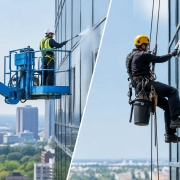
For condominium boards, HOAs, commercial operators, and owners of multi-story homes, exterior cleaning has traditionally meant lifts, scaffolding, rope crews, blocked access points, and a schedule that can stretch far beyond the actual cleaning work. Drone-powered cleaning changes the access equation. It brings controlled, low-pressure cleaning to difficult exterior surfaces while reducing the equipment and disruption required on the ground.
Why South Florida Buildings Get Dirty So Quickly
Palm Beach County buildings face conditions that are tough on exterior surfaces. Humidity encourages organic growth. Frequent rain carries debris onto walls, windows, ledges, and architectural details. Coastal air can leave salt deposits, while intense sun makes discoloration and streaking more noticeable.
The result is often a combination of green algae, black mildew staining, airborne dirt, pollen, and runoff marks. On stucco, painted surfaces, concrete, metal, and other exterior materials, that buildup can make a well-maintained property look neglected long before there is a structural problem.
Waiting until staining becomes severe is rarely the best approach. Routine exterior care makes it easier to maintain a consistent appearance and can reduce the need for more aggressive cleaning later. The right timing depends on a building’s location, shade exposure, landscaping, proximity to the coast, and the type of surface being cleaned.
How Highrise Drone Cleaning Works
Drone cleaning is not simply a drone carrying a pressure washer. It is a professional exterior-cleaning method that combines aerial access with controlled application techniques. A trained operator positions the drone to treat high or difficult-to-reach sections of a structure, applying an appropriate cleaning solution and low-pressure rinse process for the surface and level of buildup.
This is particularly useful for facades, upper-level walls, exterior cladding, balconies, architectural features, roofs where appropriate, and other areas that can be costly or inconvenient to reach with conventional equipment. The purpose is not to blast away dirt with excessive force. It is to use the right cleaning chemistry, dwell time, water volume, and pressure for the job.
Low-pressure methods matter because many exterior finishes can be damaged by an overly aggressive wash. Paint can be stripped, stucco can be scarred, seals can be compromised, and water can be pushed where it does not belong. A careful service provider evaluates the material, condition, drainage, nearby landscaping, and access needs before work begins.
A Different Approach to Access
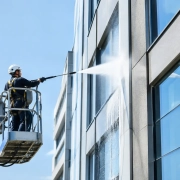
Traditional exterior cleaning may require a boom lift or scaffolding to reach upper stories. Those options still have a place on certain projects, especially when repair work, detailed inspection, or hands-on restoration is required. But for many cleaning-only applications, they create extra expense and operational complications.
Aerial cleaning can reduce the footprint of the job. Fewer large access systems can mean less impact on parking, sidewalks, entrances, landscaping, and daily activity around the building. For active residential communities and commercial properties, that is a meaningful advantage.
It also allows crews to address sections of the building that are awkward to reach from the ground. Instead of designing the entire project around equipment placement, the cleaning plan can focus more directly on the areas that need attention.
The Benefits for Condos, HOAs, and Commercial Properties
High-rise and multi-story properties have to balance appearance with safety, resident communication, budget, and business continuity. Drone-powered exterior cleaning is valuable because it helps address several of those concerns at once.
The most immediate benefit is reduced disruption. A property may be able to avoid or minimize the long periods of blocked parking, restricted walkways, noise, and visual clutter associated with scaffolding or large lifts. That can make a difference for communities with residents coming and going all day, retail properties that need clear access, and offices that want to preserve a professional environment.
Safety is another major consideration. Any work at height needs careful planning, trained personnel, and proper site control. By limiting the need for workers to spend extended time on scaffolds, lifts, or suspended platforms, drone cleaning can reduce certain access-related risks. It does not eliminate the need for a professional safety plan, but it gives property managers another option for handling elevated surfaces responsibly.
Then there is speed. Setup and repositioning often take less time when a project does not depend entirely on moving large access equipment around the property. Actual project duration still depends on building size, staining, weather, water access, surface type, and required preparation. Still, a more efficient access method can help a property return to normal faster.
Where Drone Cleaning Delivers the Best Results
Drone cleaning is especially effective where the primary challenge is access. Multi-story condominium exteriors, apartment buildings, hotels, office properties, parking structures, and tall residential facades are common examples. It can also be a strong fit for upper-level architectural surfaces that are visible from the street but difficult to reach safely from below.
That said, not every exterior problem has the same solution. Heavy mineral staining, failing paint, damaged sealant, rust, deteriorated stucco, or deep cracks may require specialized restoration or repair before cleaning. Cleaning can improve appearance, but it cannot correct material failure.
The same is true for delicate surfaces. A reputable provider should assess the material and use a method that fits it. An eco-friendly cleaning solution and low-pressure process may be appropriate for many surfaces, but the exact approach should never be one-size-fits-all. Good results come from matching the cleaning process to the property, not forcing every property into the same process.
What Property Managers Should Ask Before Scheduling
Before approving an exterior cleaning project, ask how the provider will protect people, vehicles, landscaping, windows, and surrounding surfaces. Confirm that the company has a clear plan for site setup, weather monitoring, water management, and communication with residents or tenants.
It is also worth asking what cleaning agents will be used and why. Eco-friendly does not mean ineffective, and effective does not need to mean unnecessarily harsh. The goal is a cleaning process that addresses organic growth and surface dirt while respecting the building materials and the property environment.
Request a scope that identifies the areas to be cleaned, any exclusions, and the expected results. Severe staining may improve dramatically but still leave permanent discoloration if it has penetrated or damaged the surface. Setting clear expectations before the work starts protects everyone involved.
Finally, look for direct experience with both cleaning and property care. A company that understands surface-specific cleaning, not just drone operation, is better positioned to make sound decisions about pressure, chemicals, rinse methods, and finish protection.
Planning a Cleaner Exterior Without the Headaches
A successful exterior cleaning project starts with a walkthrough or visual assessment. The provider should identify the most affected elevations, note sensitive landscaping and access routes, and determine whether a test area is useful. This is also the time to coordinate with building staff, residents, tenants, or security teams.
For larger properties, cleaning may be scheduled by elevation or zone to keep entrances and parking areas available. Weather matters in South Florida, so a realistic plan includes flexibility for wind, rain, and lightning conditions. A dependable company will prioritize safe operating conditions over rushing a job.
The Cleaners Drones brings this technology-led approach to South Florida properties while applying the same practical attention to detail used across professional cleaning and restoration services. The goal is visible improvement without making your property harder to live in, work from, or visit while the job is underway.
A building exterior is one of the first things people notice and one of the hardest parts of a property to maintain. When access is the obstacle, highrise drone cleaning offers a cleaner, safer path forward – one that keeps the focus where it belongs: on a property that looks cared for from the ground all the way up.
Future of Aerial Building Maintenance in South Florida
A South Florida building can look weathered far sooner than its age suggests. Salt air, humidity, wind-driven rain, algae, mildew, and traffic residue collect on exterior walls, balconies, windows, soffits, and facades. For a condo board or property manager, the hard part is rarely recognizing the problem. It is finding a safe, practical way to clean it without turning the property into a long-term work zone. That is where the future of aerial building maintenance is already taking shape.
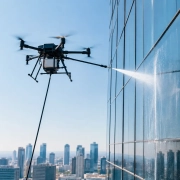
Drone-powered cleaning is changing how multi-story properties approach exterior care. Rather than relying only on scaffolding, boom lifts, rope access, or crews working from difficult angles, trained operators can use aerial equipment to deliver controlled, low-pressure cleaning where it is needed. The result is a cleaner property with less disruption below.
Why Traditional Exterior Access Is Under Pressure
Traditional methods still have a place, especially for repairs, painting, sealant work, and detailed hands-on restoration. But for routine exterior washing, they often create a costly access problem before cleaning even begins.
Scaffolding can block entrances, reduce parking availability, interrupt pedestrian traffic, and remain in place for extended periods. Lifts need room to operate and may be limited by landscaping, pool decks, narrow access lanes, or soft ground. Rope-access crews can be effective, but they require detailed planning, specialized safety procedures, and favorable conditions.
For occupied condos, hotels, office buildings, and retail properties, those logistics affect more than the cleaning budget. Residents may lose access to balconies or parking areas. Tenants may be distracted by equipment and noise. Visitors see a building under construction instead of a well-managed property.
Aerial cleaning does not eliminate planning. It changes the kind of planning required. The focus shifts from building a large ground-level access operation to creating a controlled flight plan, protecting the work area, checking weather conditions, and using the correct solution and pressure for the surface.
The Future of Aerial Building Maintenance Is Practical
The strongest case for drone cleaning is not that it looks futuristic. It is that it solves real property-management problems.
A cleaning drone can reach elevated exterior surfaces without placing workers on scaffolding or repeatedly moving a lift around the site. That can reduce setup time, limit ground-level congestion, and shorten the period when residents or customers notice active work. On many properties, that matters as much as the final appearance.
For South Florida buildings, regular exterior maintenance also helps prevent the buildup from becoming a larger restoration issue. Organic growth can leave staining on stucco, painted surfaces, pavers, and other exterior materials. Salt and pollution can dull finishes and make a property look neglected. Addressing buildup early is often more manageable than waiting until the discoloration is deeply set.
The right process is not about blasting every surface with high pressure. Delicate finishes, painted walls, stucco, window frames, and certain architectural materials can be damaged by the wrong equipment or technique. Low-pressure cleaning, surface-appropriate solutions, and trained judgment remain essential. The drone is the access tool. Professional cleaning knowledge is what protects the property.
What Better Aerial Maintenance Looks Like
A successful aerial cleaning project begins before the drone leaves the ground. A qualified provider should evaluate the building height, facade material, exterior staining, access points, nearby trees, power lines, pedestrian areas, and drainage considerations. A clear plan helps determine whether drone cleaning is the best choice for the entire job or one part of a broader maintenance program.
Safer Access Without Unnecessary Equipment
Keeping crews off elevated scaffolding or suspended platforms can reduce exposure to high-risk work. It also reduces the need to position large access equipment next to landscaping, parked vehicles, entryways, and busy common areas.
That does not mean the work is risk-free. Flight operations require trained personnel, controlled work zones, and close attention to wind, rain, and nearby activity. A responsible provider pauses work when conditions are not right. Speed should never come before safety.
Less Disruption for Residents and Businesses
For an HOA or commercial manager, exterior cleaning is easier to approve when it does not create weeks of inconvenience. Drone-based work can help preserve access to drive lanes, walkways, patios, and storefronts that might otherwise be affected by a large lift or scaffold setup.
The exact disruption level depends on the property. A busy high-rise in downtown West Palm Beach needs a different scheduling approach than a waterfront condominium or a multi-story home in Palm Beach County. Communication still matters. Residents and tenants should know where work is happening, what areas are temporarily restricted, and how long the project is expected to take.
More Consistent Preventive Care
Exterior cleaning should not be treated only as an emergency response to visible staining. Buildings benefit from an ongoing plan that considers seasonal weather, shade, moisture exposure, landscaping, and the materials used on the facade.
A property close to the coast may need more frequent attention than an inland building with less salt exposure. A shaded north-facing wall may develop mildew faster than a sun-exposed elevation. Instead of using a one-size-fits-all calendar, managers can build maintenance around the areas that actually soil first.
Where Drones Work Best, and Where They Do Not
Drone cleaning is especially useful for multi-story exterior walls, upper-level facades, difficult-to-reach architectural features, and areas where lift access would be impractical or disruptive. It can be a strong fit for condominiums, apartment communities, hotels, office buildings, retail centers, parking structures, and larger residences.
Still, it is not the answer to every exterior job. Deep cracking, failed caulk, loose materials, structural concerns, and painting preparation may require hands-on inspection and repair. Ground-level pressure washing, detailed window work, gutters, and heavily soiled surfaces may call for other equipment or manual techniques. Wind conditions can also limit aerial operations, particularly near taller buildings where gusts behave unpredictably.
The best maintenance providers do not force one method onto every surface. They recommend the approach that protects the building, fits the scope, and keeps the site manageable.
Technology Is Improving, but Accountability Matters More
As aerial systems improve, building owners can expect better control, more precise application, improved camera visibility, and more detailed documentation of exterior conditions. Before-and-after images can help boards and managers confirm results across upper elevations that are otherwise hard to inspect from the ground.
This visibility can also support smarter budgeting. When a manager can identify early staining, runoff patterns, recurring mildew areas, or surface deterioration, maintenance decisions become more proactive. Small cleaning needs can be addressed before they become larger appearance or restoration concerns.
But better equipment does not replace accountability. Property decision-makers should still ask practical questions: Is the provider experienced with the building material? What safety measures protect residents, pedestrians, and vehicles? What low-pressure methods and cleaning solutions are being used? How will the work area be managed? What happens if weather changes?
Those answers matter more than a dramatic drone video.
A Better Standard for South Florida Properties
The future of aerial building maintenance is not about replacing every cleaning crew with a machine. It is about giving property owners a safer, more efficient option for the work that has historically required expensive, disruptive access equipment.
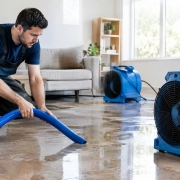
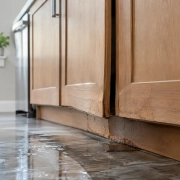
For South Florida condos, HOAs, commercial properties, and multi-story homes, that can mean cleaner exterior surfaces, fewer access headaches, and a maintenance plan that fits the way the property is actually used. The Cleaners Drones combines aerial access with the same attention to surface care needed for every cleaning job, from exterior walls to interior floors and upholstery.
If your building is showing algae, mildew, salt residue, or general exterior staining, do not wait for the issue to become part of the property’s image. A professional assessment can clarify which areas need attention now, which method makes sense, and how to keep the work from disrupting the people who live, work, and visit there.